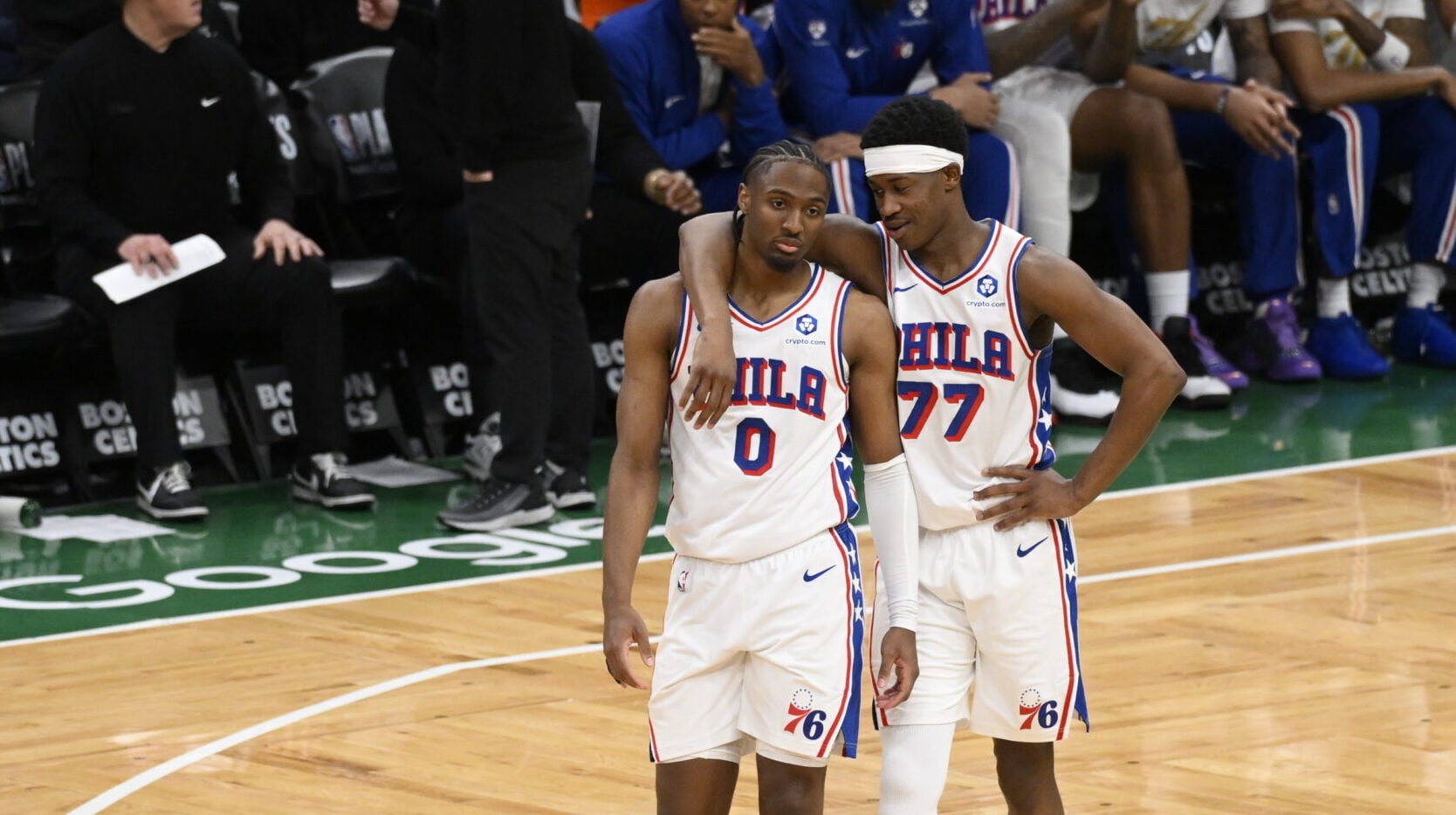

Against all odds and on enemy territory, the Philadelphia 76ers unleashed their true potential, delivering a decisive Game 7 knockout to send the Boston Celtics crashing out of the playoffs!
This wild card Sixers squad, often inconsistent, proved their mettle when it mattered most, overcoming a 3-1 series deficit and a hostile crowd to secure a 109-100 victory.
“We’ve had this weird swag about us all year,” Tyrese Maxey remarked, reflecting on the team's unwavering self-belief. That confidence manifested in a gritty performance that saw the 76ers almost squander an 18-point lead, only to pull away in the clutch.
Key Takeaways from the Thrilling Game 7:
- Tyrese Maxey's late-game heroics, including back-to-back drives, sealed the victory for Philadelphia.
- Joel Embiid delivered a dominant 34-point, 12-rebound performance that Boston's defense simply couldn't contain.
- The Celtics' experimental starting lineup, sans Jayson Tatum, proved disastrous, contributing to an early deficit.
- Cold jump shooting plagued Boston throughout the series, ultimately dooming their surprising season.
The Clutch Genes Ignite in Beantown
When the game hung in the balance, with just over two minutes remaining and defenses suffocating scoring, a star emerged. Tyrese Maxey, despite the 76ers largely funneling offense through Joel Embiid, seized the moment. After a missed Payton Pritchard three-pointer, Maxey sped up the floor, initiated a ball-screen, and left Neemias Queta in his dust for a crucial reverse layup, putting Philadelphia up by three.
He wasn't done. On the very next possession, running a similar action, Maxey again beat Queta and two converging defenders, squeezing through for another vital bucket. These back-to-back plays were the defining moments, showcasing Maxey's incredible burst and efficiency, finishing with 30 points on 11-for-18 shooting. His ability to elevate in crunch time makes him a serious threat for the New York Knicks in the next round.
Embiid's Unstoppable Force: Boston's Defensive Nightmare
From the opening tip, Joel Embiid was a man on a mission. He poured in 10 points and dished out five assists in the first quarter alone, hitting jumpers and making smart reads against double-teams. The Celtics tried everything to stop him, from a rarely-used Hugo Gonzales to Jaylen Brown to various zone schemes. Nothing worked.
Though visibly fatigued and potentially nursing a knee injury in the fourth quarter, Embiid's seven points in the final frame were monumental. He drained a face-up jumper over Queta and a pick-and-pop three-pointer. Crucially, he drew a foul on Brown in the post, sinking free throws to give the Sixers a three-point cushion with under five minutes to play. Despite a less efficient series overall, Embiid's presence was the unwavering force the 76ers needed, and Boston's top-tier defense had no answer.
Celtics' Gamble Backfires: A Risky Starting Lineup Sinks Hopes
The absence of Jayson Tatum (left knee stiffness) was a blow, but Boston's response to his injury raised eyebrows. Instead of minimal adjustments, they opted for a radical overhaul, benching regular rotation players Queta and Sam Hauser in favor of Baylor Scheierman, Luka Garza, and Ron Harper Jr. – players who were ninth, 10th, and 11th in playoff minutes through six games.
This never-before-seen starting five was a gamble that spectacularly failed. The Celtics went scoreless on their first six possessions, falling 11-4 before their first substitution. Harper Jr. played a mere 4:02, never to return, and Garza's eight minutes saw Boston outscored by 15 points. The combined 0-for-7 shooting from this trio underscored the ill-fated decision, gifting the 76ers an early psychological and scoreboard advantage they never relinquished.
Cold Shooters and a Crushing End to Boston's 'Surprise' Season
The Boston Celtics' season had been a pleasant surprise, defying expectations after Jayson Tatum's previous Achilles tear and significant roster changes. They had once again ranked among the league's top five in both offensive and defensive efficiency. Yet, a season that seemed destined for a deep playoff run ended abruptly, marking only the second time in a decade they've failed to reach the conference semifinals.
Their Achilles' heel? An over-reliance on the jump shot. As the league’s most jump-shot dependent team, with just 41% of their regular-season attempts coming in the paint—and an even lower 36% in the playoffs—the Celtics struggled to generate efficient scoring when it mattered most, shooting just 27.4% from three across their four losses and leaving key opportunities on the table in crunch time.