
Key Highlights
- The draft “lottery” began in 1966 as a coin flip between the Detroit Pistons and New York Knicks.
- The system shifted through multiple eras, including envelope draws and weighted odds starting in 1990.
- Major reform in 2019 flattened odds and expanded the lottery drawing to the top four picks.
- A 2027 overhaul will expand the lottery to 16 teams with further reduced odds for the worst records.
The coin flip era: where it all began
In the beginning, there was no actual lottery system at all.
Detroit player-coach Dave DeBusschere called “tails” at the first version of what would eventually become the NBA Draft Lottery in 1966, which was simply a coin flip between the Pistons and the New York Knicks – the worst teams in the Eastern and Western Divisions that season. And it wasn’t even formally called a “draft lottery” at the time, since no lottery system existed yet.
Pistons owner Fred Zollner provided the coin, a $20 gold piece from 1907. Its value today would be roughly $4,200. (There was no social media back then; imagine the reaction today if a team showed up with its own coin for a draft decision.)
The Knicks won the flip and selected Cazzie Russell with the No. 1 pick. This coin flip format remained in place through 1984, with the league continuing to decide the top pick via “heads or tails.”
From envelopes to early lottery systems (1985–1989)
The modern lottery era began in 1985 with the introduction of an envelope system. Seven teams had equal odds, each with a sealed envelope, and one was drawn to determine the No. 1 pick. This later expanded to nine teams when Miami and Charlotte were added in 1989.
Originally, the lottery determined picks 1 through 7. However, in 1986, the system was adjusted so it only decided the top three selections, with the rest of the order following regular standings.
Weighted odds enter the picture (1990–1994)
A major shift came in 1990 when the league introduced weighted odds. The NBA expanded the lottery to 11 teams and gave worse-performing teams better chances of landing the top pick, rather than equal probability for all participants.
By 1994, the system was refined further: the worst team was given a 25% chance of securing the No. 1 pick, up from 16.7% under the previous format. This structure largely defined the next two decades, with adjustments tied to league expansion – growing to 13 teams and later 14 when the Charlotte Bobcats entered in 2004.
Modern reform and flattening odds (2019)
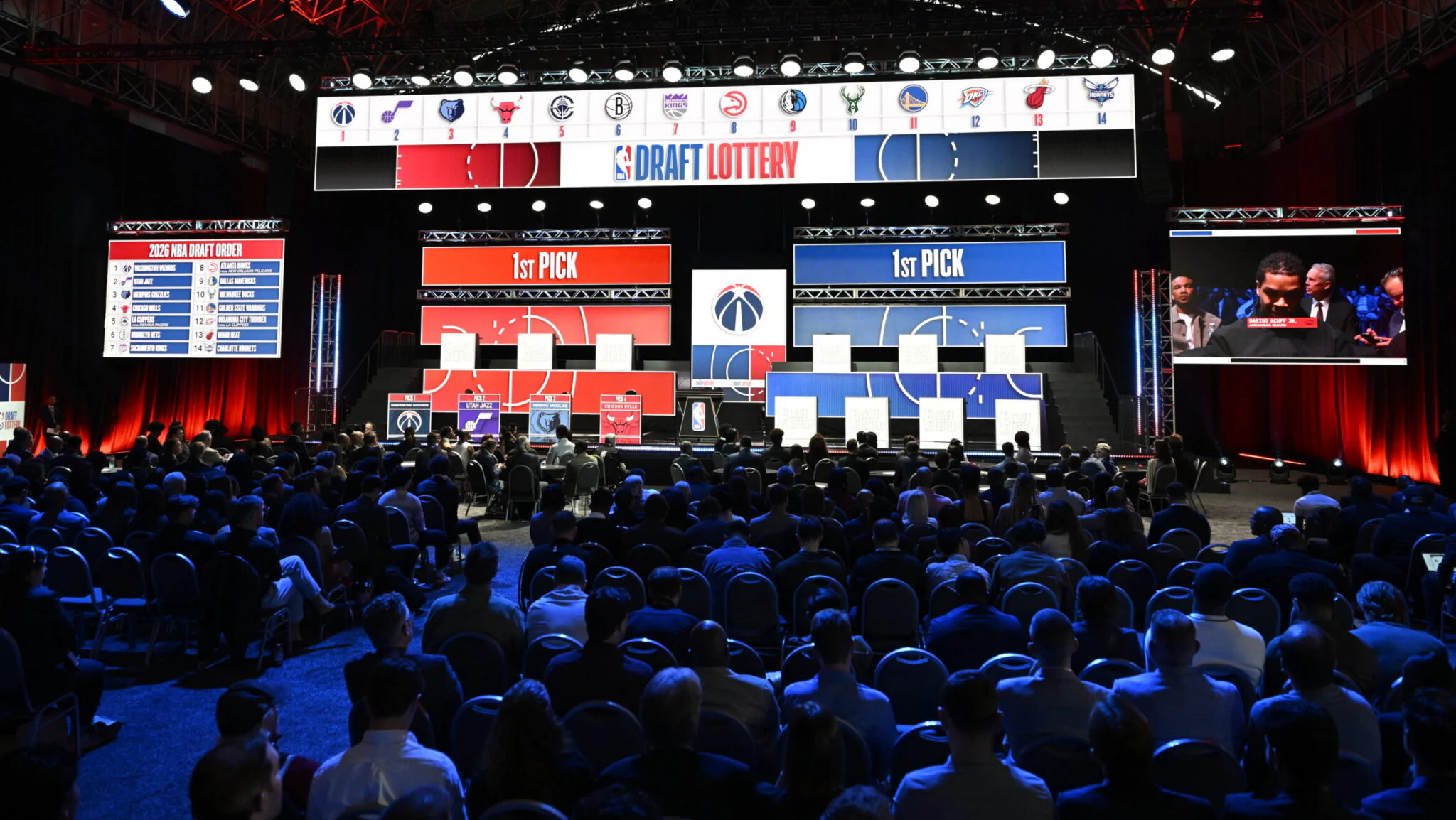
A major update arrived in 2019 after approval in 2017 by the NBA Board of Governors. The three worst teams were each given identical 14% odds of winning the No. 1 pick, significantly reducing the advantage of finishing last.
The lottery process also expanded, with the draw now determining the first four picks instead of just the top three. The changes were designed to reduce incentives for tanking while maintaining competitive balance.
The 2027 system: bigger pool, tighter margins
The next evolution arrives in 2027 with a newly expanded “3-2-1 Lottery.” The system will include 16 teams and further flatten the odds to discourage teams from intentionally losing games to improve draft position.
Under the new format:
- The three worst teams will have 5.4% odds of winning the No. 1 pick.
- Teams ranked fourth to tenth worst will each hold 8.1% chances.
- Lottery balls will range from one to three depending on standings.
Even the worst teams still have a shot at the top pick, but the path will be far more difficult than in earlier eras.