

Amidst the sweltering crucible of the Singapore Grand Prix, a surprising hero emerged not from the podium, but from a piece of kit many drivers scorn: Williams' revolutionary cooling vest, hailed by Alex Albon as a grid-leading game-changer. The intense humidity and soaring temperatures pushed human limits, making effective driver cooling more critical than ever following lessons from the grueling 2023 Qatar GP.
Key Points:
- Alex Albon praised Williams' cooling vest as "the best on the grid" after battling extreme heat in the Singapore Grand Prix.
- The vest provided crucial comfort despite 30C ambient temperatures and 78% humidity, and even an initial malfunction.
- Many top F1 drivers, including Max Verstappen and Pierre Gasly, voiced strong skepticism or outright rejection of cooling vests due to practicality or philosophical reasons.
- This debate underscores the ongoing challenge of balancing driver welfare against the perceived "toughness" inherent in elite motorsport, a discussion reignited by the 2023 Qatar GP heat exhaustion issues.
The Singapore Sweat Test: Albon's Verdict
The Marina Bay Street Circuit is infamous for its demanding conditions, and this year’s Singapore GP was no exception. With ambient temperatures hovering around 30C and humidity soaring to 78%, a "Heat Hazard" warning was officially issued. This gave drivers a critical choice: wear a cooling vest or carry ballast in its place. For Williams, the decision was clear.
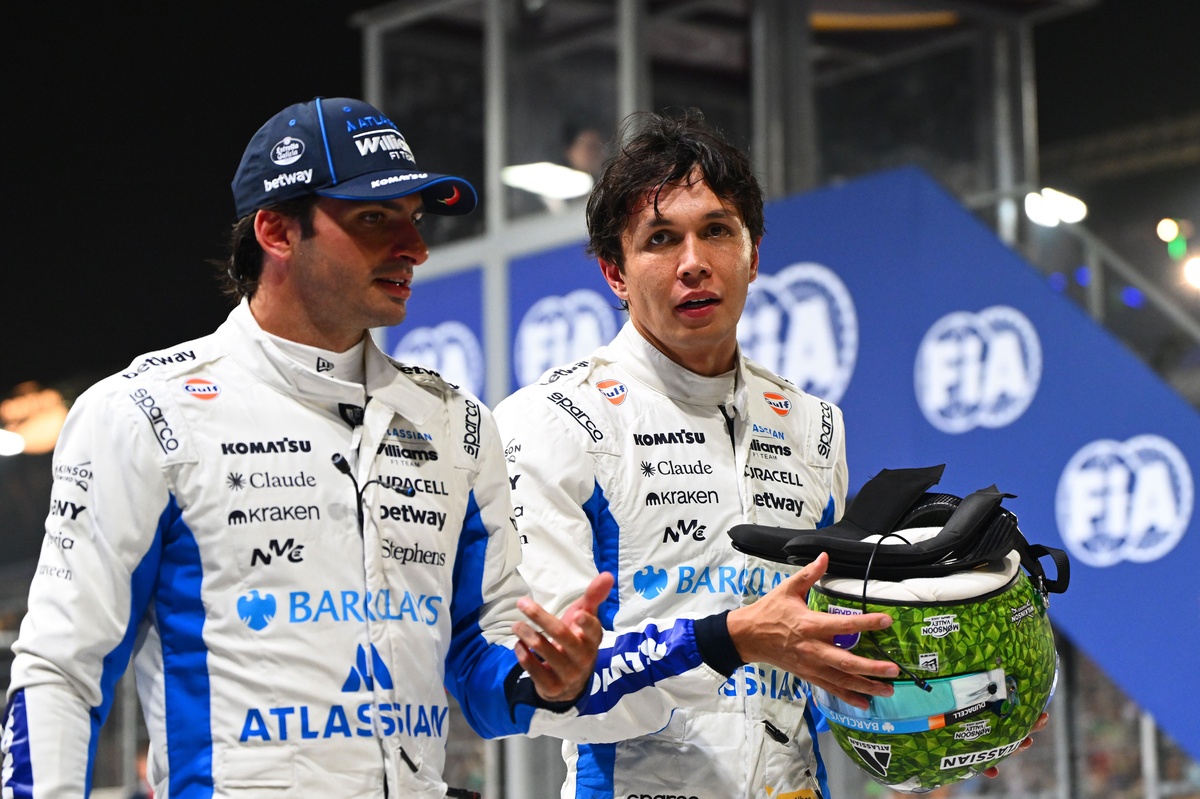
Alex Albon, despite a challenging race plagued by brake overheating that ultimately led to his late retirement, emerged surprisingly fresh. He declared the Williams cooling suit superior, stating, "I have to say as a team, we've really done a good job with our cooling suit." This glowing endorsement came even after the vest initially failed for the first 10 laps.
Beating the Heat: How Williams Got It Right
Albon highlighted the stark difference once his cooling system engaged. "Then it turned on and it was very comfortable," he explained, contrasting his experience with that of other teams. His teammate, Logan Sargeant, likely shared similar sentiments, as he previously noted Williams' strong development in this area. It appears Williams has engineered a rare success story in an often-flawed technology.
The ability to maintain core body temperature is paramount for driver performance and safety. In conditions where other drivers struggled visibly, Williams seemingly provided a competitive edge, proving that comfort can indeed be a performance factor.
A Grid Divided: Rivals Voice Concerns
While Albon lauded Williams' solution, the wider paddock presented a starkly different view. Several high-profile drivers expressed reservations or outright disdain for cooling vests, highlighting the varying effectiveness and philosophical approaches across the grid.
Verstappen's Practicality vs. Hadjar's Principle
Reigning champion Max Verstappen dismissed the need for a cooling vest, citing practical drawbacks. "For me it's not needed," Verstappen asserted, complaining about "stupid cables" that limit movement and questioning the vests' long-term efficacy. "It doesn't work anyway for one-and-a-half hours."
His Red Bull counterpart, Isack Hadjar, took a more ideological stance, declaring the devices "should be banned" because F1 "is supposed to be tough." This sentiment reflects a traditionalist view that driver endurance is an intrinsic part of the sport's challenge. Pierre Gasly echoed similar practical sentiments, claiming he had "no need for it."
The Reliability Riddle: Why Some Drivers Resist
The core issue for many drivers isn't just discomfort, but the unreliability of cooling technology. Kimi Antonelli recounted harrowing experiences where vests failed dramatically. He suffered a heat stroke after a pump system failed in Austin, pumping 50C water instead of cool liquid. Such incidents breed distrust, making drivers hesitant to rely on what could become an additional hazard.
Antonelli articulated the critical need for confidence: "If it's developed, if we get to a point where it's developed and we have the confidence that it's going to work every time and for the time that we need to, I think it's very nice." Until then, many opt for rigorous training over unpredictable technology.
Beyond Singapore: The Future of Driver Comfort
The debate over cooling vests highlights a broader conversation about driver safety and the extreme physical demands of Formula 1. While the immediate "Heat Hazard" threat might recede for the remainder of the season, with the Qatar Grand Prix being the only other potential high-temperature event, the underlying challenge remains.
Williams' success with their cooling vest, as championed by Alex Albon, could force other teams to re-evaluate their own solutions. It's a clear signal that investing in driver comfort isn't just about welfare; it's about unlocking peak performance in the most brutal conditions F1 can throw at its athletes. The question now is whether the rest of the grid will catch up to Williams' cool innovation.