

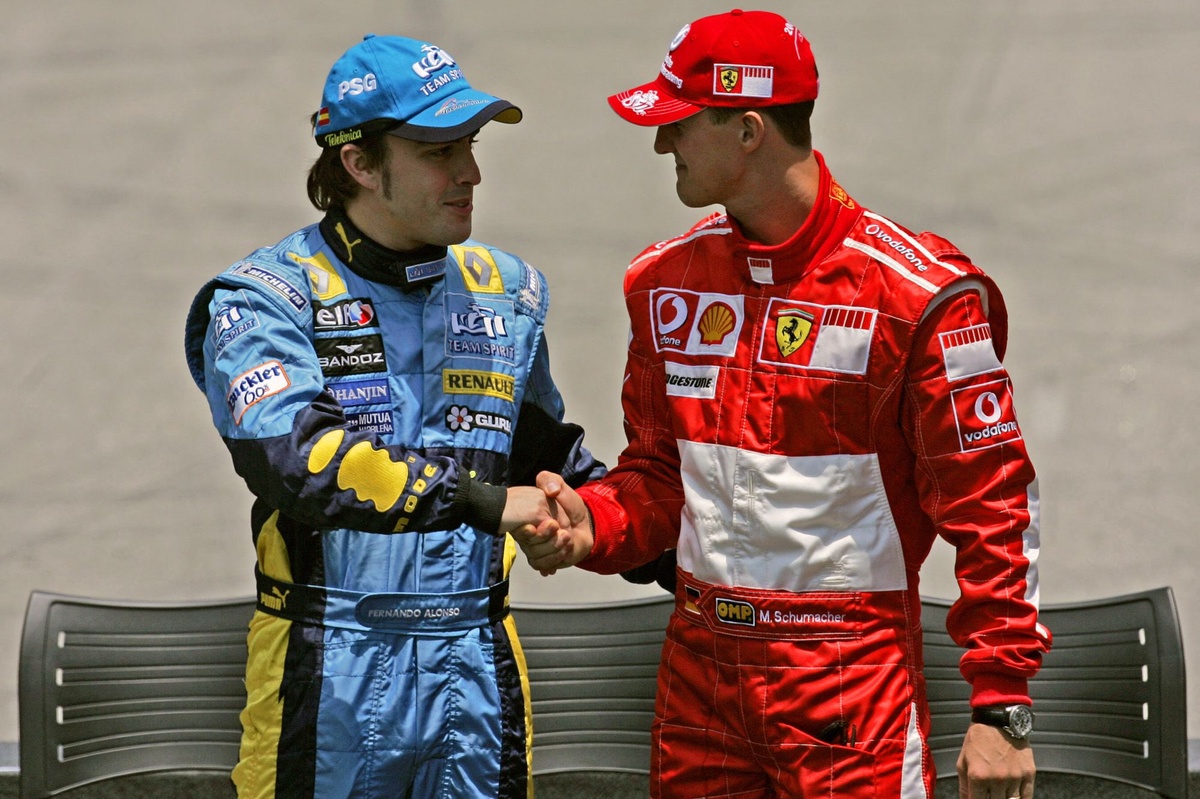

The roar of Interlagos on October 22, 2006, echoed with both triumph and an unforgettable farewell. Fernando Alonso wasn't just sealing his second consecutive Formula 1 world title; he was driving past the departing shadow of a legend, Michael Schumacher, who delivered one of his most heroic performances in his initial final race. It was a true changing of the guard, packed with the raw emotion and relentless drama only F1 can provide.
Key Takeaways from the 2006 Brazilian Grand Prix:
- Fernando Alonso cemented his place in F1 history, clinching his second world championship with Renault.
- Michael Schumacher mounted a legendary charge from 10th to 4th place despite a puncture, showcasing his unparalleled fighting spirit in his initial F1 swansong.
- The race marked a significant transition in Formula 1, with a young champion rising as a seven-time titan stepped away.
- Schumacher's "retirement" proved temporary, though his later return brought new challenges.
Alonso's Reign: A New Era Crowned
The 2006 season finale in Brazil was always destined to be Fernando Alonso's coronation. After Michael Schumacher's heartbreaking engine failure in Suzuka, which swung the championship advantage firmly towards the Renault driver, Alonso simply needed to score points. He started from fourth on the grid, in a comfortable position to secure his place among the sport's double world champions.
His cool, calculated drive was a testament to his maturity and skill, navigating the chaos unfolding behind him with precision. The victory wasn't just a championship; it was a powerful statement that a new dominant force had arrived.
Schumacher's Unforgettable Farewell Drive
While the title was effectively decided, Michael Schumacher refused to go quietly into the night. Starting a lowly 10th due to a fuel pressure issue in qualifying, the odds were stacked against him even making a dent. Many wrote off his chances for a memorable end.
But the Ferrari ace was a force of nature. He stormed through the field, gaining three positions on the very first lap. By lap eight, he was already right behind Alonso, having carved through rivals including former teammate Rubens Barrichello and Giancarlo Fisichella. A slight touch with Fisichella, however, resulted in a heartbreaking rear-left puncture, forcing an early pitstop and dropping him to a staggering 20th place, a minute behind Alonso.
The Phoenix Rises: A Masterclass in Overtaking
What followed was vintage Schumacher. From seemingly insurmountable depths, he unleashed a relentless barrage of overtakes. He sliced through the back markers, executed brilliant undercuts, and capitalized on every opportunity. By lap 27, he had already reached the tail end of the points.
His climb continued unabated, passing Nick Heidfeld and Robert Kubica, before making a decisive move on Fisichella to claim fifth position. With just laps remaining, he pulled off a clinical overtake on McLaren's Kimi Räikkönen to seize fourth place. It was a heroic effort, a drive that transcended the championship outcome and cemented his legendary status.
A Bittersweet End and a Look Ahead
Despite the incredible recovery, Schumacher ran out of laps to challenge for a podium. Yet, his performance was a powerful reminder of his unmatched talent and determination. "We really had a superb car today... for me it didn't work out well," he reflected, a tinge of disappointment mixed with pride.
Alonso, meanwhile, celebrated a "fantastic way" to depart Renault, the team he called "my family in Formula 1," before his much-anticipated move to McLaren. He spoke of dreaming to emulate Ayrton Senna, aiming for a third title—a dream he, remarkably, still chases today.
Schumacher's initial retirement, announced a month prior in Monza, was driven by Ferrari's signing of Räikkönen, not wanting to displace the promising Felipe Massa. His words, "Once you're out of it, you're out," hinted at a permanent departure. However, the allure of competition proved too strong, leading to a three-year stint with Mercedes from 2010 to 2012. While his return saw him struggle to replicate past glory, it further showcased his enduring passion for the sport.
The 2006 Brazilian Grand Prix wasn't just a race; it was a chapter closing and another beginning, a testament to the relentless spirit of F1's greatest.