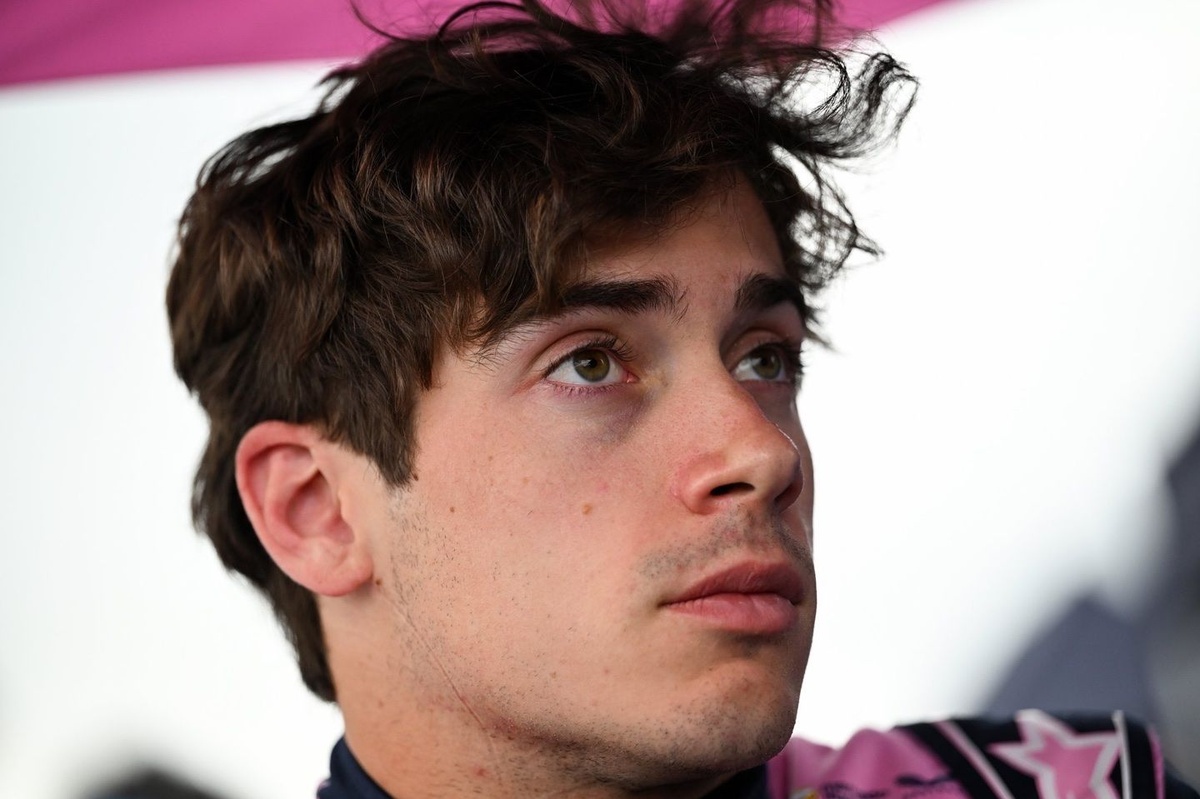



Antonelli Unleashes Mercedes' Power in Austrian GP Practice
The Austrian Grand Prix weekend began with a powerful statement from Mercedes, who made their front-running intentions clear through an electrifying performance from championship leader Kimi Antonelli. The young Italian dominated Friday's practice sessions, setting the benchmark for both outright speed and crucial long-run consistency.
Key Takeaways from Spielberg Practice:
- Kimi Antonelli topped both Free Practice sessions, showcasing Mercedes' superior short- and long-run pace.
- Ferrari's eagerly anticipated upgrades failed to deliver, with the Scuderia struggling significantly during race simulations.
- Red Bull and Max Verstappen were surprisingly off the leading pace despite introducing their second major upgrade package of the season.
- High track temperatures are causing unprecedented tyre degradation, pointing towards a likely multi-stop race strategy.
Mercedes Flexes Its Muscle
Mercedes looked undeniably strong at the Red Bull Ring. Kimi Antonelli proved untouchable, not only topping the timing sheets but also demonstrating the strongest long-run pace. His consistent performance suggests Mercedes holds a significant advantage heading into the rest of the weekend.
The team's confidence is soaring, with Antonelli maintaining a 0.06-second-per-lap advantage over teammate George Russell in adjusted long-run simulations. This points to a well-balanced car that manages its tyres exceptionally well, averaging only around 0.1 seconds of degradation per lap.
Ferrari's Upgrade Falls Short
It was a difficult day for Ferrari at the Austrian Grand Prix. Despite arriving with a new power unit update and fresh off a victory in Spain, their performance in Spielberg fell well below expectations. Both their one-lap pace and long-run consistency were lacking.
Lewis Hamilton finished 0.597 seconds off the pace in FP2, with an adjusted long-run deficit of 0.51 seconds per lap. Charles Leclerc, whose FP1 running was limited, fared even worse, trailing Antonelli by 0.841 seconds in qualifying simulation and a staggering 0.97 seconds in long-run pace.
The data showed Ferrari losing substantial time through the technical second and third sectors. Their much-praised chassis performance from recent races appeared to disappear on Friday, leaving the team with a mountain to climb.
McLaren's Tyre Conundrum
McLaren displayed a familiar pattern from Barcelona, showing strong single-lap potential but struggling with tyre degradation over longer stints. Oscar Piastri impressed by finishing just 0.237 seconds behind Antonelli in FP2, even outpacing teammate Lando Norris, who was 0.325 seconds adrift.
However, Piastri's long-run pace faded, leaving him with an adjusted deficit of 0.50 seconds per lap to Mercedes—roughly three-tenths slower than Norris. Overall, McLaren experienced around 0.3 seconds of tyre degradation per lap, significantly higher than Mercedes' controlled tyre wear.
Red Bull's Home Circuit Headache
All eyes were on Red Bull at their home circuit, especially after the team introduced its second major upgrade package of the season. Expectations were high for a significant step forward, but Friday's sessions told a different story.
Max Verstappen finished 0.550 seconds behind Antonelli in qualifying simulation and recorded an adjusted long-run deficit of 0.27 seconds per lap. The reigning world champion also battled noticeable tyre degradation and consistently lost time across all three sectors to the dominant Mercedes.
While Red Bull still appears to be the third-fastest team, they will be working late into the night on setup changes if they hope to challenge for pole position and race victory.
Midfield Mayhem & Strategic Showdown
The midfield battle at the Austrian Grand Prix proved as competitive as ever. Alpine, Racing Bulls, and Audi established themselves as the leading contenders, while Haas and Williams trailed behind. Aston Martin and Cadillac struggled at the rear of the field.
Nico Hulkenberg once again delivered a strong long-run performance for Audi, finishing only 0.80 seconds behind Mercedes. However, the familiar question remains whether the team can convert that pace into valuable championship points. Alpine (+0.83s) and Racing Bulls (+0.94s) also showed encouraging long-run speed.
Adding to the challenge is the ongoing European heatwave. Pirelli Head of Motorsport Dario Marrafuschi confirmed unexpectedly high tyre degradation, averaging 0.164 seconds per lap across the field. As a result, a one-stop strategy now appears highly unlikely, with a two-stop race expected to be the minimum and a three-stop strategy remaining a distinct possibility. Evolving track conditions and changing grip levels throughout the weekend are expected to play a crucial role.