

Aprilia is continuing to push the boundaries of motorcycle aerodynamics ahead of MotoGP's major technical changes in 2027, with new images of its 850cc prototype revealing an unusual front-wing design.
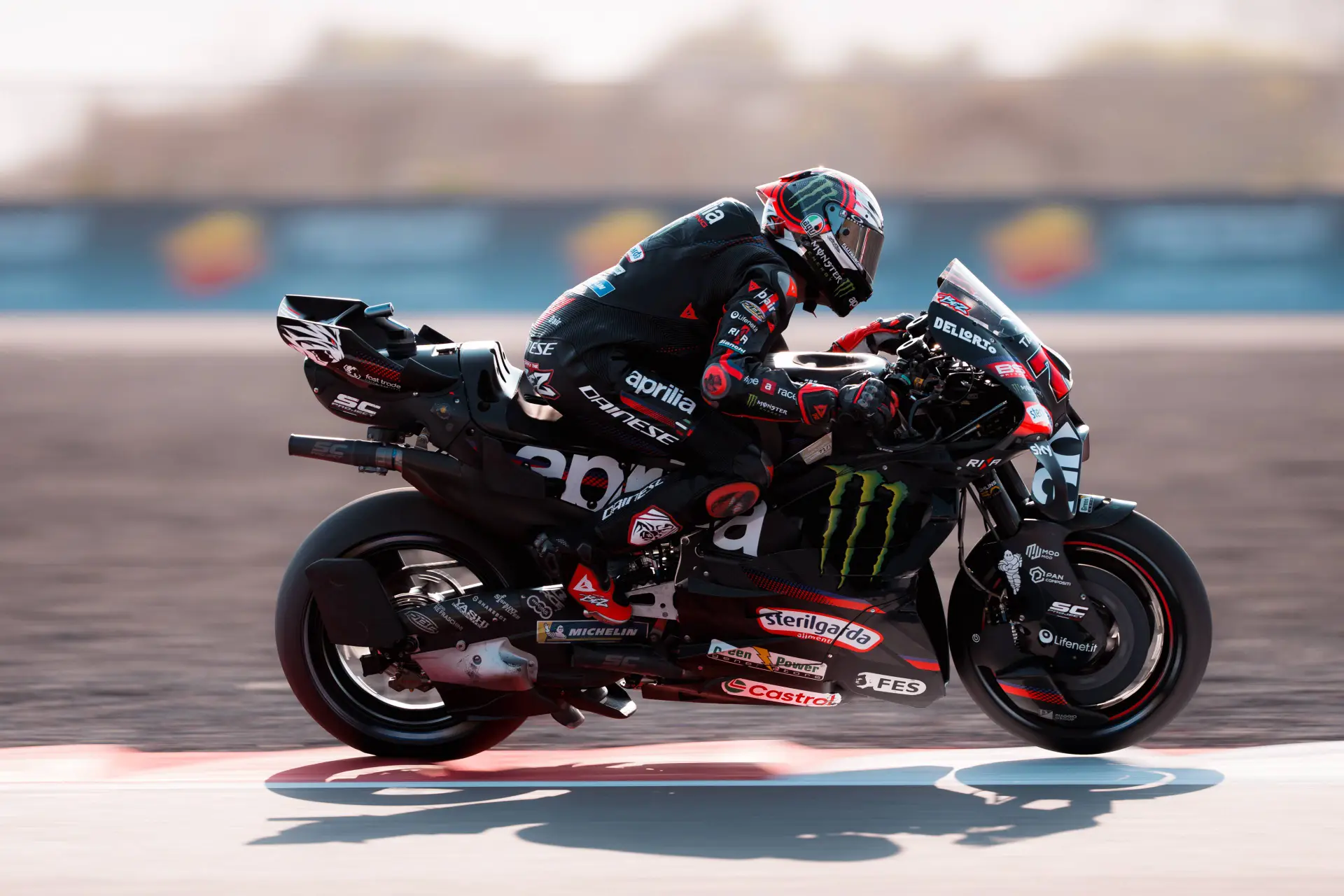
The latest glimpse came from Aprilia test rider Lorenzo Savadori, who shared photos of the bike following a testing session at Jerez. The images attracted attention for the aerodynamic developments introduced by the team's technical department, led by Fabiano Sterlacchini.
Although the machine remains a development prototype and is expected to undergo further changes before its official appearance at the Valencia test on December 1, its current design offers an early look at Aprilia's approach to the new regulations.
One of the most noticeable features is the redesigned front wing. Supported by two mounting pillars, the curved aerodynamic profile sits further away from the ram-air intake, creating a larger opening that allows more airflow to pass through the front section.
However, the most significant change can be found around the fork area.
Aprilia has introduced a series of cascading aerodynamic flaps, replacing the previous fork-wing arrangement. Under the 2027 regulations, aerodynamic components will face tighter restrictions and will no longer be allowed to extend beyond the fork.
To work within these limits, Aprilia has repositioned the elements towards the inside of the front assembly. A vertical flap extends down from the front fairing, partially following the shape of the fork leg. A smaller support connects it to another carefully shaped aerodynamic element designed to generate downforce while limiting drag.
The design demonstrates how manufacturers are adapting their development strategies as MotoGP prepares to introduce its new 850cc machines.

Source: GPBlog
The 2027 technical regulations will bring several major changes, including a reduction in engine capacity from 1000cc to 850cc, stricter aerodynamic limits and a switch from Michelin to Pirelli tyres. Ride-height devices will also be banned as part of efforts to improve racing and reduce the technical complexity of the bikes.
Despite the restrictions, aerodynamic development is unlikely to lose its importance. Manufacturers are already exploring alternative ways to manage airflow and generate downforce without relying on large external winglets.
Aprilia's latest design is a clear example of this direction, suggesting that aerodynamic innovation will remain a major part of the competition even under the revised rules.
Meanwhile, Savadori also delivered a competitive performance during the Jerez test. Ducati's Nicolo Bulega topped the timesheets with a 1m39.253s lap, while the Aprilia test rider finished second, just over three tenths of a second behind. KTM's Pol Espargaro completed the top three.
With teams still evaluating different aerodynamic configurations, the final designs are expected to evolve further before the first official 2027 MotoGP test in Valencia on December 1.