

The 2026 World Cup final was supposed to be Argentina's crowning moment, but instead, it became a nightmare etched in history. The ghost of Ángel Di María loomed large as the Albiceleste suffered an offensive collapse against a clinical Spain side, leaving fans to ponder if the veteran winger's retirement was the ultimate undoing.
Key Points from Argentina's 2026 World Cup Final Collapse:
- Argentina failed to register a single shot on target throughout the entire 2026 World Cup final, a historic attacking drought.
- Ángel Di María's consistent track record of scoring in and winning major finals for Argentina amplifies the debate around his absence.
- Despite the team's struggles, Lionel Messi delivered an individual masterclass at 39 years old, scoring 8 goals and providing 4 assists in the tournament.
- The loss raises questions about Lionel Scaloni's tactical approach and the team's collective resilience without their 'closer' in high-stakes matches.
A Final Nightmare: Argentina's Offensive Blackout in 2026
The stats from Argentina's 2026 World Cup final performance against Spain are staggering, painting a picture of historic impotence. Across 90 minutes of regulation time, the South American giants couldn't muster a single shot on target. Let that sink in: zero attempts to seriously test the Spanish goalkeeper. In total, Argentina managed just two shots, both off target, compared to Spain's 20, with 12 of those finding the mark. Spain also dominated possession, holding 65% to Argentina's 35%.
The Statistical Shame: Zero Shots on Target
Things went from bad to worse when Enzo Fernández received a red card in the 90+3rd minute, forcing Argentina to play extra time with ten men. Goalkeeper Emiliano Martínez was a solitary beacon, making 11 crucial saves throughout the match, a testament to the relentless pressure his defense faced. These numbers represent Argentina's worst attacking display in a World Cup final during the Lionel Messi era, surpassing even the 2014 loss to Germany.
The Fideo Factor: Di María's Undeniable Finals Legacy
Months before the tournament, Ángel Di María steadfastly refused pleas from teammates and coach Lionel Scaloni to reconsider his international retirement. Scaloni himself revealed that attempts were made to coax Di María back, even for a farewell match. "We asked him to come and say goodbye to his fans. He has gone, and there is no way to convince him. We tried, but his decision is final," Scaloni lamented to Spanish newspaper AS, adding, "He retired as a winner, and as one of the best footballers in our history."
The Golden Touch: When Di María Played, Argentina Won
Di María's record in major finals is nothing short of extraordinary and fuels the current debate. He missed the 2014 World Cup final due to injury, and Argentina lost to Germany. He limped off early in the 2015 Copa América final, which Chile won on penalties. The 2016 Copa América Centenario final saw him play less than fully fit, with an identical outcome: defeat.
However, when fully fit, Di María was a game-changer. He scored the winner in the 2021 Copa América final against Brazil, netted a crucial goal in the 2022 World Cup final against France, and started the 2024 Copa América final where Argentina triumphed over Colombia. The pattern is undeniable: Argentina lost every final Di María missed or was compromised in, and won every final where he played at his peak.
Beyond Goals: Leadership and Psychological Edge
Di María's impact extended far beyond just turning up for finals; he was a 'closer.' He scored the title-clinching goal in the 2008 Beijing Olympics final against Nigeria, the 2021 Copa América final, and the 2022 World Cup final. In the modern era of Argentine football, only Lionel Messi boasts such a record in decisive moments. His influence also encompassed leadership within the squad, calming nerves during high-pressure situations—a factor impossible to quantify with mere statistics. He even took medication for a period due to the psychological toll of past final defeats, highlighting the immense pressure he shouldered.
Scaloni's Dilemma: Searching for the Irreplaceable
Throughout the 2026 World Cup, Lionel Scaloni's coaching staff struggled to find a definitive replacement for Di María's unique role. On the left flank, players like Thiago Almada, Giovani Lo Celso, and Nicolás González all had opportunities. In the final against Spain, Scaloni even abandoned the familiar 4-3-3 formation for a 4-4-2, shifting Alexis Mac Allister to the left wing in a desperate attempt to fill the void. This constant tactical tinkering underscored the ongoing struggle to adapt to the retired star's absence.
More Than One Man: Unpacking Argentina's Complexities
While the correlation between Di María's presence and Argentina's final victories is striking, attributing the 2026 defeat solely to his absence oversimplifies a complex reality. The Albiceleste's triumphs in 2021, 2022, and 2024 were not solely on Di María's shoulders.
The 2018 Anomaly: Di María Present, Still Defeated
Consider the 2018 World Cup: Di María was present and physically fit, yet Argentina was knocked out by France in the Round of 16. This suggests that broader technical issues and team balance played a significant role. Emiliano Martínez's heroic saves, the goal-scoring prowess of Lautaro Martínez and Julián Álvarez, and Scaloni's overall stability since taking the helm were all crucial elements in their successes.
The Spanish Wall: A Formidable Opponent
Direct factors heavily influenced the 2026 final outcome. Enzo Fernández's red card and Lisandro Martínez's early injury severely hampered Argentina. Moreover, Spain was a formidable opponent, arriving at the final on a long unbeaten run, having kept clean sheets in five consecutive knockout matches. To ignore their defensive solidity and offensive efficiency would be a disservice to their performance.
Messi's Enduring Brilliance: A Lone Beacon
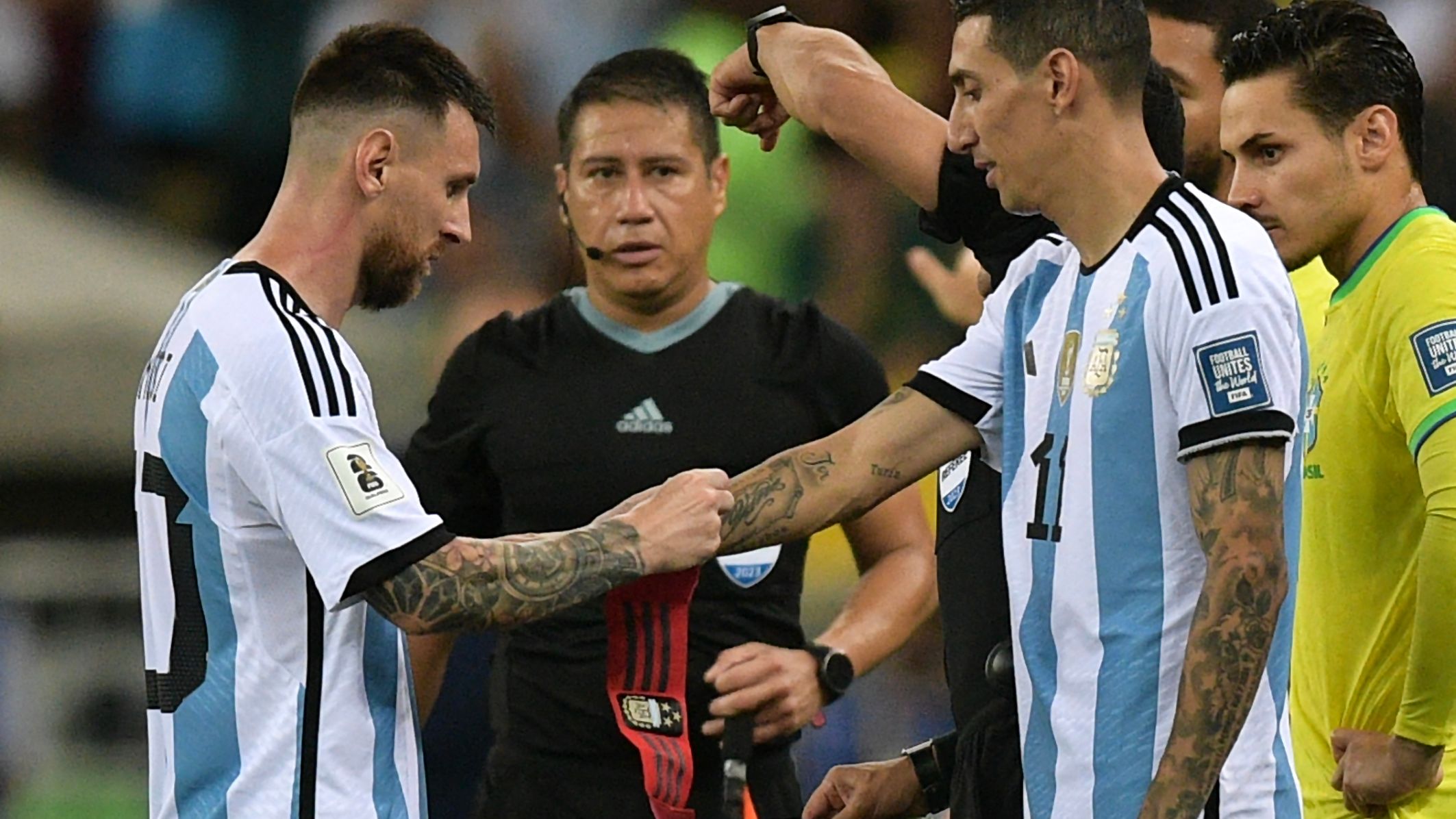
Lionel Messi's individual numbers in the 2026 World Cup tell a story of unparalleled greatness, even amidst collective disappointment. At 39 years old, Messi delivered one of his finest individual tournaments, scoring a staggering 8 goals and providing 4 assists in just 8 matches.
Records Shattered: Messi's Unrivaled 2026 Campaign
His goal tally climbed to 21, making him the second-highest scorer in World Cup history, just behind Kylian Mbappé (22). Messi also became the only player to provide at least one assist in six different editions of the tournament (2006, 2010, 2014, 2018, 2022, 2026) and to score in seven consecutive knockout-stage matches. These incredible statistics underscore that Argentina's collective decline in the final did not diminish their captain's individual brilliance.
A Legacy Beyond Any Single Player
Comparing the international careers of Messi and Di María reveals Messi's significant advantage in matches, goals, and assists. Crucially, Messi led Argentina to three World Cup finals (2014, 2022, 2026), an unparalleled achievement in tournament history. Furthermore, Argentina's struggles in finals pre-date Di María's involvement; Messi himself lost the 2007 Copa América final to Brazil by 3-0 a full year before Di María's international debut in 2008.
The difficulty of settling finals is a long-standing issue for Argentina, one that extends far beyond the presence or absence of any single player. While Di María's influence was immense, the 2026 World Cup final was a stark reminder that even with the greatest of all time, football remains a team sport with countless variables.