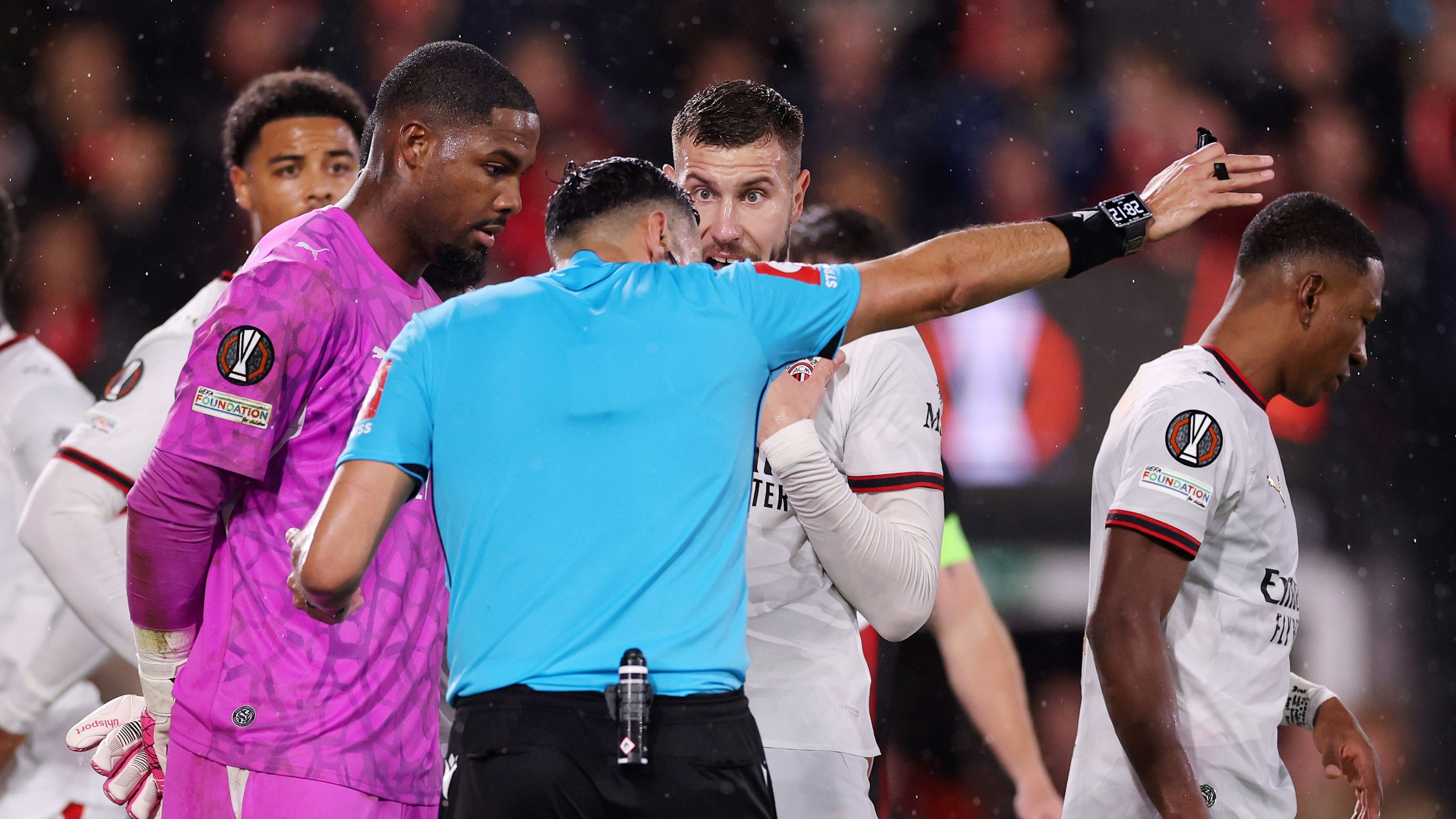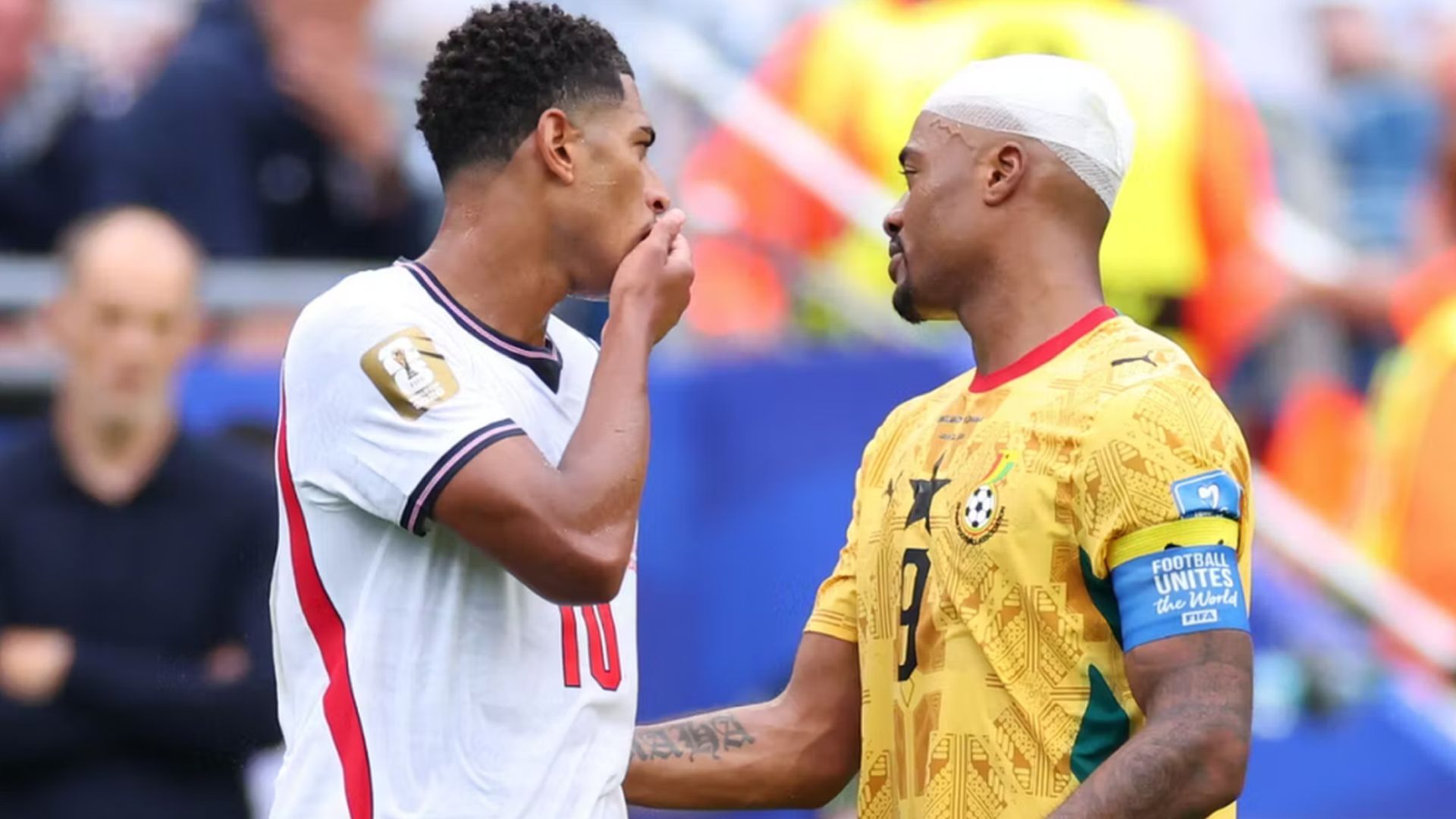

The football world held its breath as images of Jude Bellingham covering his mouth spread like wildfire during England's World Cup clash with Ghana. Was this the moment FIFA's contentious new "mouth-covering" rule claimed its highest-profile victim?
- Jude Bellingham avoided a red card despite covering his mouth when speaking to Jordan Ayew.
- FIFA's new rule penalizes deliberate mouth-covering during heated confrontations to curb abuse.
- Context is crucial: officials differentiate between friendly chats and antagonistic exchanges.
- The rule's consistency remains a major concern, as highlighted by Miguel Almiron's earlier dismissal.
FIFA's New Rule: A Controversial Silence on the Pitch
FIFA has introduced a game-changing regulation for the 2026 World Cup, threatening players with a red card if they intentionally conceal their mouth while conversing with an opponent. This bold move, championed by FIFA President Gianni Infantino, emerged after an incident involving Benfica's Gianluca Prestianni, who faced a ban for homophobic conduct. The intention is clear: foster respect and accountability on the field.
"It's about respect. It's about the example that we should give," Infantino asserted, "If you have nothing to hide, you don't cover your mouth when you speak to somebody." The directive aims to eradicate ambiguity and clandestine exchanges, pushing for transparency in player interactions.
Bellingham's Great Escape: Context Over Controversy
Despite viral images, Jude Bellingham ultimately escaped punishment for his interaction with Ghana's Jordan Ayew. The crucial detail, clarified by FIFA's head of referees Pierluigi Collina, lies in the context of the conversation. The rule targets confrontational situations, not casual dialogue.
Collina emphasized that players are still free to cover their mouths during friendly chats or tactical discussions with teammates or opponents. In Bellingham's case, officials found no animosity or "heated confrontation" with Ayew, deeming it a standard exchange rather than an attempt to conceal abusive language. This nuance proved vital for the Real Madrid midfielder.
The Almiron Precedent: A Stark Warning
The football community had already witnessed the rule's impact when Paraguay's Miguel Almiron was sent off against Turkey. His decision to cover his mouth while speaking to Mert Muldur during a "general melee" was interpreted as hiding abuse, leading to a one-game ban. This incident served as a stark warning, demonstrating that officials are prepared to enforce the new directive when the context aligns with its intent.
Consistency Challenges: A VAR Head-Scratcher
The new mouth-covering rule presents significant consistency challenges for officials and VAR. Critics fear it could become a "weapon" for players to provoke opponents, triggering red cards simply by initiating a conversation and then highlighting a covered mouth. The subjective nature of "heated confrontation" versus "friendly chat" leaves a grey area.
Currently an opt-in measure for competitions, it remains uncertain whether major domestic leagues like the Premier League will adopt it. The potential for controversy and inconsistent application could deter widespread implementation, adding another layer to football's ongoing VAR debates.
Beyond the Mouth: Queiroz's Fiery Post-Match Outburst
The mouth-covering incident wasn't Bellingham's only brush with drama during the tense England vs Ghana match. He was reportedly involved in a heated half-time exchange with Ghana boss Carlos Queiroz, who later claimed the midfielder used "one word that is not in the book of life" after a challenge on Jerome Opoku.
Queiroz's frustrations boiled over after the final whistle, as he lambasted VAR officials for allegedly missing a late penalty. "I'm not sure VAR is still working in the World Cup... They're very lucky. Once again, VAR went for a coffee," he fumed, highlighting the intense scrutiny and emotional stakes surrounding every decision in modern football.