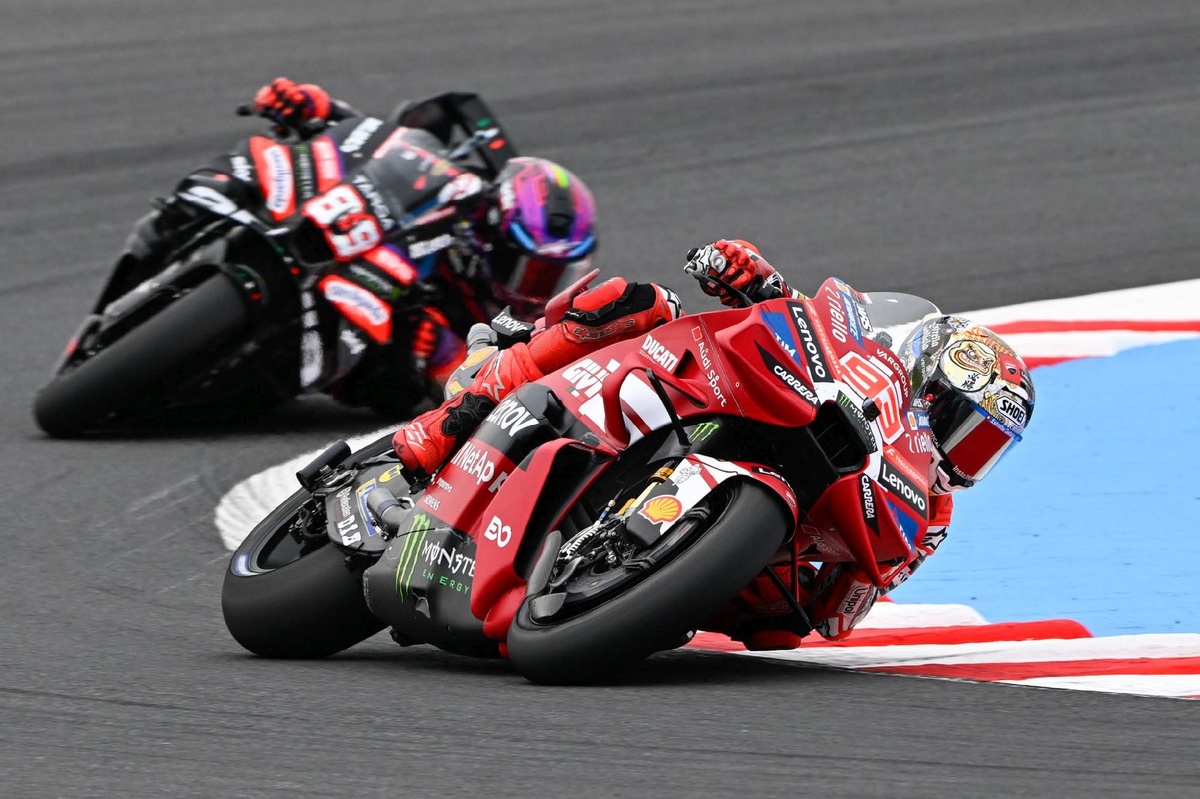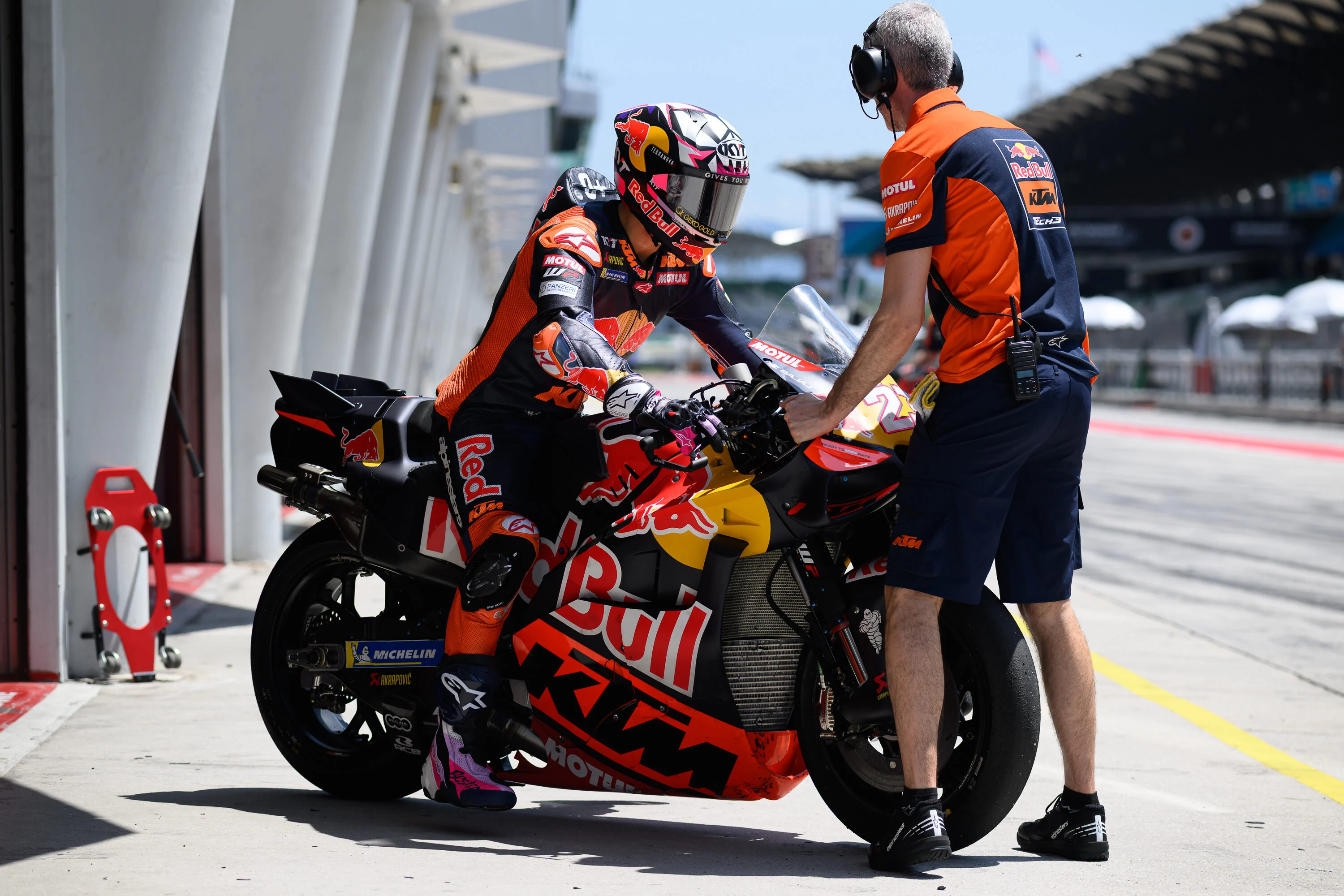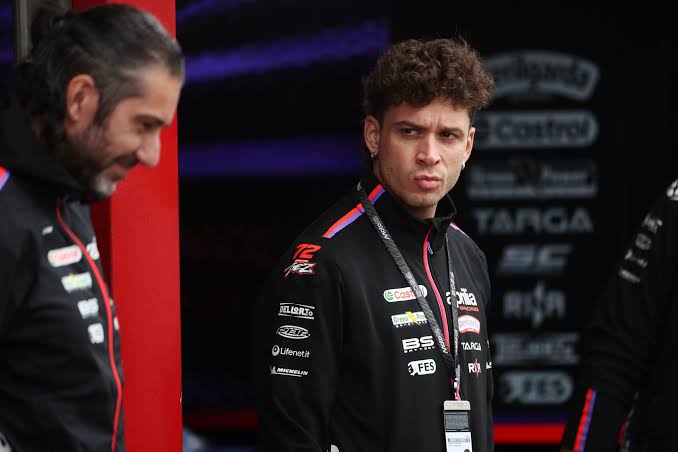

Marco Bezzecchi was left searching for answers after a promising morning at Motegi turned into a frustrating sixth-place finish in Saturday’s Japanese Grand Prix Sprint.
The Aprilia rider had shown strong pace on the medium rear tyre in practice, but could not reproduce that performance when it mattered. His decision to use the medium while most of the field opted for the soft ultimately cost him valuable ground in the championship fight.
Bezzecchi was one of only two riders, alongside Jack Miller, to start the 12-lap Sprint on Michelin’s medium rear compound. The choice was based on concerns over rear tyre temperatures with the soft, as well as the pace he had found on the medium during Saturday morning practice.
The decision initially looked promising. Bezzecchi moved up to third early in the race after starting fourth, but his pace soon faded and he was passed by several riders running the soft rear. Even after the opening laps, when the medium was expected to become more competitive, he could not find the speed he had shown earlier in the day.
In FP2, Bezzecchi had completed several laps in the 1m43s range, with his best effort of 1m43.321s coming on a rear tyre that had already completed 16 laps. That put him at the top of the session, ahead of team-mate Jorge Martin and KTM’s Pedro Acosta.
In the Sprint, however, Bezzecchi managed to break into the 1m43s only once. His best lap of 1m43.873s was more than half a second slower than his FP2 benchmark, while Martin was able to stay within a tenth of his own best practice time.
Bezzecchi admitted the difference left him confused.
“Yesterday, I saw that my pace was good, but not as I wanted,” he explained. “I was also a little bit on the limit with the temperature from the rear tyre already yesterday. So we decided to try to work on the medium this morning, to see if I could have at least the two options.”

Source: Crash.net
He said the medium felt comfortable in practice and offered a lower temperature risk, which helped convince him to use it in the Sprint.
“Because of this pace and because of the less risk with the temperature, I tried to make this decision. But at the end, today I was riding a bit too slow, one second too slow.”
Bezzecchi defended the decision as reasonable based on the information available before the race, even though the result ultimately proved otherwise.
“On paper, for myself, it was the right choice,” he said. “Then obviously with the result, it's not the right choice.”
He expected to struggle during the opening two and a half laps but believed he could become stronger later in the race. Instead, the anticipated improvement never arrived.
Asked why his pace was so different from FP2, Bezzecchi could offer no immediate explanation.
“I cannot explain it,” he said. “I don't want to say anything wrong too early. So I prefer to check everything.”
His tyre gamble became even more complicated after several soft rear tyres suffered serious degradation during the Sprint, prompting Michelin to consider making the harder compound mandatory for Sunday’s Grand Prix. Bezzecchi said his medium tyre appeared to have held up reasonably well after 12 laps, but he acknowledged that doubling the distance would still be an unknown.
“If they choose this, I will agree because it’s mandatory,” he said. “I worked with the medium and my wear on the medium didn’t look too bad, but 12 laps on the medium is still a lot so it’s a bit of a jump on the unknown.”
Bezzecchi started Sunday’s race from fourth and eventually recovered from his difficult Sprint with a podium finish, but Marc Marquez and Jorge Martin both finished ahead of him again. The result meant he continued to lose ground in a championship battle that was becoming increasingly tight.