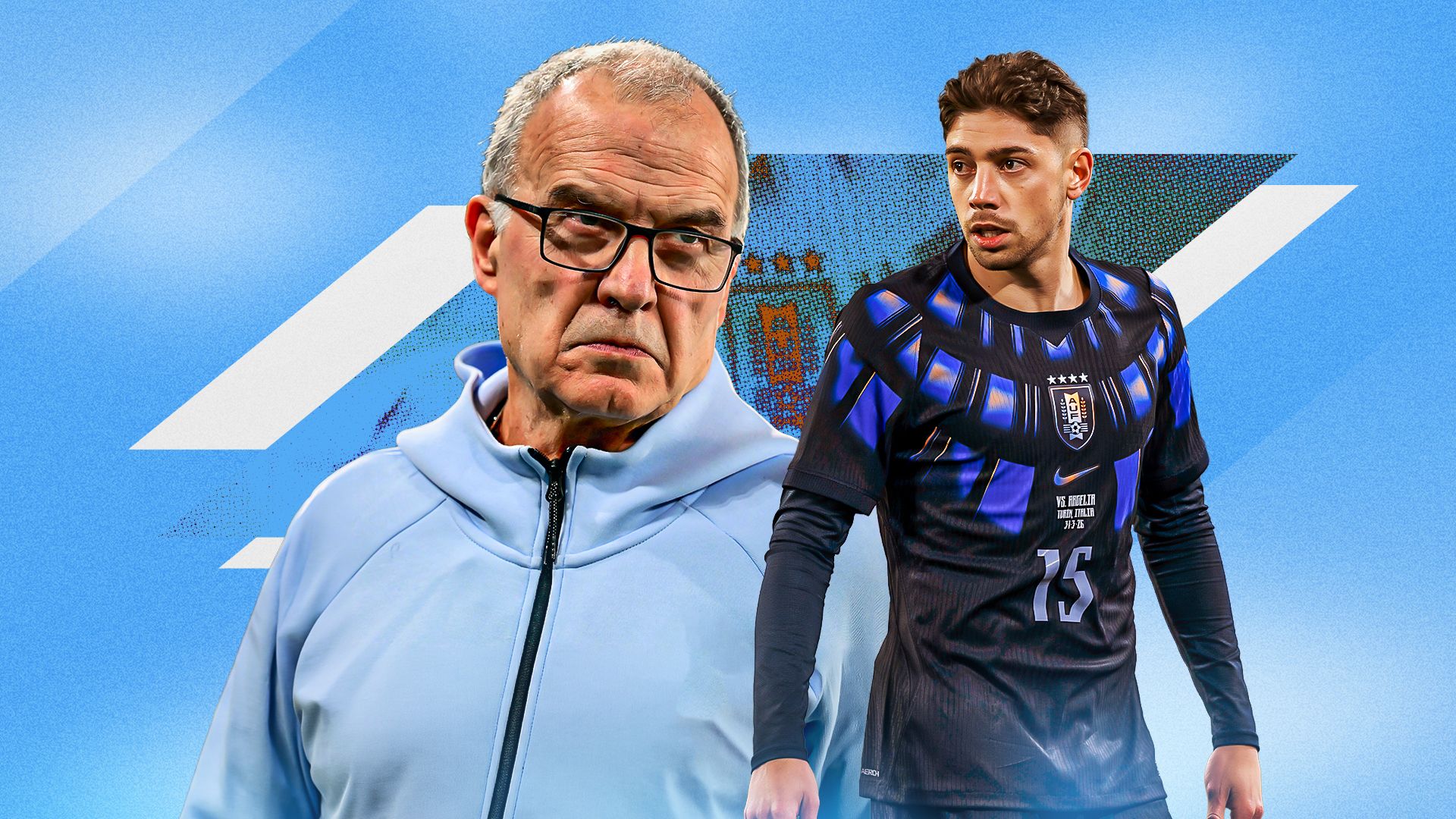

Few coaches in world football command as much admiration as Marcelo Bielsa. From Leeds to Bilbao, supporters and fellow tacticians alike have long celebrated his influence on the modern game. Yet in Uruguay, the story is far more complicated — not because of nationality, but because of personality.
Key Highlights:
- Marcelo Bielsa leads Uruguay into the 2026 World Cup, with his future set to be decided after the tournament as he prepares to step down.
- Historic rise under Bielsa includes wins over Brazil and Argentina, highlighted by a 2-0 victory in Buenos Aires — Argentina’s first home qualifying defeat to Uruguay since 1937.
- Internal tensions emerge after Luis Suárez criticism, raising concerns about Bielsa’s intense management style and player relationships.
- A shock 5-1 loss to the United States exposes inconsistency, reigniting debate over whether Uruguay’s high-intensity system is sustainable on the biggest stage.
Bielsa's Uruguay: A World Cup Gamble for 'El Loco'?
Nicknamed “El Loco”, Bielsa is known for his obsessive intensity and self-described role as a “generator of tension.” For some players, that mentality is inspiring. For others, it becomes overwhelming. That divide has made Uruguay one of the most unpredictable teams heading into the 2026 World Cup, where Bielsa has already suggested he will step down after the tournament.
A Promising Start That Raised Expectations
When Bielsa was appointed in May 2023, he arrived with major expectations following Uruguay’s disappointing early exit at Qatar 2022. Despite being one of the highest-paid coaches in international football, he insisted the move was driven by footballing purpose rather than money, praising Uruguay’s talent and identity.
Early scepticism surrounded his decision to refresh the squad, including the gradual phase-out of legends like Edinson Cavani and Luis Suárez, but results soon began to shift the narrative.
By late 2023, Uruguay stunned the continent with consecutive World Cup qualifying wins over Brazil and Argentina, including a historic 2-0 victory in Buenos Aires — their first away win over Argentina since 1937. Even Lionel Messi acknowledged Bielsa’s influence, praising Uruguay’s intensity and tactical identity. A strong showing at the Copa América, where Uruguay finished third, further reinforced the sense that Bielsa was building something significant.
Tensions Rise Behind the Scenes
Despite early progress, Bielsa’s methods have long been a source of internal friction. The most notable criticism came from Luis Suárez, who publicly expressed discomfort with the environment under the Argentine coach following his international retirement in 2024.
Suárez suggested that players had reached a breaking point with Bielsa’s distant communication style and relentless demands, describing moments of tension within the squad. His comments reflected a growing concern that, while the system was effective, it was also emotionally draining for some players.
Heavy Defeat Raises Fresh Questions
Uruguay’s momentum took a major hit in November, when they suffered a 5-1 defeat to the United States in a friendly match in Tampa. Despite the experimental nature of the fixture, the scale of the loss was impossible to ignore.
Bielsa openly took responsibility, admitting there was “no way to justify the result” and acknowledging that his preparation and tactical setup had failed. The defeat appeared to expose deeper issues around fatigue and intensity — long-standing concerns associated with Bielsa-managed teams.
The Bielsa Paradox: Visionary or Over-Exhaustion?
Bielsa’s coaching philosophy has always demanded extreme physical and mental output, and while it has produced success, it has also raised questions about sustainability. His teams are often admired for their pressing and structure but criticised for fading under prolonged pressure. Even Bielsa himself has admitted the emotional toll of his methods, once describing himself as “toxic” in the way he approaches football — a reflection of his intense self-criticism and perfectionist mindset.
With Uruguay heading into the 2026 World Cup without recent warm-up matches, uncertainty surrounds their readiness. Encouraging results earlier in qualification have been followed by inconsistency, leaving the Celeste as one of the tournament’s biggest unknowns.
A Tournament That Will Define Bielsa’s Legacy in Uruguay
As Uruguay prepare for their opening match against Saudi Arabia, the questions surrounding Bielsa remain unanswered. Is he still a revolutionary thinker capable of transforming teams at the highest level, or has his uncompromising approach reached its limit in modern international football?
What is certain is that the upcoming World Cup will define how his tenure is remembered — as either a final masterpiece or a cautionary tale of intensity pushed too far.