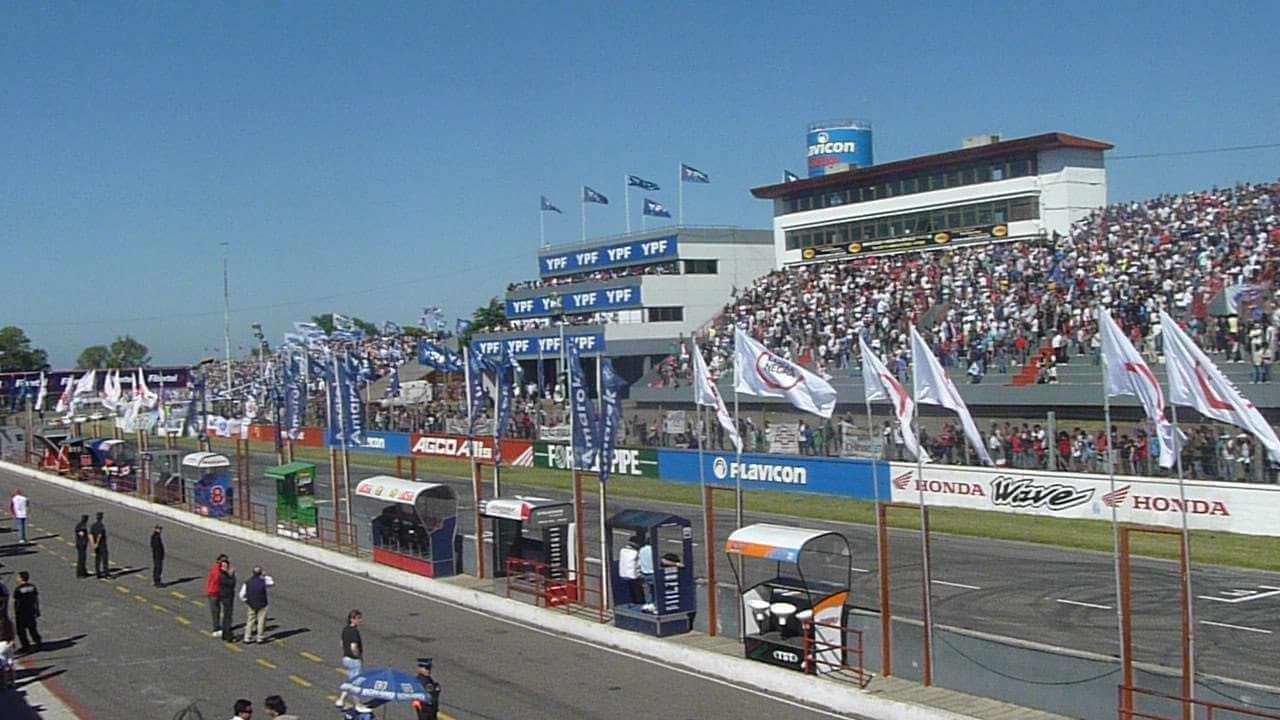

The iconic Oscar y Juan Gálvez Racetrack is undergoing a major transformation as Argentina pushes to re-establish itself on the international motorsport stage.
Backed by the city government of Buenos Aires and construction firm AUSA, the redevelopment project is advancing rapidly, with more than 150 workers operating daily to deliver a modern circuit capable of hosting top-tier events. The redesign is being handled by Tilke Engineers & Architects, a firm widely recognised for its work on many current Formula 1 and MotoGP venues, ensuring the track will meet the latest safety and performance standards.
Construction began in January with the demolition of outdated infrastructure, including the pit building used during Formula 1’s last visit in 1995, along with sections of the old circuit and grandstands. This has cleared the way for a complete redesign focused on improving speed, safety, and the overall spectacle. A new pit complex is already taking shape, measuring 265 metres in length and 23 metres in width, designed to meet modern team and operational requirements.
The revised layout will feature a 4.3 kilometre track tailored for MotoGP, including a notable 7 percent banking at Turn 4 and consistent elevation changes throughout the lap. The scale of the project is substantial, with approximately 295,000 cubic metres of earth moved so far. Performance projections indicate MotoGP bikes could exceed speeds of 330 km/h, with average lap speeds around 185 km/h, suggesting a fast and demanding circuit.
Confidence in the project’s progress has been reinforced by a recent inspection from Carmelo Ezpeleta and Carlos Ezpeleta, whose visit indicated that the circuit is on track to meet MotoGP requirements. Construction is expected to be completed in December, followed by a testing phase between late March and early April next year, positioning the venue to host a round of MotoGP for the first time since 1999.

Source: CNN Indonesia
While MotoGP is the immediate objective, longer-term ambitions include the return of Formula 1. Much of the infrastructure already aligns with F1 standards, with around 95 percent of requirements overlapping. Future modifications would involve extending the circuit to nearly 5 kilometres, particularly around the hairpin section, along with further expansion of the pit facilities, plans that have already been prepared.
An upcoming demonstration event featuring Franco Colapinto is expected to serve as an important test of the city’s readiness to host a Formula 1 race. It will also act as a showcase for officials as Argentina looks to secure a place back on the F1 calendar.
The redevelopment of the Buenos Aires circuit represents a broader effort to restore Argentina’s standing in global motorsport. With MotoGP within reach and Formula 1 a longer-term target, the project is positioning the venue as a modern racing destination capable of hosting the sport’s biggest events once again.
.jpg)