
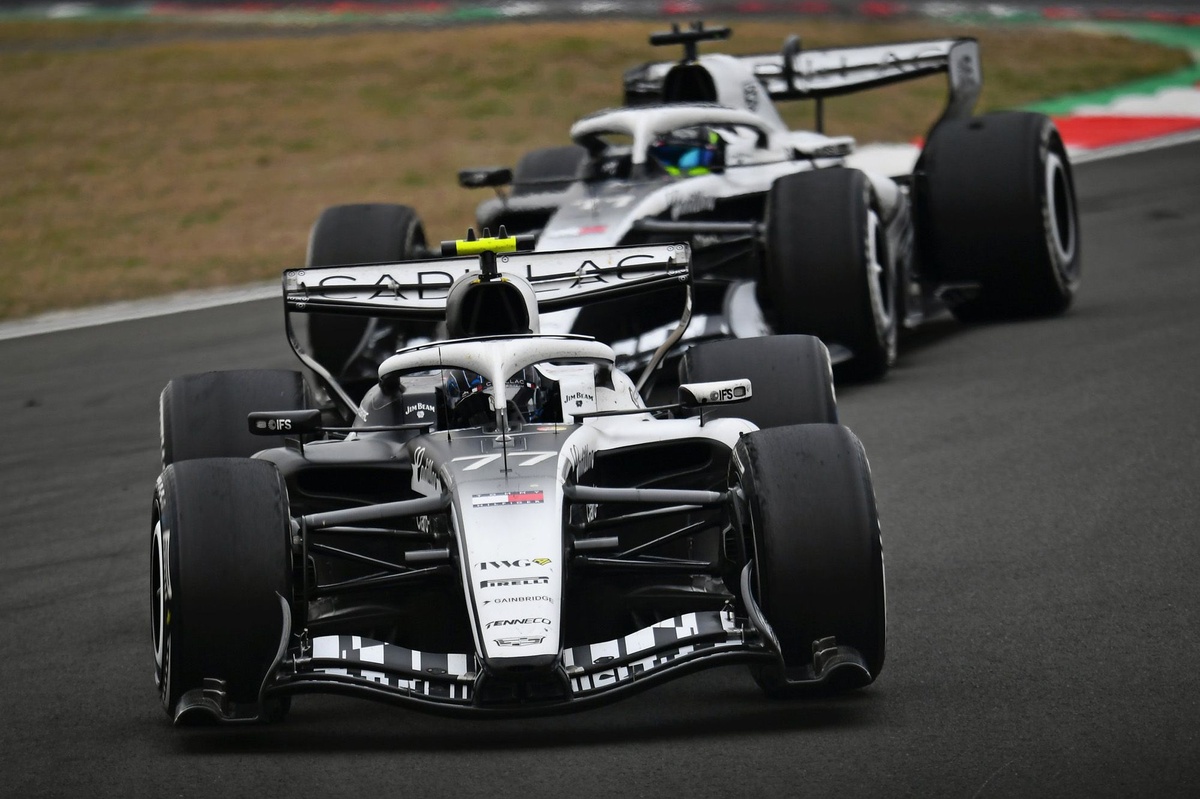

It’s now confirmed—Cadillac Racing has entered the highly competitive world of Formula 1, marking the first new team addition since 2016. Although their debut season has yet to produce points, there’s more beneath the surface than the standings show. Supported by General Motors and led by experienced F1 figures, the American outfit is already turning heads with promising early signs in one of the toughest arenas in motorsport.
Key Points from Cadillac's Debut:
- New Kid on the Block: Cadillac Racing marks F1's first new team in eight years, driven by General Motors' ambition.
- Veteran Leadership: Guided by experienced F1 figures and propelled by star drivers Sergio Perez and Valtteri Bottas.
- Defying the Odds: Showing unexpected pace improvements, notably closing the gap to and even surpassing Aston Martin on occasion.
- Rookie Hurdles: Battling early technical gremlins and persistent energy deployment issues, crucial for competitive performance.
A Bold Entry: Cadillac's F1 Ambition Takes Shape
The acceptance of Cadillac into Formula 1 on November 25, 2024, signaled a new era, fueled by the formidable backing of General Motors and a long-term vision to become a power unit manufacturer by 2029. This is not a fleeting venture but a deeply committed project with roots across four locations in the United States and the United Kingdom, anchored by a main hub in Fishers, Indiana, and a key European base at Silverstone.
Veteran Talent Steering the Ship
Leadership is critical for any new F1 endeavor, and Cadillac Racing has assembled a formidable roster. F1 veterans like former Virgin/Marussia/Manor team boss Graeme Lowdon, and ex-Renault F1 technical directors Rob White and Nick Chester, are at the helm. On track, the team bet big on experience with two of F1's most seasoned drivers: Sergio Perez and Valtteri Bottas. Together, their remarkable 106 podium finishes speak volumes, matching the career totals of legends like Alain Prost or Fernando Alonso. Their combined wisdom is invaluable for a nascent operation.
Defying Expectations: Early Pace & Progress
When a new team enters Formula 1, the default expectation is often a struggle at the back of the grid. The current level of competition is unprecedented, making instant success a near impossibility. Yet, Cadillac Racing is already carving out its own narrative, showing promising signs of progress that hint at a brighter future. While points have eluded them so far – with Bottas' 13th place in China being the highest finish – their battle against established teams is noteworthy.
The Numbers Tell a Story
Intriguingly, Cadillac has found an unexpected rival in Aston Martin. While some of this is attributed to Aston Martin's well-documented performance slump, Cadillac's own data indicates significant improvement. The MAC-26 was 0.6 seconds slower than the AMR26 in Melbourne, but that gap shrunk to 0.2 seconds in Shanghai. Astonishingly, at Suzuka, the Cadillac proved 0.4 seconds faster in one-lap pace. This upward trend is further underscored by their relative performance to the front-runners: their fastest Q1 times evolved from 103.9% of the benchmark in Australia to 102.4% in China and 102.5% in Japan.
"I feel we've gained a bit of load, a bit of stability," Valtteri Bottas remarked after their modest Japan update, which featured a reprofiled diffuser. "It worked as expected. We gained a bit of load, especially on the rear end, and hopefully a bigger step in Miami. We're still lacking a lot compared to the top teams, but at least the direction is right."
Navigating the Rookie Pitfalls
Technical issues are an inevitable rite of passage for any new F1 outfit, even one with experienced personnel and robust facilities like Cadillac Racing. Early races saw recurring fuel system problems, forcing Bottas out of the season opener in Australia and reappearing in China. The good news? The Suzuka weekend was largely trouble-free, a testament to the team's rapid learning curve. Encouragingly, Cadillac has already accrued more race mileage than five rival teams across the initial three Grands Prix, a vital achievement for data collection and reliability testing.
Power Unit Puzzles
Despite the improvements, a significant hurdle remains: energy deployment. This issue has proven costly in terms of lap time, as Sergio Perez lamented after qualifying at Suzuka: "I'm losing around three [tenths] to half a second every single lap that I've done so far on the weekend." Rectifying this complex technical challenge is paramount for unlocking further performance gains.
The Road Ahead: Development Demands
Let's be realistic: joining the midfield anytime soon presents a monumental challenge for Cadillac Racing. Their current deficit to the Q2 cutoff time consistently sits at around 1.3 seconds. However, this gap also represents a unique opportunity. The MAC-26's initial car concept was signed off early to meet strict deadlines, meaning it's inherently more basic than its rivals. This "simplicity" provides the largest margin for development, particularly as the car primarily lacks rear downforce, limiting setup options.
Cadillac has wisely planned a consistent stream of upgrades throughout the season, with a particular focus on early improvements. As Sergio Perez articulated, "It has been very promising, but on the other hand, we also look at the lap times and we can see that we need to develop. Develop means outdeveloping our rivals, which is quite a hard thing to do in Formula 1. That's the biggest challenge that Cadillac as a team faces, because these teams have been here for a while."
He continued, "We really need our A-game, and now is the time where we all have to prove that we can do it as a team. But I believe that we have a good structure, the team is in a good place, and hopefully when we start to develop, we can make significant steps. We all want to see massive progress, and we want to start closing up the gap right now." The journey for Cadillac Racing in F1 is just beginning, filled with both immense challenges and tantalizing potential.