
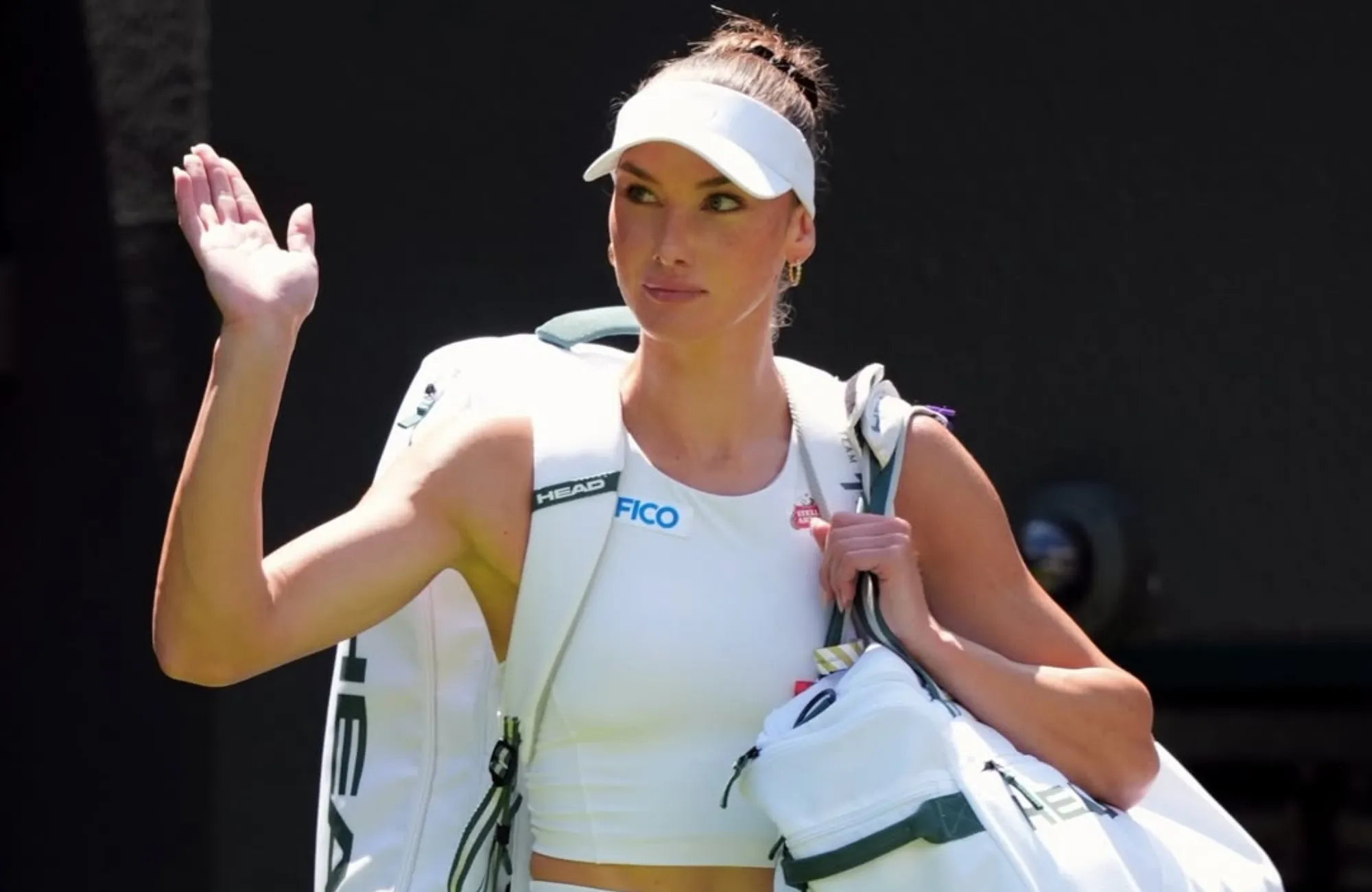

Canadian tennis player Carson Branstine has sparked discussion across the sport after sharing a candid critique of life on the professional circuit. In a viral TikTok video, the 24-year-old offered a blunt perspective on the realities faced by players outside the top rankings.
Branstine, whose career-high ranking is No. 172, used a series of satirical scenarios to highlight the gap between tennis’ glamorous image and the daily struggles experienced by many professionals. Her message focused on the financial pressure, limited support, and uneven treatment within the sport.
One of her main concerns was the high cost of pursuing a career in tennis. Travel, coaching, and accommodation expenses often fall entirely on players, leaving those without strong financial backing at a disadvantage. Branstine pointed out that many are forced to compete without proper support systems, making it difficult to sustain a career.
She also raised questions about consistency in anti-doping rulings. Without naming individuals, she suggested that higher-ranked players may receive more lenient treatment compared to those lower down the rankings. Her comments echo past cases involving Iga Swiatek, who received a short suspension after testing positive for a banned substance linked to contamination, and Tara Moore, who was handed a longer ban under different circumstances. The contrast has fueled ongoing debate about fairness in enforcement.
Injuries and scheduling were also highlighted as major concerns. Branstine, who recently dealt with a shoulder injury during qualifying for the Australian Open, noted that players often receive limited financial or medical support while sidelined. With a demanding calendar and minimal off-season, recovery time is scarce, increasing the risk of long-term physical strain.
Branstine’s own career reflects the challenges she described. She has previously funded her journey through modeling while continuing to compete, even qualifying for Wimbledon Championships. Her comments have resonated with many within the sport and renewed calls for structural changes.
By speaking openly, Branstine has brought attention to issues that are often overlooked. Her remarks highlight the need for a more balanced system that supports players at all levels, not just those at the top.