

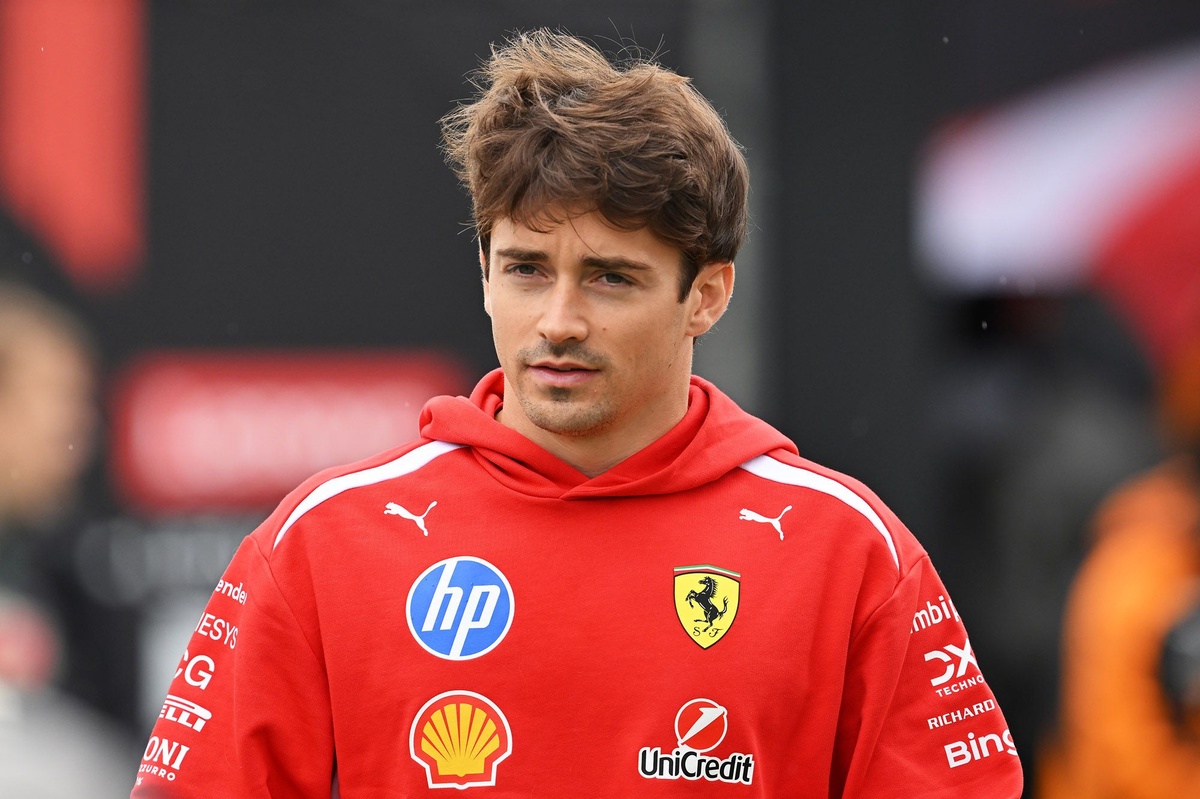

The Canadian Grand Prix delivered drama, but for Charles Leclerc, it was a stark wake-up call, branding it the 'most difficult weekend' of his illustrious Formula 1 career. Despite a P4 finish, the Ferrari ace was miles off the pace, looking to teammate Lewis Hamilton's data for answers.
Key Takeaways from Montreal
- Charles Leclerc called the Canadian GP his "most difficult weekend" ever in Formula 1.
- Lewis Hamilton significantly outperformed him, securing a P2 finish for Ferrari in 2026.
- Leclerc plans to meticulously analyze Hamilton's data to understand his own struggles with car feel and tire management.
- Circuit Gilles Villeneuve is highlighted by Leclerc as a "bogey track" that clashes with his driving style.
A Candid Admission from the Ferrari Ace
Finishing P4 sounds like a respectable points haul, but for Charles Leclerc at the Canadian Grand Prix, it felt like a hollow victory. He finished over 30 seconds behind his teammate Lewis Hamilton, who took a stunning second place. Leclerc's high finish was primarily due to strategic mishaps from McLaren and a retirement from race leader George Russell.
"It was a horrible, horrible weekend," a dejected Leclerc stated post-race. He doubled down on earlier comments, asserting it was "the most difficult weekend of my Formula 1 career so far." This stark admission underscores the depth of his struggles, particularly concerning his inability to get the tires into the optimal operating window.
The Unraveling Weekend
The Monegasque driver's issues weren't confined to Sunday. He was out-qualified by Lewis Hamilton for both the sprint and the main grand prix, starting P8 to Hamilton's P5. This consistent lack of pace across all sessions painted a clear picture of a driver struggling to connect with his Ferrari SF-26.
Hamilton's Breakthrough: A New Approach Pays Off
In stark contrast to Leclerc's woes, Lewis Hamilton delivered his best Grand Prix result since joining Ferrari in 2025, taking a brilliant second place. Hamilton's performance in Canada highlighted a rare moment where he decisively outshone his younger teammate, providing a critical benchmark.
Interestingly, Hamilton's success came after a strategic change: opting not to use Ferrari's simulator. He felt the simulator lacked real-world correlation at certain tracks, an approach he also used for his only other podium in 2026 at the Chinese Grand Prix. This bold move appears to have paid dividends, offering a fresh perspective on car setup.
Decoding the Data
For Leclerc, Hamilton's stellar drive offers a unique learning opportunity. "The only positive of the weekend is that I've got Lewis in the same car," Leclerc admitted. He plans to delve deep into Hamilton's telemetry to "try to get answers on why I was just struggling so much." This data comparison will be crucial for understanding fundamental differences in setup or driving approach that led to such a performance disparity.
The "Bogey Track" Conundrum
Leclerc also points to Circuit Gilles Villeneuve as a particular challenge for his driving style. He considers Montreal, alongside Melbourne, a "bogey track" where the rhythm of corners doesn't align with his natural feel. Coupling this with Friday's brake issues meant he never found his rhythm early on, which compounded into a weekend-long struggle.
"I just had zero feeling and I couldn't take the rhythm – today was no exception!" he exclaimed. While tires were a factor, Leclerc emphasized that they were the same for everyone, meaning his lack of feeling was unique to his interaction with the car and circuit.
What This Means for Ferrari's Championship Push
Despite the difficult weekend, Charles Leclerc holds P3 in the drivers' championship, just three points ahead of Lewis Hamilton in P4. Ferrari maintains P2 in the constructors' standings, albeit 72 points behind Mercedes. Recovering from such a challenging event is paramount for Leclerc and the Scuderia to maintain their strong championship position. Analyzing Hamilton's data isn't just about personal improvement; it's about optimizing both Ferrari cars to challenge at the front consistently.


