
Forget what you thought you knew about pickleball – in China, it's not just a sport, it's a national phenomenon reshaping cities, industries, and social landscapes at lightning speed. What started as a niche activity has quickly become a mass-participation event, electrifying millions and capturing the imagination of an entire nation.
Key Takeaways from China's Pickleball Surge
- Explosive Growth: Over 8 million regular players, with projections reaching 30 million, underscore pickleball's rapid adoption across China.
- Hebi: The Unlikely Epicenter: The city of Hebi didn't just embrace pickleball; it built an empire of 1,600 courts by 2025, becoming the sport's undisputed capital.
- Economic Juggernaut: Beyond recreation, pickleball is fueling local economies, creating a robust supply chain from raw materials to high-end gear.
- Urban Innovation: Cities nationwide are creatively repurposing spaces, from under-highway parks to high-rise courts, making the sport accessible everywhere.
The Unstoppable Surge: China Embraces the Paddle Sport
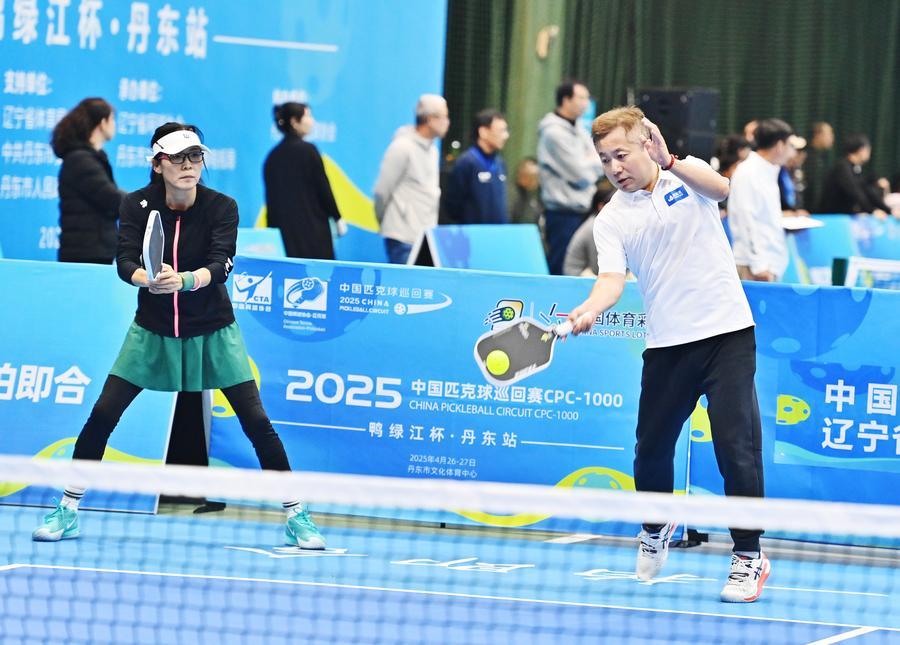
The numbers tell an astonishing story. Pickleball in China has surged beyond all expectations, with 10 provincial-level regions integrating it into their mass-participation sports events this year alone. The China Pickleball Circuit, a mere concept in 2024 with 80 stops, now boasts an incredible 1,000 venues nationwide. With 8 million regular players and 20 million having tried the sport, experts predict this figure could hit 30 million.
Hebi: The Heartbeat of China's Pickleball Revolution
At the forefront of this movement is Hebi, a city that has defied expectations to become the sport's unlikely capital. By 2025, Hebi had constructed an astounding 1,600 courts, creating one of the densest pickleball networks on the planet. The rhythmic thwack of paddles is now a daily soundtrack along the Qi River, symbolizing a community completely captivated by the game.
For residents like Zhang Shaohua, who picked up the sport in 2024, pickleball has transitioned from a trend to a way of life. She's not just a player; she's an organizer, establishing a vibrant players' community and even building her own venue. This grassroots enthusiasm is the true engine of Hebi's success.
Beyond the Court: An Economic Powerhouse Emerges
Hebi’s leaders quickly recognized pickleball's potential far beyond recreation. Zhao Hongyu, secretary of the CPC Hebi Municipal Committee, articulated a vision where the sport elevates the city's brand, connecting it nationally and internationally. This strategic foresight has paid off.
Leveraging its existing industrial base – from coal chemicals to rubber and plastics – Hebi has rapidly built a comprehensive pickleball supply chain. Companies like Henan Geli Sports Goods Co., Ltd. are at the forefront, churning out paddles, nets, and flooring. General manager Xing Weimin reports booming export sales to Europe, the Americas, and Southeast Asia, with sales exceeding 25 million yuan in 2025 and projected to double in 2026. This is a powerful testament to pickleball's economic impact.
Cities Get Creative: Innovative Spaces for Pickleball
The pickleball phenomenon isn't confined to Hebi. Cities across China are finding ingenious ways to integrate the sport into their urban fabric:
- Hangzhou transformed neglected space beneath an elevated highway into a sprawling 6,000-square-meter pickleball park.
- Beijing's Fengtai District repurposed a basketball arena into a dynamic pickleball club, now home to the popular Beijing Pickleball Super League.
- Suzhou unveiled an impressive 23-court complex, catering to its growing player base.
- Perhaps most spectacularly, Nanjing built courts on the 51st floor of a shopping mall, offering breathtaking city views alongside intense play.
These innovative venues highlight the adaptability and widespread appeal of pickleball, turning previously underutilized spaces into bustling community hubs.
The "Three Lows and Three Highs": Why Pickleball Connects
The secret to pickleball's meteoric rise lies in its unique blend of accessibility and profound benefits, eloquently summarized by Bai Xilin as the "three lows and three highs."
- Low Barrier to Entry: Easy to learn, welcoming to all skill levels.
- Low Cost: Minimal equipment required, making it affordable for everyone.
- Low Risk: A gentler sport, reducing injury concerns for diverse age groups.
- High Social Value: Fosters community, interaction, and new connections.
- High Overall Benefits: Provides excellent physical exercise and mental engagement.
- High Safety Ratings: Enjoyable for all ages without excessive strain.
This potent combination has cemented pickleball's place as more than just a game; it's a lifestyle enhancer.
A Global Game with Chinese Roots
Pickleball's international trajectory mirrors its domestic explosion. It's been the fastest-growing sport in the United States for five consecutive years and is rapidly gaining traction in Southeast Asia. Hebi itself has become a global destination, hosting the 2025 Hebi Invitational, which welcomed players from 14 countries.
Earlier this year, a cultural exchange saw American students and teachers visit Hebi, engaging in friendly matches and cultural immersion. This demonstrates pickleball's power as a bridge, fostering international goodwill and connection.
Pickleball in China is no fleeting trend. It is a powerful force, reshaping cities, galvanizing industries, and building communities with unmatched energy. While Hebi may have ignited the fuse, the explosive momentum is now undeniably nationwide. With millions already swinging paddles, pickleball is set to become one of China's defining recreational and economic movements of the decade.