
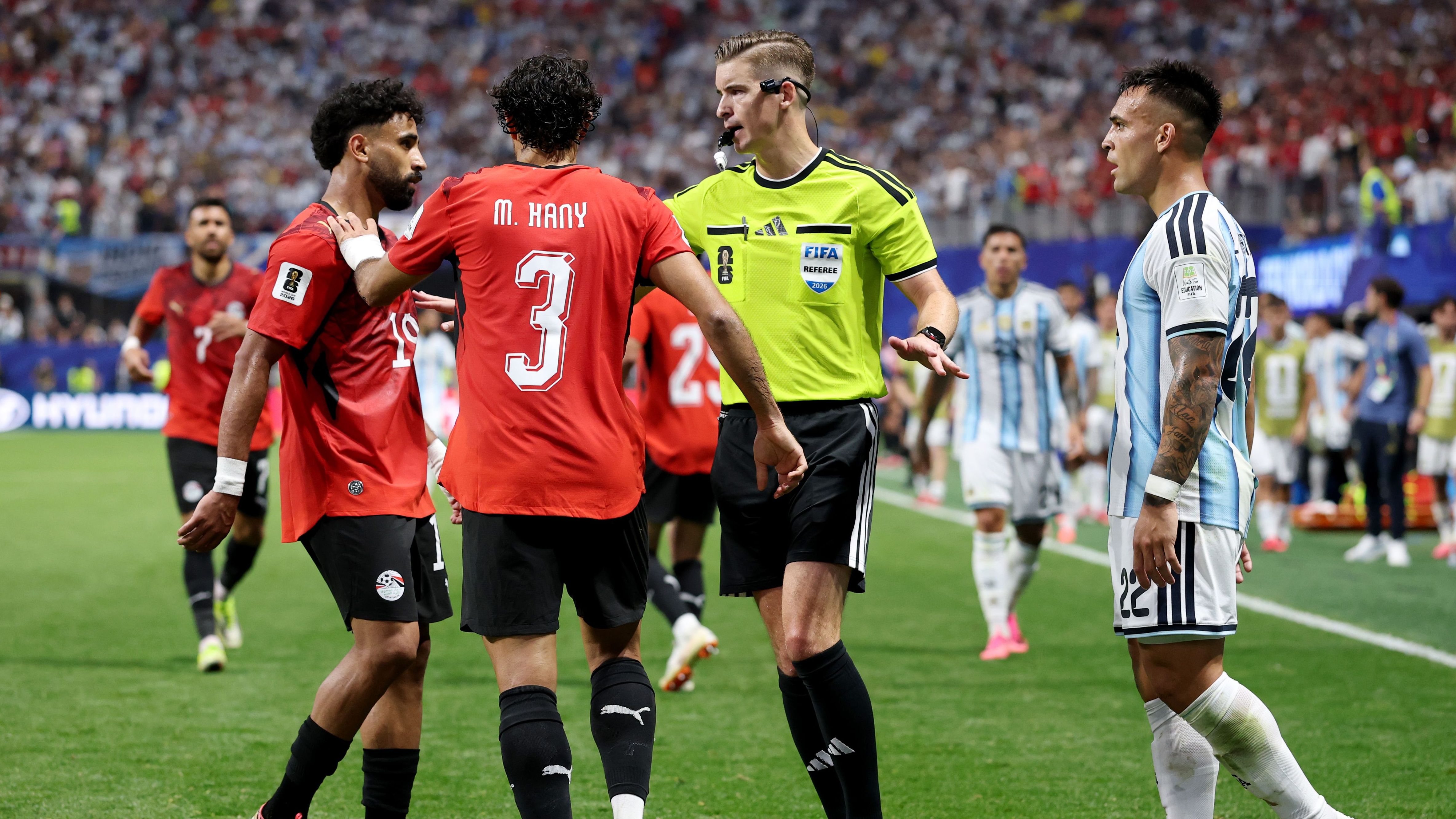

Egypt's dramatic 3-2 defeat to Argentina sparked widespread controversy after the Egyptian Football Association (EFA) issued a strongly worded statement calling for a full investigation into what it described as biased and technically flawed officiating. The federation also suggested there had been a pattern of "double standards" during the match.
Key Points:
- FIFA refereeing chief Pierluigi Collina firmly rejected Egypt's claims of biased officiating following their controversial 3-2 World Cup defeat to Argentina.
- Collina defended the use of VAR, explaining that Mostafa Zico's disallowed goal was correctly ruled out due to an earlier foul by Marwan Attia.
- He dismissed suggestions of outside influence, insisting that FIFA's refereeing department operates independently and without interference.
- Collina also backed the decision not to award Mohamed Salah a penalty, describing the challenge involving Julian Alvarez as "normal football contact."
World Cup Refereeing Under Intense Scrutiny
Pierluigi Collina, FIFA's head of refereeing, was quick to respond to the allegations. He insisted that "nobody can question the integrity" of World Cup officials, describing Egypt's accusations as "unfounded." He also warned that such claims could have serious consequences, potentially exposing referees and their families to abuse and threats.
The VAR Conundrum: Unpacking Egypt's Disallowed Goal
Much of Egypt's frustration centered on Mostafa Zico's disallowed goal, which could have dramatically changed the course of the match. Many supporters, along with the Egyptian camp, questioned why VAR intervened so late in the attacking sequence.
Collina explained that the decision was made under the attacking possession phase (APP) protocol. He confirmed that officials correctly identified an earlier foul by Marwan Attia on Lisandro Martinez, making the goal invalid. According to Collina, a foul remains a foul regardless of how much time or distance separates the incident from the eventual goal, allowing VAR to intervene appropriately.
Dispelling Myths: No Outside Influence at FIFA
Speculation surrounding external influence is common during major tournaments, but Collina firmly rejected any suggestion that refereeing decisions could be swayed. While acknowledging unrelated situations, such as U.S. President Donald Trump's involvement in a separate player's ban, he stressed that neither FIFA President Gianni Infantino nor anyone else has influence over officiating decisions.
He reaffirmed that FIFA's refereeing department operates with complete independence to ensure fairness across every match. Collina also praised Infantino for consistently supporting that autonomy, adding that referees, like players and coaches, always aim to make honest decisions.
Salah's Appeal & The "Normal Contact" Ruling
Egypt manager Hossam Hassan was particularly critical after the match, alleging that decisions favoured the defending champions. He also questioned why a potential foul on Mohamed Salah inside the penalty area, moments before Argentina's winning goal, was not reviewed more favourably.
Once again, Collina defended the officials' decision. He said both the referee and VAR determined that the contact between Mohamed Salah and Julian Alvarez amounted to "normal football contact." While acknowledging that some refereeing decisions will always involve a degree of subjectivity, Collina said he was satisfied with how this principle has been applied throughout the tournament.

.png)