
The American Dream Meets Grand Prix Ambition
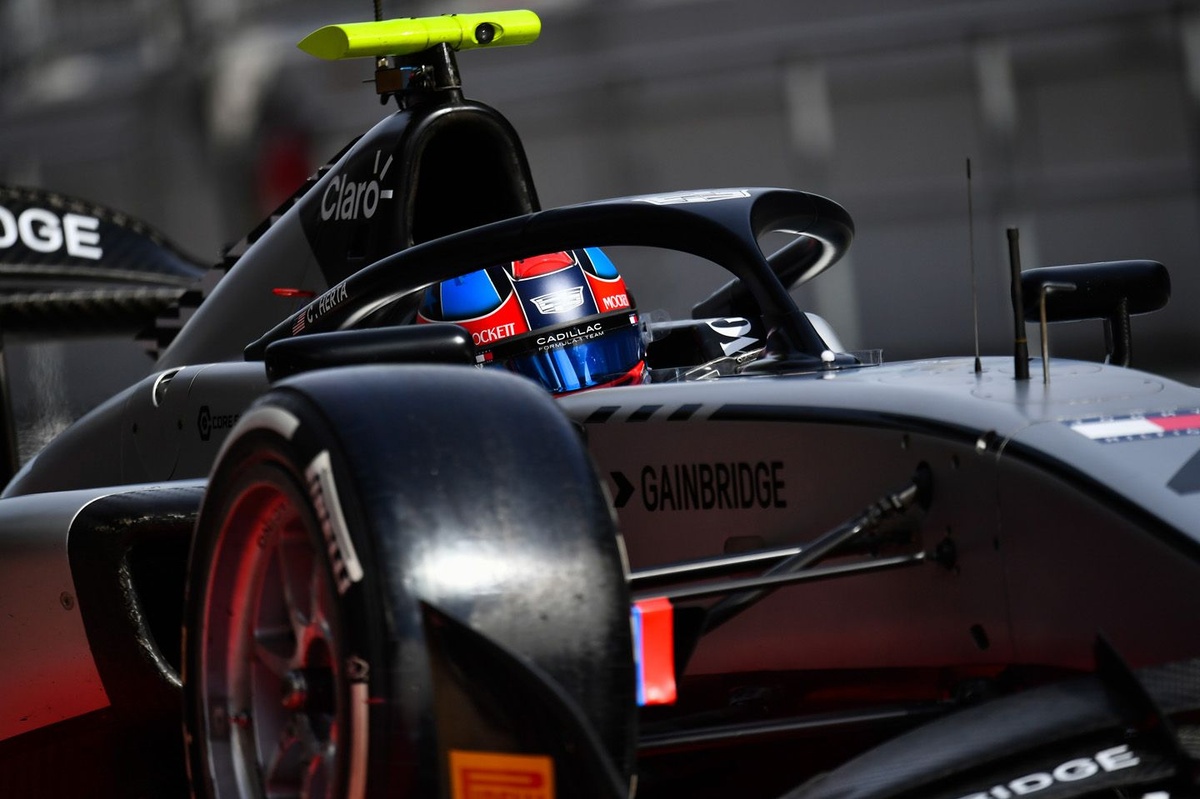
The siren song of Formula 1 beckons, and Colton Herta is convinced his blistering raw speed is the key to unlocking an American dream with Cadillac F1. The IndyCar sensation believes his one-lap pace, proven consistently across challenging road courses, makes him a prime candidate for a top-tier Grand Prix drive. But the road to F1 is notoriously tough, and Herta faces a demanding audition in F2.
Key Points:
- Colton Herta is staking his Formula 1 future on his exceptional outright pace, a hallmark of his IndyCar career.
- He's joined Cadillac F1 as a test driver, with a potential race seat hinging on his F2 performance and development.
- Cadillac demands a top-10 F2 finish and strong showings in FP1 sessions, starting at Barcelona.
- Despite a challenging F2 debut in Melbourne, Herta remains focused on adapting to the new machinery and Pirelli tires.
For years, American racing fans have craved a homegrown hero in Formula 1. Now, IndyCar sensation Colton Herta is on the cusp, transitioning to F2 with a clear goal: impress Cadillac F1. This isn't just a development role; it's a high-stakes audition for a potential race seat with the sport's newest entrant.
Cadillac F1 CEO Dan Towriss has laid down a demanding challenge. Herta must finish in the top 10 of the F2 standings this season, demonstrate progress in the team's simulator, and prove his mettle in upcoming FP1 sessions, with the first scheduled for Barcelona. The path is clear, but the climb is steep.
Herta's Ace Card: Unrivaled One-Lap Pace
When asked to articulate his primary qualification for an F1 seat, Herta didn't hesitate: "It's probably just down to outright speed, right? That's the most important thing." He points to his stellar IndyCar record, which boasts an incredible 16 pole positions. This demonstrates a consistent ability to extract maximum performance over a single lap.
Crucially, 15 of those poles were secured on road courses. This statistic is vital, as road circuits are far more analogous to the challenging layouts found on the Formula 1 calendar than the ovals that define much of IndyCar racing. Herta's knack for mastering traditional race tracks could be a significant advantage.
Navigating the F2 Learning Curve
The transition to F2 has not been without its bumps. Herta's debut weekend in Melbourne proved a baptism by fire. An early crash in practice severely hampered his preparation, leaving him to qualify a distant 14th. Despite the setback, he showcased his fighting spirit, battling through the field to secure a respectable seventh-place finish in the feature race, opening his points account.
"I had the crash in practice, which just put our whole weekend a step behind everybody else," Herta reflected. The unfamiliar Pirelli tires and circuits present a steep learning curve. He acknowledged the importance of qualifying well in F2 to maximize points opportunities from the reverse grid format, an area he's determined to improve upon.
The Road Ahead: Proving Ground for Grand Prix Glory
With 13 rounds remaining, Herta's focus is squarely on rapid adaptation and consistent performance. The upcoming F2 schedule includes unexpected North American stops in Miami and Montreal, offering a chance to shine closer to home. However, the Montreal race unfortunately clashes with the iconic Indy 500, preventing Herta from participating in one of motorsport's greatest spectacles.
Herta's journey is a compelling narrative of ambition, talent, and the relentless pursuit of a Formula 1 dream. His raw speed is undeniable, but success in F2 will require mastering every aspect of the European racing scene – from tire management to qualifying execution. The world will be watching to see if this American talent can convert potential into a coveted Cadillac F1 seat.