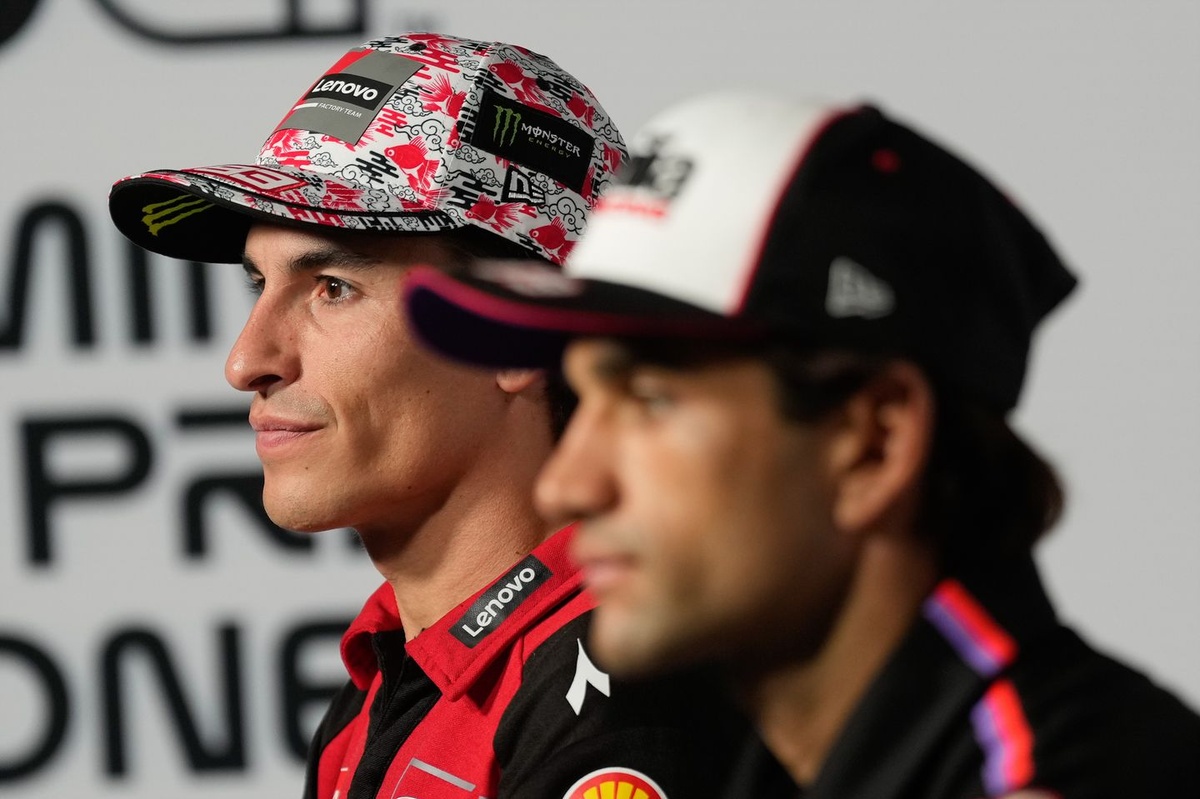



The message is loud and clear: Ducati might have conquered Jerez with Alex Marquez, but the Borgo Panigale factory is far from satisfied. The post-race test saw an aggressive push, signaling a relentless pursuit of perfection that could reshape the MotoGP grid. This isn't just tweaking; it's a full-blown revolution.
Key Innovations from Jerez Test:
- Radical New Fairing: A wider, more aggressive front-end design, moving away from previous shapes.
- Revised Aero Wings: Thicker lower wings and narrower upper wings for enhanced front-end contact.
- Advanced Swingarm: A hybrid metal and carbon-fibre structure hints at significant chassis evolution.
- Optimized Airflow: Redesigned intake slots and diffuser elements maximize aerodynamic efficiency.
Ducati's Relentless Pursuit of Perfection
Even after a triumphant weekend, Ducati proved its commitment to relentless innovation at the Jerez post-race test. Rather than basking in Alex Marquez's dominant victory, the factory immediately shifted focus to future performance. This aggressive development strategy underscores Ducati's ambition to maintain its edge in MotoGP.
The sight of Marc Marquez on a Desmosedici adorned with unpainted composite parts sent a clear signal across the paddock. These weren't minor adjustments; they were substantial upgrades aimed at unlocking previously untapped potential. It’s a bold move, demonstrating a "no stone unturned" philosophy.
Marc Marquez Unleashes the Beast: Front-End Revolution
The most striking changes appeared at the front of the Desmosedici, where Marc Marquez was tasked with evaluating a completely re-engineered aerodynamic package. This overhaul suggests Ducati's engineers are seeking to fundamentally alter how the bike interacts with the air, enhancing stability and turning performance.
Fairing and Wing Overhaul
A brand-new fairing immediately caught the eye. Its wider profile now extends right to the edges of the front wing, pushing aggressively forward towards the airbox. This design departs dramatically from the previous "arrow-like" silhouette, indicating a strategic shift in aerodynamic philosophy.
The wing elements themselves have also undergone significant revision. The lower wing now boasts a noticeably thicker leading edge, while the upper wing features reduced incidence and a narrower chord. This intricate redesign by Gigi Dall'Igna’s aerodynamic department appears geared towards creating a greater contact surface, optimizing front-end behavior and grip.
Redesigned Airflow Dynamics
Further enhancing the front-end performance, the intake slot has been completely redesigned. It sheds its former tuning-fork shape, adapting precisely to the altered airflow generated by the new fairing and wing setup. Every detail is meticulously crafted for maximum efficiency.
Beneath the fairing, the diffuser continues its crucial work, channeling a substantial volume of air. This system is now further optimized by an innovative upper blowing solution. The goal is clear: improve airflow filling and boost overall aerodynamic efficiency, creating a Venturi-like effect as the gap to the central bodywork appears reduced.
Beyond Aero: Chassis Upgrades Signal Intent
While aerodynamics often grab the headlines, Ducati's development push extended deep into the chassis. These structural changes highlight a comprehensive approach to extracting every ounce of performance from the Desmosedici.
The Swingarm Revelation
Perhaps the most telling sign of Ducati's deep dive into development was the revised swingarm. This innovative component combines a robust metal structure with new carbon-fibre coverings. Such a significant modification to a core chassis element underscores the extensive nature of Ducati’s engineering efforts.
Other subtle yet crucial details were also observed. The fairing’s step and vertical side panel remain, but with more rounded edges. A larger, less vertical air intake now sits beneath the step. Interestingly, Ducati has retained its controversial leg wings, a design previously debated, showcasing their commitment to proven performance gains.
Enduring Elements and Future Flex
Not every rider tested the radical new components. Francesco Bagnaia and Alex Marquez continued to evaluate a more familiar aerodynamic configuration. This package, identified by its stepped fairing and smoother lower section, was initially seen in pre-season at Sepang. Its re-evaluation confirms Ducati's methodical approach, ensuring all viable options are explored.
Why This Matters: A Glimpse into 2026 Dominance?
This aggressive development cycle, even after a dominant win, isn't just about the next race. It’s about securing Ducati's long-term supremacy in MotoGP. The sheer scale of the changes, particularly the integration of new chassis and aerodynamic elements, suggests a forward-thinking strategy for the seasons to come.
Ducati is sending a strong message: resting on past glories is not an option. Their proactive innovation at Jerez indicates a clear intent to push boundaries, staying ahead of the competition and laying the groundwork for sustained success, potentially even eyeing rule changes down the line. The future of MotoGP racing just got a whole lot more exciting, courtesy of Borgo Panigale!