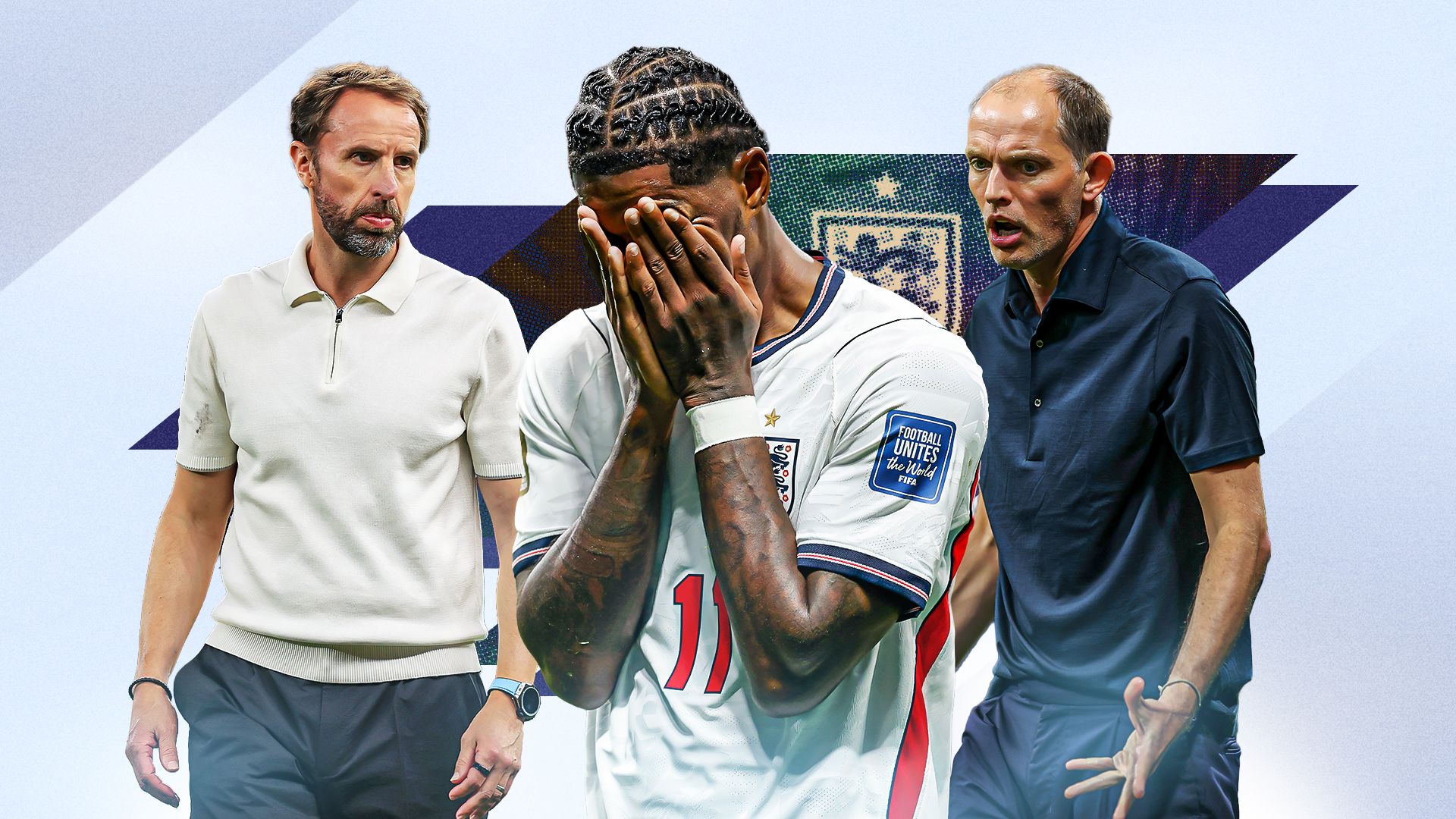

The narrative around England football keeps hitting the same brick wall: a team brimming with talent that often plays with the handbrake on. Despite a change in management, the Three Lions still seem to be battling an internal struggle, relying on bursts of individual genius rather than collective attacking dominance.
Key Takeaways: England's Persistent Problem
- Individual Brilliance vs. Collective Caution: England consistently relies on Jude Bellingham and Harry Kane to bail them out, masking a risk-averse team approach.
- Tuchel's Echoes of Southgate: Manager Thomas Tuchel's system, while aiming for solidity, appears to reinforce the cautious play that defined Gareth Southgate's later years.
- Creative Spark Sidelined: Players known for their unique flair, like Phil Foden and Trent Alexander-Arnold, are often overlooked for more "disciplined" options.
- The "Weight of the Shirt" Endures: Despite managerial changes, the collective seems to shrink in high-pressure moments, a pattern tragically familiar to England fans.
The Ghost of Euros Past Haunts the Three Lions
Euro 2024 was a strange campaign for England. They reached the final without ever truly convincing, scraping through games with draws, narrow wins, and the occasional Jude Bellingham or Harry Kane moment of magic. It was a masterclass in pragmatism over panache.
The final against Spain starkly illustrated this issue. With the score locked at 1-1 in the dying minutes, England famously retreated. From a Kyle Walker throw-in in the 75th minute to full-time, Spain dominated, completing 105 passes to England's 27, ultimately snatching a late winner. The Three Lions froze when they needed to push hardest.
Tuchel's Reign: A Familiar Cautionary Tune
Fast forward to the recent World Cup round of 16 match against DR Congo, and the alarm bells are ringing again. England started flat, struggled for rhythm, and conceded after just seven minutes to a clinical counter-attack. The early discussion around Djed Spence's defending missed the bigger picture: why was the team so passive to begin with?
Only when chasing the game did England show some life, but even then, it felt tentative. Yoane Wissa even hit the post, nearly putting DR Congo 2-0 up. Attacking ideas were scarce, often boiling down to "give the ball to Bellingham and hope for the best." Centre-back Ezri Konsa ended up making the most passes into the final third, a telling statistic.
Over-Reliance on Star Power: The Kane & Bellingham Show
Once again, individual brilliance masked collective shortcomings. Harry Kane emerged as the hero, scoring twice in the final 15 minutes to secure a win. While his goals were sublime, his individual excellence shouldn't be consistently required to paper over cracks.
England has scored eight goals at this World Cup so far; Kane and Bellingham have combined for seven. The team is disciplined and tidy, yes, but often tepid. They hold possession but do little with it, frequently resorting to hopeful crosses. Manager Thomas Tuchel may deny "fear," but the statistics paint a different picture.
A Philosophical Stalemate: Spark vs. Solidity
Tuchel's philosophy emphasizes wide players, strong strikers, and creative attackers, yet he also shows a strong preference for risk-aversion. He reportedly left players like Phil Foden, Cole Palmer, and Trent Alexander-Arnold out of the squad because they are "position-less" and might offer a spark that isn't worth the perceived defensive risk.
This approach, while aiming for solidity, inadvertently reinforces the deep-seated insecurities within the England squad. It's a difficult tightrope walk. Southgate started with solidity, perhaps overcorrected, and ended up feeling more like a patriotic caretaker. Tuchel aims for a happy medium, empowering stars while seeking collective buy-in.
England's Enduring Enigma: New Manager, Same Old Story?
Ultimately, Thomas Tuchel is a shrewd tactician, arguably more capable than Gareth Southgate in that department. However, he seems to be steadily exposed to the fundamental flaw of this England team: they are too scared to fully express themselves.
The pattern of "glorious failures" from Russia 2018 through Germany 2024 continues. Despite a new voice and a different tactical mind, the Three Lions still struggle to shed the collective fear and hesitation that has plagued them for years. It's a bitter pill for fans, but perhaps it's time to admit: meet the new England, same as the old England.