
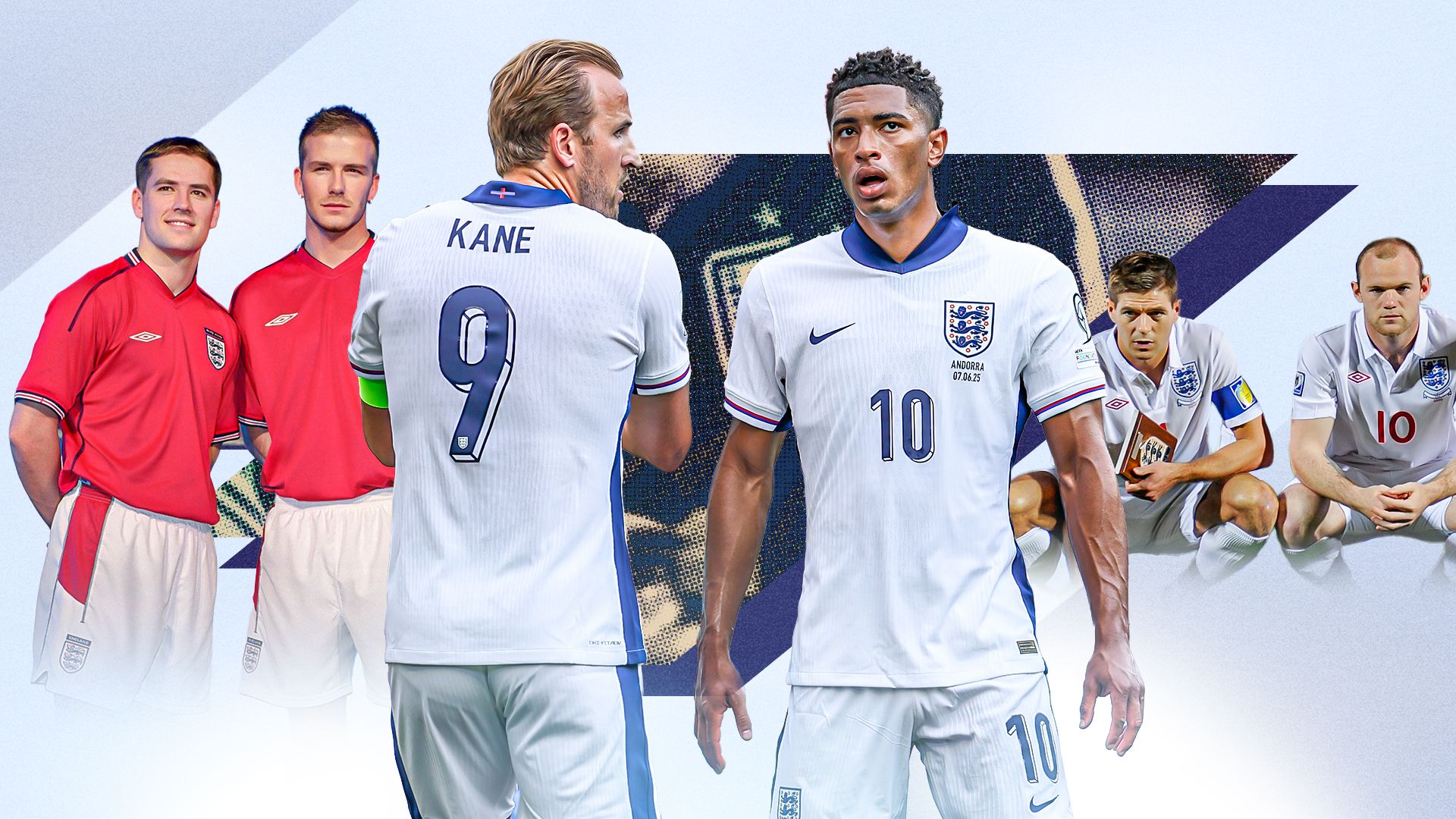

The England national team consistently ignites passion and debate, especially when it comes to the World Cup. We've seen moments of pure brilliance, heartbreaking exits, and squads that promised the world but delivered disappointment. But which Three Lions squad of the 21st century truly stacked up as the strongest?
Here's how we rank England's World Cup squads from the turn of the millennium to the highly anticipated 2026 campaign.
Key Takeaways:
- England's 2006 squad, featuring legends like Gerrard and Lampard, remains arguably the most talented but lacked cohesion.
- Gareth Southgate's 2018 side masterfully overperformed, reaching the semi-finals against expectations.
- Thomas Tuchel's projected 2026 squad aims for a pragmatic balance, boasting immense top-end quality.
- Early 21st-century campaigns were often hampered by injuries, tactical missteps, or a lack of crucial depth.
The Painful Nadir: 2014's Forgotten Campaign
There's little fondness for England's 2014 World Cup campaign. What appeared on paper to be a tricky but navigable group with Italy, Uruguay, and Costa Rica quickly became a nightmare. Back-to-back losses against Italy and Uruguay saw the Three Lions mathematically eliminated before their final group game.
The squad was an awkward blend of aging stars past their peak and promising youngsters not yet ready. While Steven Gerrard captained, his heartbreaking Liverpool season was still fresh. Wayne Rooney and Frank Lampard were shadows of their former selves. The youthful exuberance of Daniel Sturridge and Raheem Sterling couldn't mask a defensively suspect unit, marshalled by Gary Cahill and Phil Jagielka, which was never truly World Cup standard.
Golden Generation's Fading Echoes: England in 2010
The 2010 World Cup squad in South Africa represented a twilight period for England's much-hyped 'Golden Generation.' Manager Fabio Capello faced an immediate setback with captain Rio Ferdinand's injury before the tournament even began, forcing a defensive reshuffle. Crucially, both Rooney and Gareth Barry went into the tournament nursing injuries, severely limiting their impact.
Despite a smattering of world-class talent – Rooney, Gerrard, Lampard, John Terry, and Ashley Cole – there was a glaring lack of quality elsewhere, and the star players often failed to perform. The campaign ended in a Last 16 exit against Germany, remembered more for Rob Green's infamous error and Lampard's disallowed goal than any footballing prowess.
Brave Front, Broken Dreams: The 2002 World Cup Challenge
Sven-Göran Eriksson's 2002 squad certainly boasted star power, with names like David Beckham, Michael Owen, Ferdinand, Sol Campbell, and Paul Scholes. However, significant injuries to key players like Gary Neville and Gerrard severely hampered preparations and depth. Danny Mills stepped in at right-back, and a pre-tournament injury to Danny Murphy saw West Ham winger Trevor Sinclair drafted in.
Sinclair ultimately started three games, highlighting England's persistent 'left-sided problem.' Despite Beckham's recovery from his metatarsal injury still impacting his form, England showed resilience. They famously defeated Argentina in the group stages and delivered one of their best tournament performances in years by dismantling Denmark. Their quarter-final exit against Brazil felt harsh, courtesy of Ronaldinho's audacious lob over David Seaman. A talented squad, but one ultimately undone by external factors and a touch of misfortune.
Southgate's Overachievers: The 2018 Run to the Semis
England's 2018 World Cup campaign under Gareth Southgate stands as a testament to intelligent management and squad unity. Reaching the semi-finals, equalling their best performance since 1966, significantly exceeded expectations. While Harry Kane and Dele Alli formed a potent partnership, and Raheem Sterling shone for Manchester City, the squad had perceived weaknesses.
Kyle Walker was deployed in a back three alongside a pre-Manchester United Harry Maguire, while Ashley Young filled the left wing-back role. Jesse Lingard was a midfield starter, and the reliance on Ruben Loftus-Cheek off the bench underscored a lack of elite depth. Ultimately, these limitations caught up with the Three Lions in their extra-time defeat to Croatia, yet this squad achieved far more than its individual parts suggested.
Unleashed Potential, Unfulfilled Promise: Qatar 2022
The 2022 World Cup in Qatar saw an England squad brimming with talent and momentum after reaching the Euro 2020 final. Players like Declan Rice, Bukayo Saka, and Phil Foden were established as Premier League stars. The dynamic emergence of Jude Bellingham provided a midfield drive missing for years. With Kane consistently scoring and experienced heads like Jordan Pickford, John Stones, and Maguire anchoring the team, this squad was built to compete with the very best.
Even with quality depth from Jack Grealish and Marcus Rashford off the bench, the quarter-final exit to France felt like a monumental missed opportunity. Kane's crucial penalty miss against the eventual finalists was a bitter pill, leaving fans to ponder what might have been for a squad widely considered one of England's strongest.
Tuchel's Bold Vision: The 2026 Squad Awaits
The projected England squad for 2026 under Thomas Tuchel promises a blend of star power and pragmatic balance. Tuchel seems to have addressed some of the tactical imbalances of previous campaigns. The team boasts immense top-end quality: Harry Kane arrives as a potential Ballon d'Or frontrunner after a sensational 60-goal season at Bayern Munich, Declan Rice is arguably the Premier League's best midfielder, and Jude Bellingham and Bukayo Saka possess world-class talent.
Crucially, Tuchel emphasizes balance. Disciplined midfielder Elliot Anderson anchors the side, and Reece James is preferred for his defensive solidity over Trent Alexander-Arnold. While there are still questions regarding defensive experience and the depth of attacking options off the bench (with Cole Palmer and Foden reportedly omitted), this squad represents a formidable force, potentially the most talented England has assembled in decades.
The Unrivalled Talent: Germany 2006's Golden Generation
On paper, the England squad that went to the 2006 World Cup in Germany was simply phenomenal. It was truly a 'Golden Generation.' A back four featuring Gary Neville, Rio Ferdinand, John Terry, and Ashley Cole was fearsome. Having Steven Gerrard and Frank Lampard in central midfield, despite the debate over their partnership, offered an unparalleled engine room. Upfront, a peak Wayne Rooney, despite nursing an injury, partnered an intelligent Michael Owen.
Even the bench was stacked with quality, including Sol Campbell, Michael Carrick, and Owen Hargreaves – players who would have walked into most other international teams. So, what went wrong? Despite the individual brilliance, team rivalries and a lack of tactical astuteness from Sven-Göran Eriksson meant the squad never truly gelled. Owen's early tournament injury and Rooney's red card against Portugal in the quarter-finals, coupled with the inevitable penalty shootout loss, sealed their fate. A squad good enough to win the tournament left Germany with immense regret, proving that talent alone isn't enough.


.jpg)