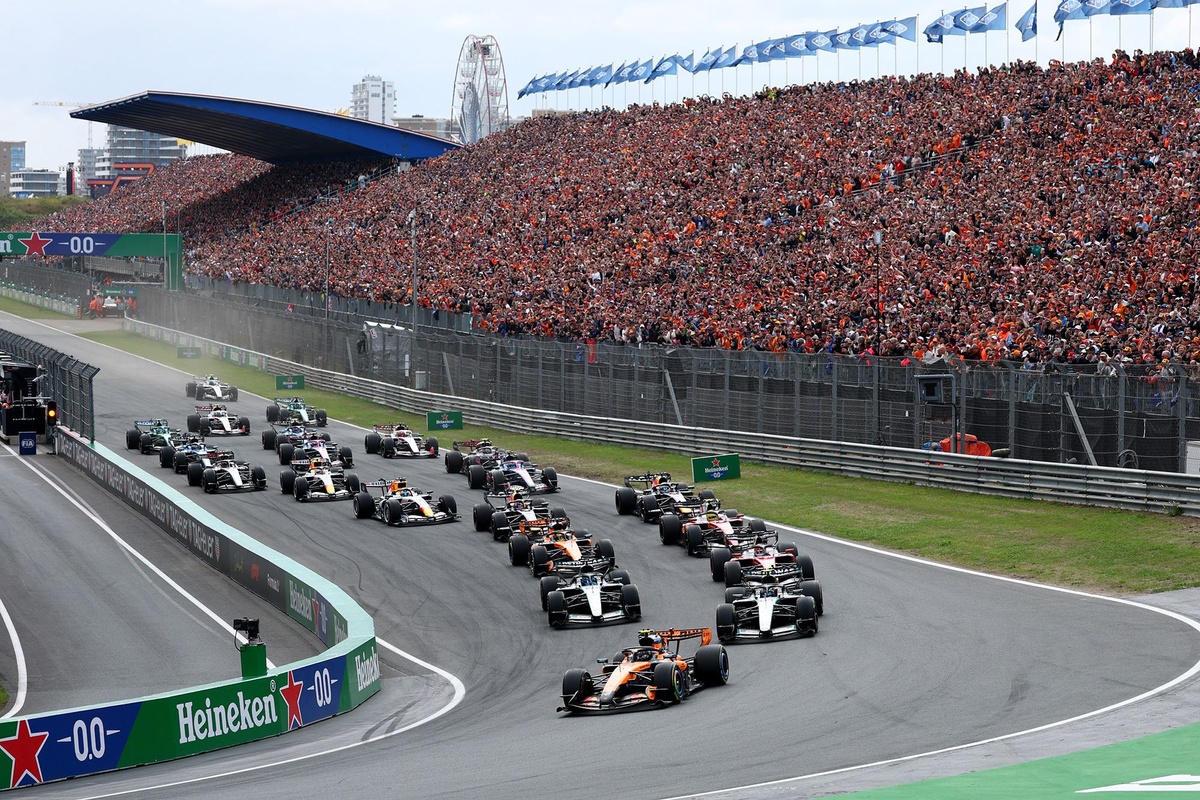
The Italian Grand Prix at Monza delivered a spectacle under the shadow of the Formula 1 2026 regulations, revealing a future that's both exhilarating and utterly chaotic. This wasn't just racing; it was a high-speed game of tag where breaking away felt impossible.
Key Takeaways from Monza 2026:
- "Yo-Yo Racing" Defined: Cars easily overtake with battery boost but struggle to maintain position due to energy depletion.
- Monza's Extreme Slipstream: The long straights amplified the effect, keeping packs tight and making dominant performance elusive.
- Driver Frustration: Even top talents like Max Verstappen felt like "turtles" when defending against the electric surge.
- Andrea Kimi Antonelli's Masterclass: The Mercedes rookie defied the trend, carving through the field from 19th with unparalleled skill.
F1 2026's Monza Mayhem: A New Era of Racing?
The Autodromo Nazionale Monza, historically known for its slipstream battles, transformed into an unprecedented arena for what's now dubbed "yo-yo racing." Under the new Formula 1 2026 regulations, the sheer power of battery deployment allowed for aggressive overtakes. However, this electric boost often depleted energy reserves, immediately turning the hunter into the hunted on the very next straight.
This dynamic created an intense, almost relentless back-and-forth, particularly on Monza's flat-out sections. The enormous tow effect further exacerbated the situation, ensuring that even intrinsically slower cars could stay glued to their rivals, making genuine escapes nearly impossible. The 53-lap race became a masterclass in strategic energy management, or rather, a frantic scramble to manage an unmanageable beast.
Top Drivers Caught in the Relentless Cycle
The new rules proved to be a double-edged sword, challenging even the most elite drivers. While overtakes were plentiful, the ability to consolidate a position became a monumental task, leading to visible frustration among the sport's biggest names.
Verstappen's Struggle: "Like a Turtle"
Even the formidable Max Verstappen found himself battling the peculiar nature of the 2026 cars. Despite his best efforts for Red Bull, he lacked the raw power unit performance to truly challenge the Mercedes duo for victory. Yet, the potent slipstream and energy deployment allowed him to shadow George Russell for extended periods.
"To be honest, [I didn’t enjoy it] a lot when people just drive by you like you’re a turtle," Verstappen bluntly stated. He highlighted the difficulty of defending once in the lead, even with fresh tires after a Virtual Safety Car (VSC) period. The overtake mode was simply "too powerful" to defend against.
The Unbreakable Packs: Where Pace Couldn't Dominate
The "yo-yo" effect wasn't limited to the front. Behind the lead battle, groups of cars, including Oscar Piastri and Lewis Hamilton, and another featuring Lando Norris and Pierre Gasly, formed tight pockets. These cars, often with differing ultimate pace, found themselves locked together.
McLaren team boss Andrea Stella noted the struggle for a quicker car to truly break away. "If you see how much it took for Lando to pass Gasly and then start to close the gap to the cars ahead," he explained, indicating how challenging it was to convert superior pace into a decisive lead.
Team Principals Call for Clarity Amidst the Chaos
The race at Monza served as a wake-up call for teams, highlighting the strategic complexities and potential drawbacks of the Formula 1 2026 regulations. Team bosses voiced concerns about the balance between entertainment and the ability for faster cars to truly compete.
Ferrari team principal Fred Vasseur lamented his team's struggles. "The main issue was top speed and overtaking. It was quite impossible for us to attack or to defend," Vasseur stated. He described a scenario where attempting an overtake would drain the battery, only for the position to be lost on the subsequent straight – a perfect illustration of "yo-yo racing."
Andrea Stella emphasized the intense workload for engineers and drivers, describing the Monza weekend as one of the busiest. Managing the power unit and battery became the "dominating element of racing." He highlighted how the combination of slipstream and defensive boosting could cost a leading car as much as half a second per lap, preventing them from pulling away.
Antonelli's Unforgettable Drive: A Glimmer of Hope
Amidst the frenetic, often frustrating, pack racing, one driver stood out: Andrea Kimi Antonelli. The young Mercedes talent delivered a performance that defied the "yo-yo" trend, demonstrating exceptional car control and race craft. Starting from 19th on the grid, Antonelli sliced through the field with a precision and aggression that left commentators stunned.
His early climb saw him as high as sixth after a lap 6 restart, putting him in contention for an improbable win. While Mercedes' superior energy deployment played a role, Antonelli's ability to consistently move from group to group, unlike his teammate George Russell who struggled to shake Verstappen, highlighted his unique talent.
Mercedes team boss Toto Wolff was effusive in his praise. "The differentiator today was the ability going through the traffic," Wolff observed, comparing Antonelli's drive to past legends like Lewis Hamilton. "There's just no stopping [him]. When a driver and a car are one, then there's nothing that can stop them." Monza 2026 may be remembered not just for the chaos, but for the emergence of a future superstar.