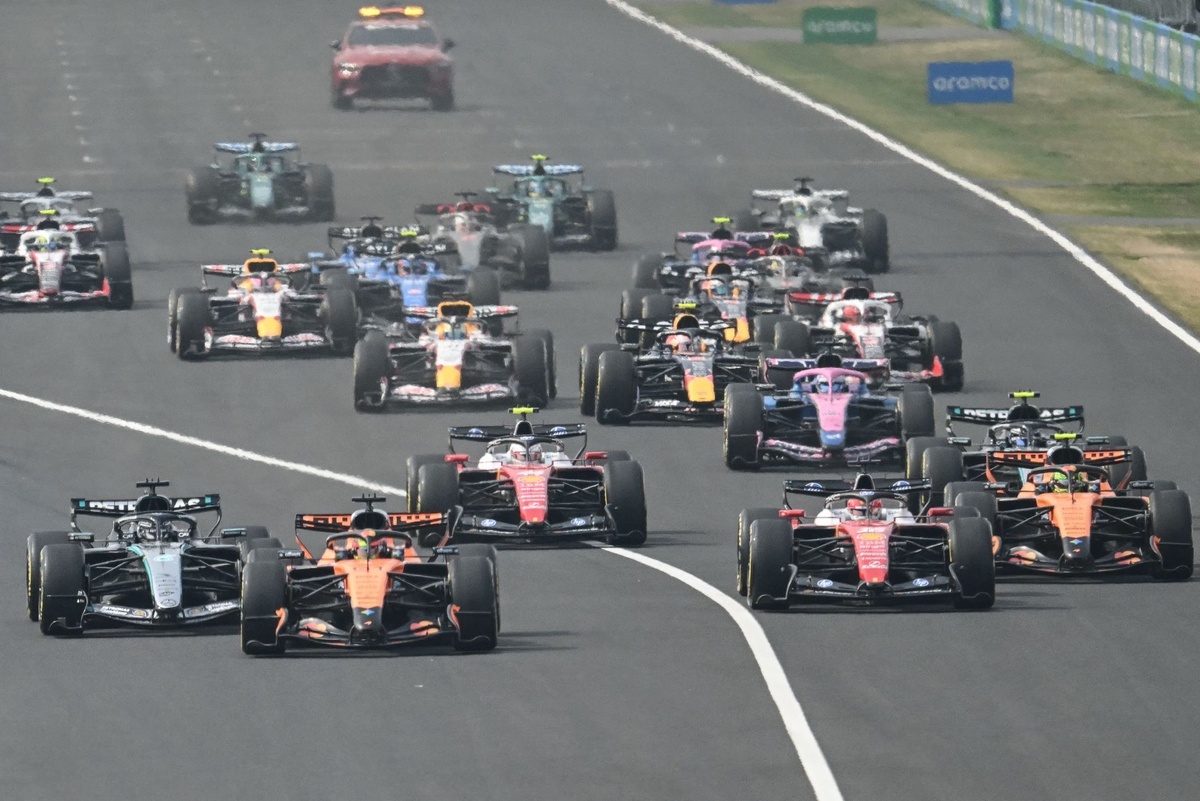

The cockpit of a modern Formula 1 car isn't just about raw speed anymore; it's a high-stakes, real-time mental marathon.
Naomi Schiff, the sharp-witted Sky Sports F1 analyst and former W Series driver, has declared a crucial truth: the mental load on today's F1 grid is "probably higher than it ever has been." This intense cognitive demand is set to be pushed to unprecedented levels with the impending 2026 regulations, transforming the sport into a battle of wits as much as horsepower.
Key Takeaways:
- F1 drivers face unprecedented mental strain due to complex car management and evolving regulations.
- Naomi Schiff highlights the immense data processing required, making even straights mentally demanding.
- The 2026 rules will introduce active aerodynamics, Overtake Mode, and a 50:50 hybrid power split, intensifying the challenge.
- Liam Lawson revealed he was "mentally drained" after the Japanese Grand Prix, underscoring the physical and cognitive toll.
The New Battlefield: Mind Over Machine
Schiff, speaking on the Up To Speed podcast, laid bare the constant cognitive demands on drivers. Beyond the primal instincts of braking and turning, drivers are juggling intricate pitstop strategies, energy deployment, and real-time race scenarios. She noted that even traditional "rest" moments like straights are now engagement zones, requiring constant calculation and management.
This isn't merely about physical endurance; it's about the sheer volume of information that must be processed at blistering speeds. Every lap, every corner, every straight now comes with an invisible overlay of data points and strategic choices.
2026 Regulations: A Cognitive Overload?
The horizon of F1 2026 looms large, bringing with it a radical overhaul that promises to push drivers further. The new rules mandate an almost 50:50 split between internal combustion and electric power, active aerodynamics, a dynamic "Overtake Mode," and a strategically deployed "boost button."
These innovations, while exciting for fans, translate into an exponential increase in in-cockpit decision-making. Drivers will have to master an even more complex dance of energy management and aerodynamic adjustments, all while fighting for track position.
Lawson's Suzuka Struggle
The impact of this escalating mental strain is already clear. Racing Bulls driver Liam Lawson recently confessed to being "mentally drained" after the physically demanding Japanese Grand Prix. After securing a commendable ninth-place finish at Suzuka, he told F1 TV that the current season itself is "very intense."
Lawson recounted a race filled with real-time learning and adaptation. He described a chaotic sequence where he lost a place, only to regain it serendipitously due to another driver's battery deployment issues. This highlights a dynamic where drivers are continuously "figuring out through the race" how to manage their resources.
Dynamic Racing, Dynamic Thinking
His account painted a vivid picture of constant trade-offs: use deployment now, lose it later. He observed rivals engaging in a cat-and-mouse game of overtakes and re-overtakes, emphasizing the reactive, high-pressure mental environment. Ultimately, Lawson and Esteban Ocon behind him settled into a "sustainable" mode, acknowledging the need to conserve mental and mechanical resources. The future of Formula 1 isn't just about faster cars; it's about sharper minds.