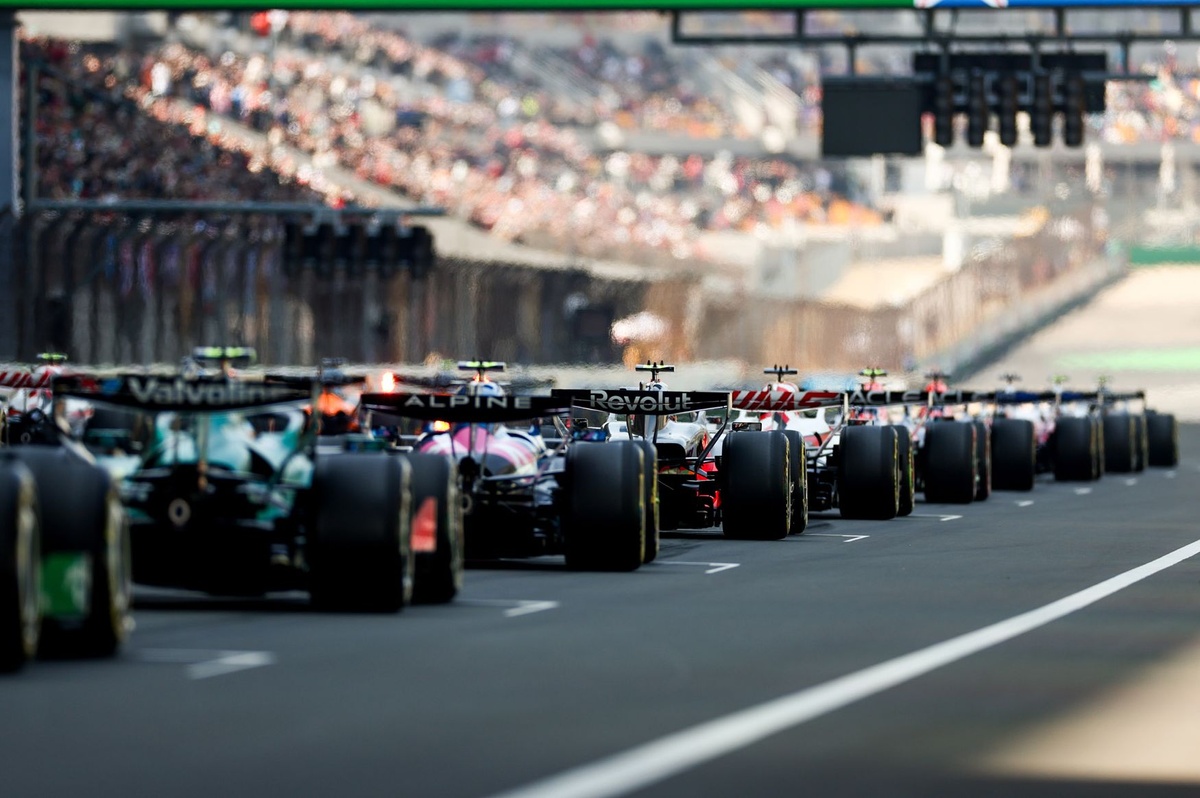

Under the looming shadow of Formula 1's 2026 regulations, the art of the race start has undergone a dramatic transformation. With revised power units amplifying hybrid output and shedding the MGU-H, the opening moments of every Grand Prix have become a perilous, unpredictable gamble. Early season data is already revealing the teams and drivers who are mastering this new challenge, and those who are spiraling into first-lap chaos.
Key Takeaways from Early F1 Starts
- Ferrari-powered teams are dominating, collectively gaining 25 positions in the opening laps.
- Mercedes and Red Bull works teams are unexpectedly losing significant ground.
- Carlos Sainz leads the driver pack with 12 positions gained, showcasing supreme launch control.
- Start performance isn't just about the engine; driver skill, setup, and operational consistency are proving crucial.
The Shifting Sands of the Grid: 2026 Rules Rework F1 Starts
Formula 1's 2026 regulations are designed to revolutionize the sport, and their impact on race starts is already undeniable. The new power unit philosophy, ditching the MGU-H while boosting hybrid power, has made off-the-line performance far more inconsistent. What was once a highly predictable launch has morphed into a high-stakes lottery.
This shift elevates the importance of every single meter on the run to the first corner. Early warnings from Ferrari and even adjustments from the FIA highlighted the challenges ahead. Now, with several races under our belts, a clear picture is emerging: some teams are thriving, while others are hitting the panic button.
Engine Power Play: Ferrari's First-Lap Masterclass
Across the initial four competitive outings, Ferrari-powered teams have proven themselves the undisputed kings of the launch. Collectively, they've surged a remarkable 25 positions on the opening lap – a figure unmatched by any other engine supplier. This early dominance is a testament to their preparation and understanding of the new power unit dynamics.
Aston Martin follows with 14 positions gained. However, this figure requires context, as they often start from further down the grid where overtakes are naturally easier. In stark contrast, Mercedes-powered cars have only managed a combined 8 positions gained, with customer teams largely contributing to this modest tally.
Alarm bells are ringing loudest at Red Bull and Audi. Red Bull-powered cars have astonishingly lost a net 21 positions in the opening phase, while Audi sits at a dismal minus 26 positions, despite supplying only their own factory team. This data points to a significant struggle for these manufacturers in adapting to the crucial initial moments of the race.
Team Performance: Who's Leaping Off the Line?
While Ferrari leads the engine pack, the individual team breakdown offers fascinating insights. Surprisingly, Williams, a Ferrari customer, currently tops the charts with 18 positions gained on the first lap. While their usual back-of-grid starts make gains more accessible, it still highlights excellent execution.
The Ferrari works team isn't far behind, netting 17 positions. This is arguably more impressive given their consistent starting positions within the top five, where securing overtakes is inherently tougher. Their meticulous preparation for these high-pressure starts is clearly paying dividends.
Conversely, the Mercedes works outfit has endured a shocking 22 positions lost across the first four starts. This stark decline is concerning, especially when customer teams like Alpine (+10) and McLaren (+2) demonstrate better control, even from stronger grid spots. Oscar Piastri's strong launch in Japan, his true first Grand Prix start, underscores McLaren's potential.
Driver Dexterity: Sainz Leading the Charge
Ultimately, it's the drivers who execute these launches, and the data reveals clear standouts. Carlos Sainz of Ferrari currently wears the crown as the season's most successful starter, gaining a phenomenal 12 positions – an average of three per race. He's closely followed by Fernando Alonso (+10), teammate Charles Leclerc (+9), and Lewis Hamilton (+8), all demonstrating exceptional awareness and control off the line.
The contrast within Mercedes is particularly stark. While George Russell has dropped 5 positions, his teammate Kimi Antonelli has haemorrhaged an alarming 17 positions. Even more dramatically, Nico Hulkenberg has lost a staggering 21 positions in just three race starts.
Even in the dominant Red Bull stable, the start woes are evident. Both Max Verstappen and Isack Hadjar have each seen 11 positions slip away in the crucial opening moments. This suggests that even the best drivers are vulnerable to the complexities of the new start procedures when the underlying car setup and operational consistency aren't perfect.
Beyond the Engine: Mastering the Art of the Start
These early season trends underscore a critical point: raw engine power isn't the sole determinant of start performance under the 2026 regulations. While engine characteristics play a role, the ability to fine-tune the start procedure – encompassing driver technique, clutch bite point, traction control setup, and overall operational consistency – is paramount. Teams like Ferrari and Williams are clearly ahead of the curve, proving that mastery of the F1 start is a complex dance between man and machine, a dance that some are performing far better than others right now.