
Formula 1 isn't just about on-track drama; the real power plays often unfold behind garage doors, where team principal shifts can rewrite history or plunge dynasties into chaos. The sport's cut-throat nature means even the most influential figures can find their positions precarious, leading to some truly sensational exits and unexpected arrivals. From legendary masterminds crafting championship-winning teams from the brink to seasoned executives navigating internal political storms, F1's leadership landscape is a constant carousel of high-stakes decisions and sudden departures. These are the stories that define the off-track battles as much as any Grand Prix victory.
Key Points:
- Ross Brawn transformed a struggling Honda into the championship-winning Brawn GP against all odds.
- The infamous Crashgate scandal forced Flavio Briatore's dramatic exit from Renault.
- Ferrari endured a rapid succession of team principals, highlighting the immense pressure at Maranello.
- Alpine's quest for stability has been a constant struggle, marked by frequent leadership changes.
Ross Brawn: Engineering a Miracle from the Ashes
When Ross Brawn departed Ferrari alongside Michael Schumacher in 2006, he took on a daunting challenge as Honda team principal. The Japanese outfit had finished a dismal eighth in 2007 with just six points.
Rebuilding Honda's Foundations
Brawn quickly identified a critical organizational flaw: a blame culture between the Japanese powertrain division and the UK-based chassis team. He recognized Honda possessed immense resources, comparable to Ferrari's, but lacked cohesion. His frank assessment to the board – that both engine and chassis were inadequate – was a wake-up call after years of internal misreporting. He laid out a bold three-year plan: one year to fix the organization, a second for decent results, and a third to contend for the title.
The Birth of Brawn GP
The 2008 F1 season remained tough for Honda, with only a solitary podium for Rubens Barrichello. Yet, behind the scenes, Brawn's team was pouring resources into the 2009 regulations, with multiple wind tunnel programs. Then, the 2008 financial crisis struck, and Honda abruptly pulled out. In a move that became F1 legend, Brawn bought the team for a symbolic one pound. The newly christened Brawn GP then achieved the unthinkable, sweeping both championships in 2009 with Jenson Button – a year ahead of Brawn's own ambitious timeline.
Crashgate: Renault's Darkest Hour and Briatore's Downfall
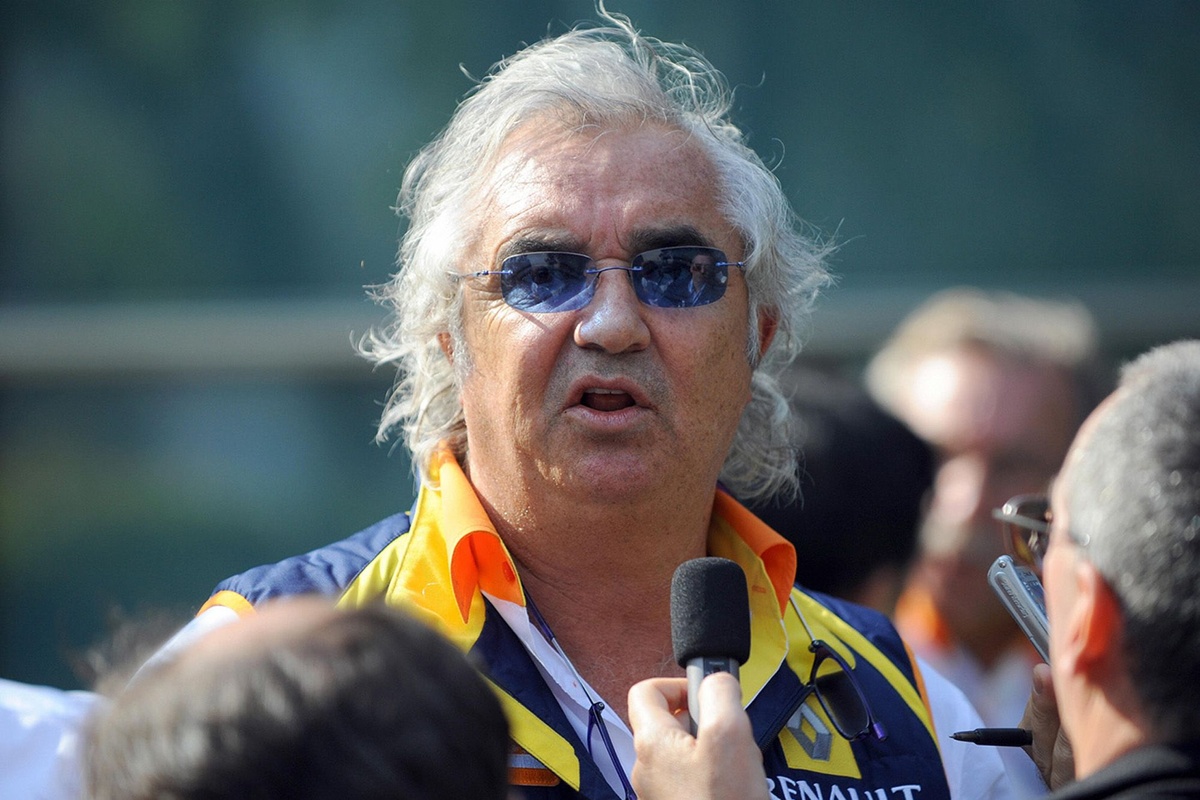
Formula 1 was rocked to its core when the 2008 Singapore Grand Prix revealed a shocking conspiracy. It emerged that Renault team boss Flavio Briatore and engineering director Pat Symonds had instructed driver Nelson Piquet Jr. to deliberately crash, triggering a safety car that engineered a victory for teammate Fernando Alonso.
The Scandal Unveiled
The backlash was swift and severe. Both Briatore and Symonds were forced to leave the team. The FIA initially banned Briatore indefinitely, a decision later overturned by a Paris court. This scandal marked the end of an era for the charismatic Italian, who had led the Enstone-based outfit (first as Benetton, then Renault) to multiple drivers' championships with icons like Michael Schumacher and Fernando Alonso. The team, now tainted, was eventually sold to Genii Capital, ending Renault's full works team involvement for a period.
Ferrari's Leadership Merry-Go-Round
Following the departure of long-serving team boss Jean Todt at the end of 2007, the role of Ferrari team principal became one of F1's most demanding. Despite the best efforts of Stefano Domenicali for six years, Ferrari struggled significantly with the technical revolution introduced in 2014, failing to secure a single podium in the opening three rounds.
Domenicali's Exit and Mattiacci's Brief Stint
The dismal start to 2014, overshadowed by **Mercedes**' dominance, cost Domenicali his job. In a surprising move, Marco Mattiacci, previously CEO of Ferrari North America, was appointed. Despite his deep understanding of Ferrari's corporate culture, Mattiacci notably lacked Formula 1 experience. His tenure was brief, lasting only seven months, as Ferrari's on-track fortunes showed little immediate improvement.
Arrivabene's Reign and Vettel's Challenge
Mattiacci was replaced by Maurizio Arrivabene, a seasoned executive from Philip Morris. Then-Ferrari chairman Sergio Marchionne emphasised Arrivabene's comprehensive understanding of both Ferrari and the sport's complex governance. Arrivabene's leadership saw the significant signing of four-time world champion Sebastian Vettel, which ignited two spirited title challenges in 2017 and 2018, bringing Ferrari back to competitive contention.
Caterham's Chaotic Collapse: A F1 Dream Crumbles
What began with the ambitious revival of Team Lotus in 2010 spiraled into complete disarray. Malaysian businessman Tony Fernandes launched his F1 team under the promise of a £40 million budget cap that never materialized, condemning the new outfit to be severely underfunded from the start. They joined the grid just six months after their entry was granted, predictably five seconds off the pace.
Underfunded Beginnings and Ownership Shifts
Renamed Caterham in 2012, the team's performance briefly peaked when Heikki Kovalainen outqualified both Toro Rossos in Valencia. However, with no points on the horizon, Fernandes scaled back his investment and sold the team in July 2014 to a consortium led by Colin Kolles. This triggered a reshuffle, with Cyril Abiteboul replaced by former F1 driver Christijan Albers, assisted by Manfredi Ravetto. The team even saw a former Romanian footballer, Ioan Constantin Cojocaru, promoted from janitor to director in a bizarre twist.
The Administrator as Team Principal
The financial instability proved fatal. Caterham entered administration in October 2014, leading to another unprecedented team principal change. Administrator Finbarr O’Connell remarkably took the helm for the 2014 Abu Dhabi Grand Prix, where the team crowdfunded its way onto the grid for its final race. O'Connell found himself alongside F1 giants like Toto Wolff and Christian Horner in the FIA press conference, with even Bernie Ecclestone providing logistical support, albeit with the caveat that O'Connell, a complete outsider to the sport, was stepping into one of Formula 1’s most high-pressure roles under extraordinary circumstances.
Despite the emotional effort to keep the team alive for one final appearance, the Abu Dhabi weekend ultimately marked the end of the road. Struggling both financially and competitively, Caterham faded from the grid soon after, closing a turbulent chapter in Formula 1 history defined by ambition, instability, and moments of unlikely resilience.