


Another weekend, another head-scratching moment for Formula 1 officials. The FIA has once again been forced to publicly acknowledge a significant human error, this time during the high-stakes Singapore Grand Prix Sprint Qualifying, an admission their single-seater director, Nikolas Tombazis, candidly labeled "the worst thing" for the federation.
Key Points:
- FIA admits human error marred Singapore GP Sprint Qualifying.
- 'Overtake mode' malfunctioned, impacting driver performance unfairly.
- Error traced to a missed computer pop-up and intense race control pressure.
- This incident follows recent Bahrain GP power unit glitches, raising concerns.
A Glitch in the Matrix: Singapore's Sprint Qualifying Controversy
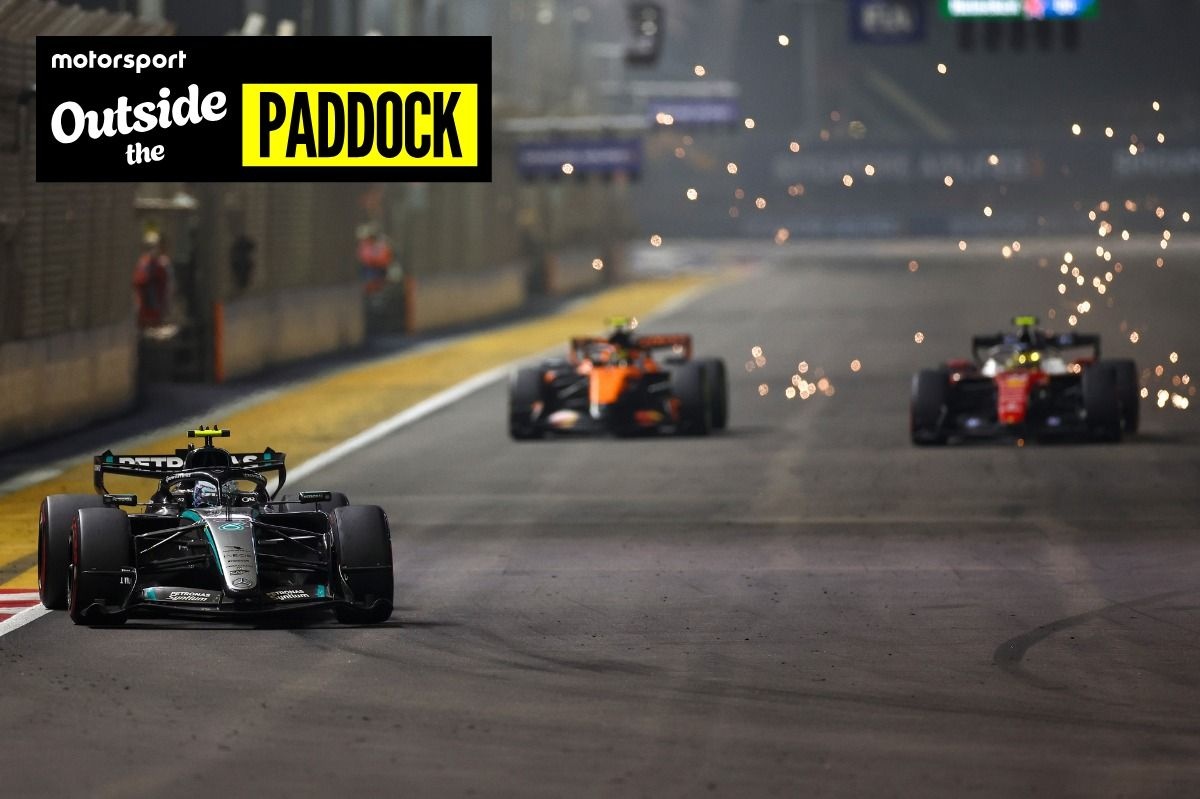
The chaos began following Sergio Perez's crash, which triggered a red flag in the SQ1 session. As racing resumed, the critical 'overtake mode' feature, designed to boost car performance, simply wasn't reactivated by race control. Drivers were left puzzled, lacking the expected power.
What followed was a moment of baffling inconsistency: the 'overtake mode' was briefly re-enabled for a mere 27 seconds, only to be swiftly deactivated again. This erratic behavior directly impacted those fighting for survival in SQ1, with eliminated drivers rightly feeling their competitive chances were unfairly hampered.
Inside Race Control: The Human Element Fails
Nikolas Tombazis shed light on the mechanics of the blunder, explaining that reactivating 'overtake mode' is typically a manual, safety-checked process. "Unfortunately, there was a pop-up window that came on somebody's computer that was not acted on quickly enough or when it should have," he revealed.
Under immense time pressure and the general intensity of race control, this crucial alert was tragically overlooked. This initial oversight snowballed into further confusion, as an "erroneous decision" was then made to briefly re-enable the system, only to switch it off again, creating what Tombazis himself called "a bit of a mess."
The Cost of Confusion: Fairness Compromised
The impact on competitive fairness is what truly concerns the FIA. Tombazis admitted the situation "affected some drivers more and some drivers less," directly interfering with the official results. For an organization whose stated top priorities are "safety and fairness," this is a significant blow.
While acknowledging that human error can occur in a "complicated job," the FIA's challenge now is to not only analyze the mistake thoroughly but to implement measures that prevent such fundamental errors from compromising the sport's integrity again. Fans expect a level playing field, and these incidents erode trust.
A Pattern Emerging? Concerns Mount Over FIA Oversight
This isn't an isolated incident. The Singapore GP blunder comes less than a week after the Bahrain Grand Prix saw disruptions due to a power unit glitch affecting multiple competitors. That issue also required frantic software updates before the race could proceed.
Such recurring technical and procedural missteps raise serious questions about the robustness of Formula 1's race management systems and the training protocols for personnel. As the sport continues to grow, maintaining absolute competitive fairness and flawless execution is paramount to its credibility and the passion of its global fanbase.