
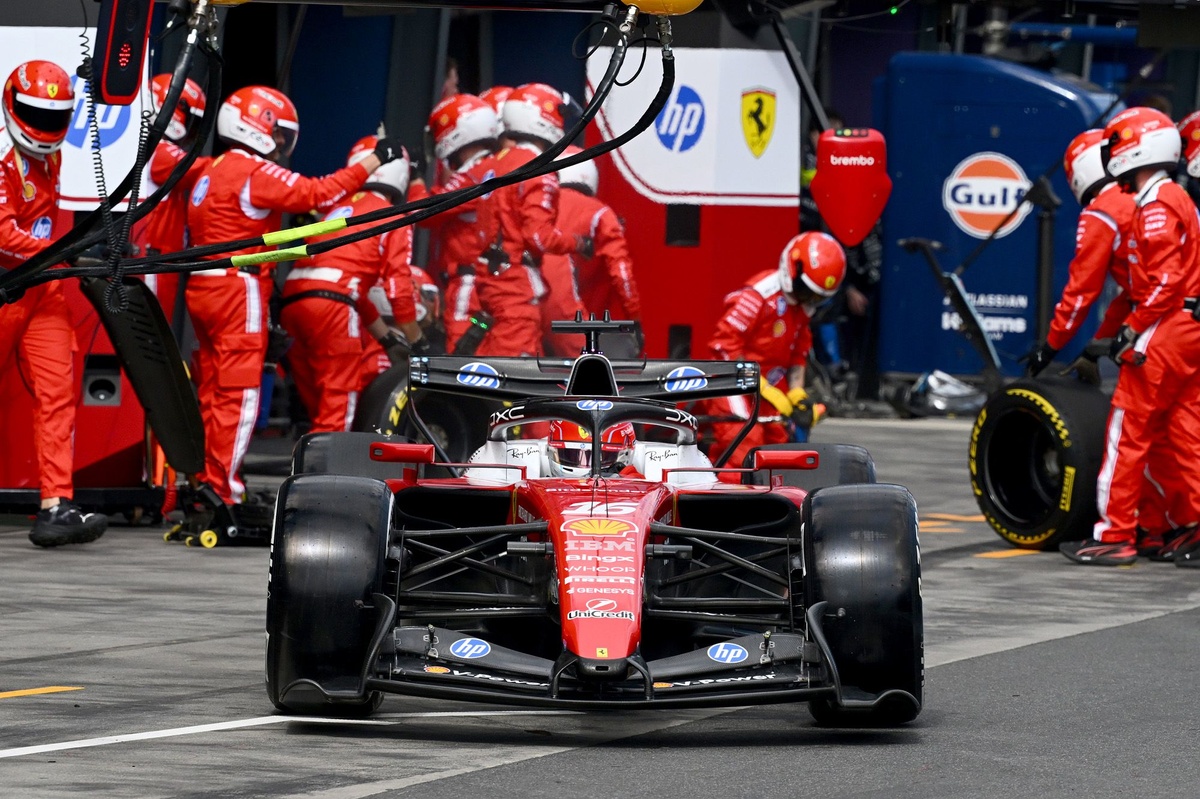

Ferrari's strategy team is under intense scrutiny after what many are calling a series of questionable decisions during the Australian Grand Prix, potentially costing them a shot at a higher finish. Former Aston Martin strategist and F1 analyst Bernie Collins didn't mince words, pointing to Ferrari's baffling choices not to pit Charles Leclerc and Lewis Hamilton under two crucial Virtual Safety Car (VSC) periods.
Key Takeaways from Ferrari's VSC Strategy:
- Ferrari inexplicably chose to keep both Charles Leclerc and Lewis Hamilton out on track during two separate Virtual Safety Car deployments.
- Bernie Collins, a respected F1 strategist, highlighted these calls as significant missed opportunities, particularly concerning Hamilton.
- Rivals like Mercedes demonstrated superior tactical awareness, successfully performing a double stack pit stop.
- The puzzling lack of action will undoubtedly lead to a thorough post-mortem within the Maranello camp.
Australian GP: The VSC Blunder That Haunts Ferrari
The race began with incredible promise for Ferrari. Charles Leclerc snatched the lead from polesitter George Russell right at the start, immediately putting pressure on the Mercedes driver. Both Leclerc and future Ferrari teammate Lewis Hamilton (in his current Mercedes guise) were pushing hard, creating an exciting early battle at Albert Park.
However, the tide began to turn on Lap 12. A technical failure for Isack Hadjar triggered the first Virtual Safety Car. This was a prime opportunity for a "cheap" pit stop, minimizing lost time. While Mercedes and the majority of the grid swiftly brought their cars in, Ferrari hesitated. Lewis Hamilton's frustrated radio call, "At least one of us should have come in!" perfectly encapsulated the moment.
The Second VSC: A Repeat Error?
Just seven laps later, on Lap 19, another VSC was deployed as Valtteri Bottas's car retired. This presented Ferrari with a second chance to rectify their earlier oversight. Yet, astonishingly, the Scuderia again opted to keep both drivers out on track.
This second missed opportunity compounded the questions surrounding their strategic decisions. It allowed rivals who had already pitted under the first VSC to consolidate their advantage, while Ferrari's drivers were left out on older tires, effectively losing crucial track position and strategic flexibility.
Expert Analysis: Bernie Collins Challenges Maranello's Call
Speaking on Sky Sports F1, Bernie Collins expressed her astonishment at Ferrari's inaction. "Lewis Hamilton was quite strong on the radio, particularly for that first VSC saying, 'Why didn't we do one car at least?'" Collins remarked, highlighting the immediate internal questioning. She further praised Mercedes' quick thinking, noting, "I was surprised actually, initially, that Mercedes stacked because they were quite close together, but they were pretty confident in what they wanted to do."
Collins specifically pointed out the timing for Hamilton during the second VSC: "The yellow flag had been out for 19 seconds at that point. So potentially for Lewis, there was time for Ferrari to react. And that'll raise some questions there." Her analysis suggests that even with a slight delay, a pit stop for at least one car was viable and strategically beneficial.
The Cost of Hesitation: Impact on the Podium
Ultimately, George Russell secured the win, a testament to Mercedes' sharper strategic execution. While Charles Leclerc managed a respectable third place, the lingering question remains: could Ferrari have fought for victory, or at least a stronger double podium finish, had they seized the VSC opportunities? The Australian Grand Prix serves as a stark reminder that in Formula 1, every split-second decision counts.