

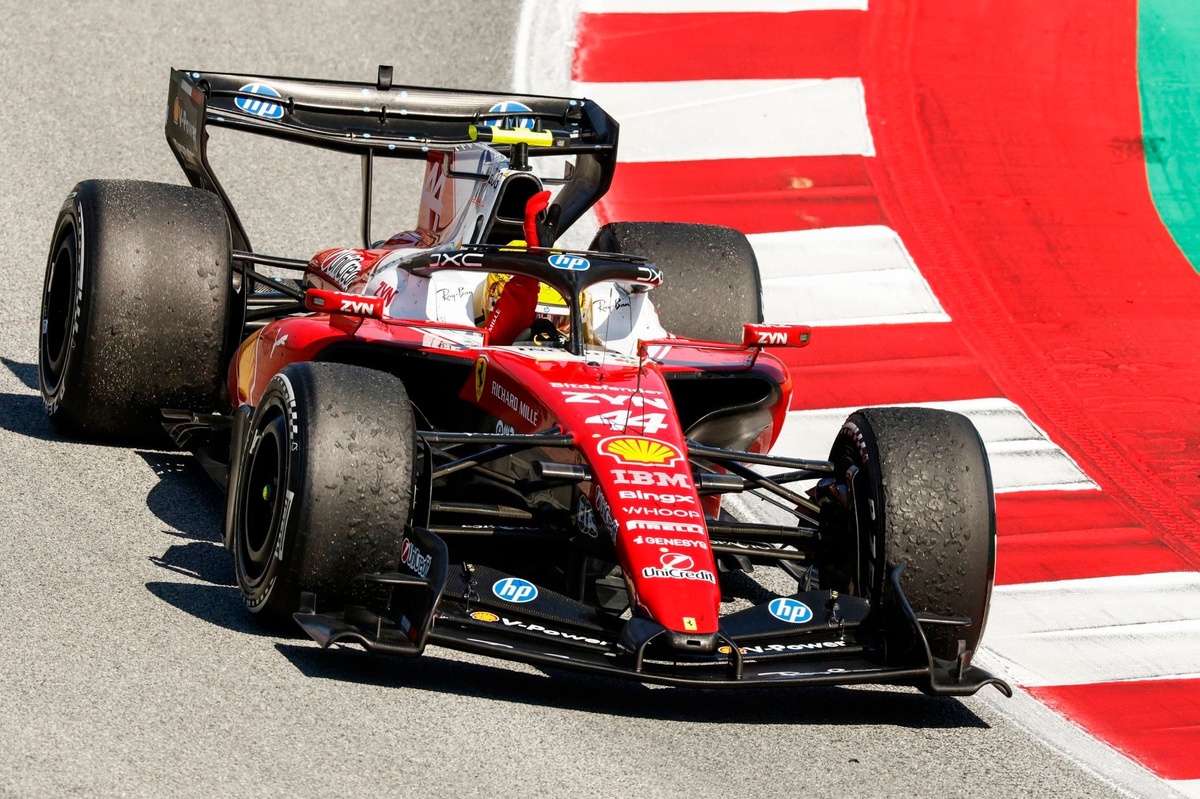

Ferrari's Dual Engine Upgrades: F1 Power Push Begins
Ferrari isn't just playing catch-up; they're launching a full-scale assault on the F1 power hierarchy with a strategic two-pronged engine upgrade plan targeting the 2026 season. After securing ADUO (Additional Development and Upgrade Opportunities) credits, the Scuderia is poised to unleash significant power unit enhancements, aiming to close the gap on rivals like Mercedes and Red Bull. This aggressive strategy signals Ferrari's intent to dominate the next era of Formula 1.
Key Points:
- Ferrari granted two ADUO engine development opportunities for 2026.
- First upgrade for Austria focuses on a 'hot engine' concept with a steel-alloy combustion chamber.
- Second upgrade, a new turbocharger, is slated for after the summer break (likely Zandvoort or Monza).
- The goal is to overcome a measured power deficit and challenge the F1 benchmarks.
Igniting the Power: Austria's 'Hot Engine' Innovation
The first wave of Ferrari's engine offensive arrives in Austria, introducing a bold 'hot engine' concept designed to extract maximum performance. Engineers have developed modifications to the combustion chamber, utilizing a cutting-edge steel-alloy cylinder head. This innovation allows the engine to operate at unprecedented pressure and temperature levels, specifically targeting 110C during combustion, a significant jump from the current 100C.
This isn't just about heat; it's about efficiency. Higher operating temperatures, combined with a specially formulated Shell fuel boasting a superior calorific value, mean more complete combustion and increased mechanical work. The result? A direct boost in power output. An added benefit is the potential for smaller radiators, streamlining the car's aerodynamic profile.
The Future Play: A Revamped Turbocharger on the Horizon
Looking beyond the immediate gains, Ferrari has a pivotal second upgrade planned for after the summer break, likely debuting at Zandvoort or Monza: an all-new turbocharger. This move directly addresses a performance area where Ferrari inadvertently lost an early season advantage. The initial "small" turbocharger was chosen to minimize lag following the removal of the MGU-H.
However, the FIA's five-second pre-start procedure, designed to prevent stalled cars, effectively nullified this benefit by allowing all manufacturers to spool up their turbos. The upcoming turbocharger won't change impeller diameter, but it will feature redesigned blades – both in number and angle – alongside advancements in material science. This is a crucial step in maximizing efficiency and power delivery in race conditions.
Strategic Maneuvers: Bridging the F1 Power Gap
Ferrari's proactive use of the ADUO credits stands in stark contrast to rivals like Mercedes and Honda, who are not introducing similar early upgrades. This strategic timing allows the Scuderia to gain a critical early advantage in the intensely competitive 2026 F1 power unit development race.
While the FIA currently pegs Red Bull-Ford as the benchmark, Ferrari internally views Mercedes as the true target. Intriguingly, past performance, like the Barcelona upgrade package, demonstrated Ferrari's ability to compensate for power deficits with superior, lower-drag aerodynamics. In the searing heat of Spain, their rumored 25-horsepower gap seemingly vanished. This holistic approach, combining aggressive engine development with aerodynamic excellence, underpins Ferrari's ambitious push for F1 supremacy.


