

Galatasaray's Early Defensive Masterclass
Under Okan Buruk, Galatasaray established a defensive fortress early on, deploying a 4-2-3-1 formation that shifted into a compact 4-4-2 without possession. Their primary objective was to restrict Barcelona's playmakers in Zone 14, the dangerous space just outside the penalty area. Midfield anchors Lucas Torreira and Mario Lemina formed a disciplined double pivot, cutting off passing lanes to key threats such as Dani Olmo and Fermin Lopez.
Galatasaray's pressing structure allowed Barcelona's centre-backs, Pau Cubarsi and Eric Garcia, to retain possession until the ball entered the middle third or moved towards the flanks. Going forward, the Turkish side bypassed Barcelona's press with direct passes to Victor Osimhen, whose aerial strength created opportunities to win second balls for Batrakov and Leao. The approach paid off in the 28th minute, when Leao assisted Batrakov for Galatasaray's shock opener.
Galatasaray's backline also maintained an impressively high defensive line, catching Barcelona offside eight times. However, sustaining such an intense and compact structure demanded considerable energy. As the first-half progressed, small gaps began to emerge, exposing the difficulty of maintaining their defensive discipline against a side of Barcelona's quality.
Flick's Blueprint: Unlocking the Turkish Wall
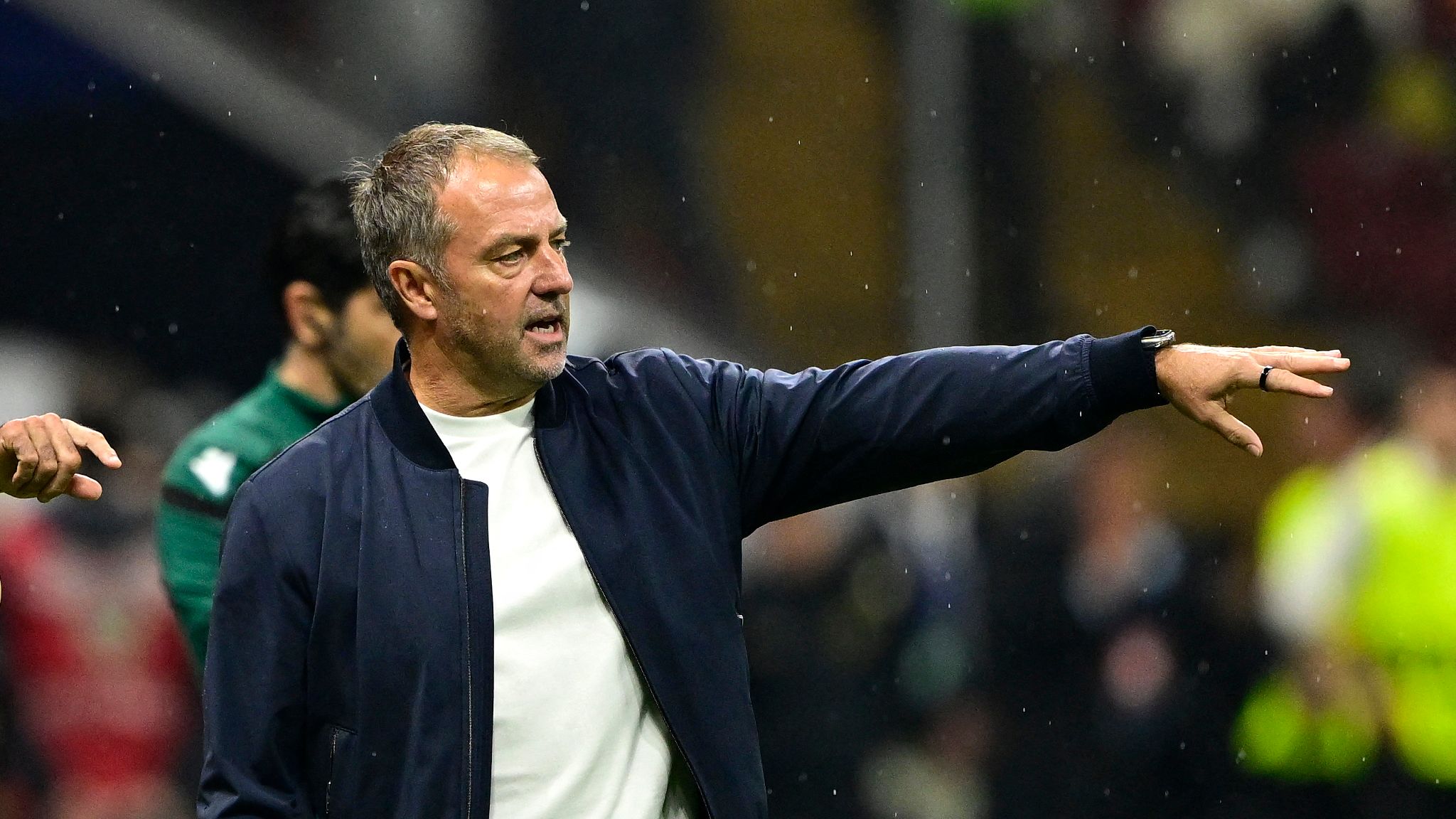
Hansi Flick also deployed a 4-2-3-1 formation, but with different tactical intentions designed to break through Galatasaray's defensive block. Rodri anchored the midfield and frequently dropped between the centre-backs to create a three-man build-up. This allowed full-backs Joao Cancelo and Gerard Martin to advance into wider, higher positions, stretching Galatasaray's narrow midfield structure.
Barcelona's aggressive pressing continued to create problems for the Turkish side despite the early deficit. The first-half statistics highlighted the Catalan club's attacking pressure, with 22 shots and 11 on target, while Galatasaray were forced into 25 clearances. Barcelona's high-regain approach kept the opposition under sustained pressure and created repeated opportunities to attack.
The breakthrough arrived in the 43rd minute, when Joao Cancelo found the equaliser with a moment of individual brilliance. The goal brought Barcelona level before half-time and provided the platform for Flick to make further tactical adjustments after the break.
The Halftime Huddle: Flick's Game-Changing Adjustments
The decisive shift came through Flick's tactical adjustments, which helped Barcelona overcome Galatasaray's control of the central areas. Buruk's compact setup had initially congested the midfield and limited Barcelona's attacking options. However, Flick responded by giving Dani Olmo and, crucially, Lamine Yamal greater freedom to drift inside and create numerical advantages in dangerous areas.
Yamal's movement proved particularly influential, drawing defenders towards him and opening valuable spaces for Fermin Lopez and other Barcelona attackers. Galatasaray's midfield pairing of Lemina and Torreira struggled to cover these movements as Barcelona increased their tempo and attacked more vertically.
The impact was immediate between the 50th and 53rd minutes. Fermin Lopez put Barcelona ahead before Anthony Gordon extended the advantage to 3-1. Both goals reflected Barcelona's growing control of the central areas, where their ability to recover second balls increasingly overwhelmed Galatasaray's tiring midfield.
Flick's willingness to increase the attacking intensity after half-time ultimately shifted the balance of the contest. What had initially been a closely contested tactical battle became a demonstration of Barcelona's ability to adapt and exploit weaknesses in the opposition's structure.
Super Subs Ignite the Barça Attack
Despite Barcelona's 3-1 lead, Flick continued to target Galatasaray's defensive weaknesses with decisive substitutions in the 59th minute. He introduced Karim Adeyemi and Gabriel Jesus for Olmo and Gordon, adding fresh pace and mobility to the attack.
The changes offered more than fresh legs. Adeyemi's speed put immediate pressure on Galatasaray's increasingly fatigued backline, while Jesus' movement and ability to drop deeper helped pull defenders out of position and create additional space for his teammates.
The substitutions delivered their intended impact in the 65th minute. Gabriel Jesus turned provider, setting up Adeyemi to score Barcelona's fourth goal, effectively putting the contest beyond Galatasaray's reach.
Buruk attempted to respond, but Barcelona had already seized control of the tactical battle. The Catalan side's attacking pressure was reflected in their reported 2.83 expected goals (xG) value in the latter stages, underlining their ability to create dangerous opportunities as the match progressed.
Barça's Champions League Statement: Adaptability Triumphs
Ultimately, Barcelona's emphatic 4-1 victory showcased the importance of tactical adaptability. Galatasaray's direct 4-2-3-1 formation initially caused problems, with their compact defensive structure limiting Barcelona's options through the middle. However, once the hosts equalised and raised the physical intensity, Buruk's side struggled to find an effective alternative approach.
Flick's use of Lamine Yamal as a focal point was a defining tactical masterstroke. By attracting defenders towards the young winger, Barcelona created the space needed for Fermin Lopez and other attackers to exploit. This movement, combined with a faster passing tempo and greater attacking verticality, gradually dismantled Galatasaray's defensive organisation.
Barcelona's second-half substitutions further exposed the visitors' declining defensive energy, with Adeyemi and Jesus immediately adding new dimensions to the attack. Their combination for the fourth goal demonstrated how Flick's changes helped turn tactical superiority into a decisive result.
In the end, Barcelona did more than secure a convincing win. Their ability to recognise Galatasaray's initial strengths, adjust their attacking approach and capitalise on the opposition's fatigue proved decisive, turning a difficult first-half contest into a commanding 4-1 victory.