
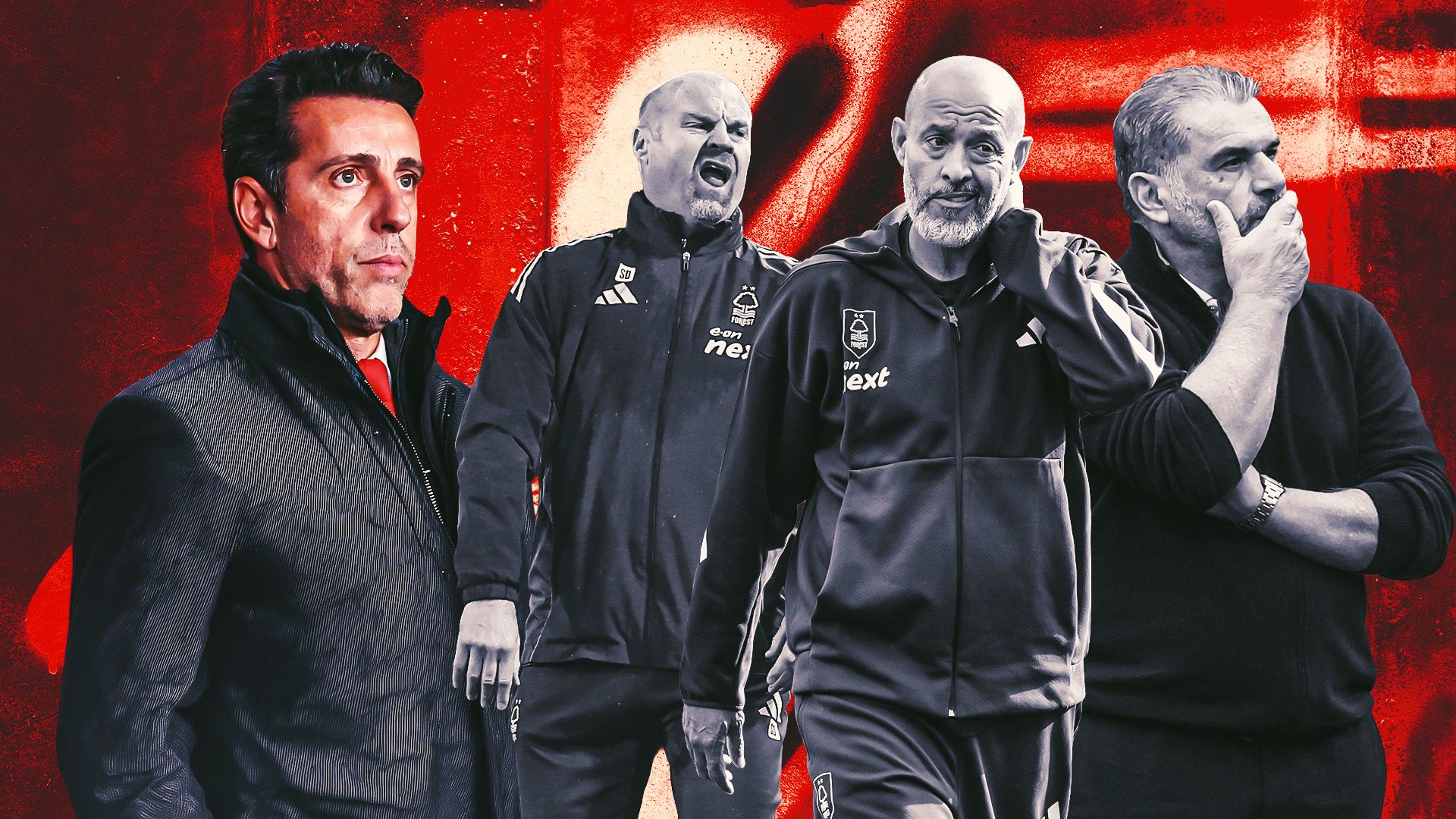

The Dyche Dilemma: A Sinking Ship or Scapegoat?
Another manager bites the dust at Nottingham Forest, but the sacking of Sean Dyche feels less like a solution and more like a desperate distraction from the true architect of the club's escalating crisis: global head of football, Edu Gaspar. The axing marks the third managerial change in seven months, plunging the Tricky Trees deeper into a perilous Premier League relegation battle. This isn't just about results; it's a fundamental clash of philosophies and a damning indictment of the club's recruitment strategy.
Key Points:
- Sean Dyche departs Nottingham Forest despite a solid win percentage, succumbing to growing internal dissent.
- Owner Evangelos Marinakis faces intense scrutiny amid a revolving door of managers, highlighting systemic issues.
- Global Head of Football Edu Gaspar is pinpointed as the primary catalyst for the club's alarming decline due to poor transfers and alleged overreach.
- Forest’s talented squad is struggling to thrive under a fractured leadership and mismatched playing styles.
Sean Dyche arrived at Nottingham Forest like a pragmatic firefighter, tasked with extinguishing the embers of chaos left by Ange Postecoglou’s brief, 39-day stint. Inheriting a team languishing 18th in the Premier League with just one win from eight, Dyche quickly steadied the ship, securing four victories in his initial eight outings.
He even guided Forest into the Europa League knockout stage playoffs, boasting the club's best win percentage (47.1%) under owner Evangelos Marinakis.
Initial Promise and Mounting Pressure
The New Year brought a crucial 2-1 win against West Ham and a resilient 0-0 draw against league leaders Arsenal. However, a catastrophic FA Cup third-round defeat to Championship minnows Wrexham marked a turning point.
This shocking exit ignited fan unrest and placed Dyche under unprecedented pressure, exposing deep cracks that even a subsequent league win at Brentford couldn't fully conceal.
Player Discord and Public Blame
The boiling point came with a disappointing 1-1 draw against Crystal Palace and a critical 3-1 loss to relegation rivals Leeds. The subsequent must-win clash against Wolves ended in a frustrating defeat, despite Forest peppering the opposition goal with 35 shots.
Owner Marinakis' exasperated reactions were clear, and the chorus of boos for Dyche confirmed his fate. Reports also emerged of players voicing displeasure with Dyche's tactics and his tendency to publicly shift blame onto them after poor performances, notably after the Wrexham and Everton defeats.
Tactical Tensions: A Misfit in the Dugout
Dyche was initially perceived as the ideal antidote to tactical anarchy, a manager renowned for his direct, disciplined approach. However, this pragmatic style, built on physical improvement over intricate ball work, soon alienated key figures in the Forest dressing room.
Players reportedly grew fatigued and questioned the lack of a 'Plan B' as results dipped.
The System vs. The Stars
His rigid 4-2-3-1 formation, often transforming into a defensive 4-5-1, prioritized long balls to a target man like Igor Jesus. While effective in certain scenarios, this system suffocated the creative talents within the squad.
Playmakers like Morgan Gibbs-White and Elliot Anderson found their roles diminished, while Nicolas Dominguez was deployed out of position. Promising players like James McAtee and Taiwo Awoniyi were inexplicably overlooked, highlighting a fundamental misalignment between the manager's philosophy and the squad's potential.
The Edu Effect: Forest's £200m Mistake
While Dyche bears responsibility for results, the deeper malaise at Nottingham Forest points directly to the controversial influence of global head of football, Edu Gaspar. His decision-making behind the scenes has consistently undermined managerial stability and squandered vast financial resources.
A Flawed Summer Spree
Edu's infamous clash with Nuno Espirito Santo last summer led to the Portuguese manager's premature departure. This stemmed from Edu's direct control over a staggering £200 million spent on 13 new signings, many of whom arrived late or contradicted Nuno's transfer targets.
Few have delivered, with Igor Jesus’s 11 goals (only two in the Premier League) being a rare bright spot amidst widespread underperformance from players like Dan Ndoye, Omari Hutchinson, and Arnaud Kalimuendo.
January's Missed Opportunities
The problem intensified in January when Edu reportedly overruled Dyche on crucial transfer targets. Dyche, acutely aware of the Premier League relegation battle, sought proven, gritty performers like Dwight McNeil, Nick Pope, and Lewis Dunk.
Instead, Edu opted for younger, unproven talents: 22-year-old German left-back Luca Netz, Manchester City’s backup goalkeeper Stefan Ortega, and Italian striker Lorenzo Lucca on loan from Napoli, who had scored just one Serie A goal that season. This strategic mismatch deprived Dyche of the experience he needed and underscored a worrying disconnect at the top.
Marinakis's Predicament: Searching for Stability
Owner Evangelos Marinakis' ambition is undeniable; his financial backing has propelled Forest back into the Premier League. However, his rapid succession of managerial changes has created an image of instability.
While his intentions to bring in managers like Postecoglou (for exciting football) and Dyche (for stability) were understandable, the execution has been flawed. The true blunder, however, appears to be the unchecked authority granted to Edu Gaspar.
As GOAL senior writer Chris Burton notes, Edu’s influence over recruitment has been "woeful" and a "recipe for disaster," ultimately betraying Marinakis’s trust.
What's Next for the Tricky Trees?
With Fenerbahce looming in the Europa League playoffs, Nottingham Forest urgently needs to rediscover cohesion. Early reports suggest former Wolves boss Vitor Pereira is a strong candidate, a manager who previously worked with Marinakis at Olympiacos and has a track record of steadying struggling sides.
Pereira's experience in guiding Wolves away from relegation (despite a later sour exit due to transfer disagreements) suggests he could provide the much-needed leadership.
Forest possesses enough quality to avoid relegation and make a deep European run. However, the immediate priority must be securing Premier League survival. Beyond that, the summer transfer window will be critical.
If Nottingham Forest truly wants to build for a stable, successful future, addressing the structural issues, starting with a reassessment of Edu Gaspar's role, appears to be the inevitable first step.


.jpg)