
Karun Chandhok sees George Russell as the frontrunner for the 2026 F1 championship, citing Mercedes’ strong team integration as a potential advantage under the upcoming regulations.
Key Points for Russell's 2026 F1 Title Bid:
- Karun Chandhok backs George Russell as the 2026 F1 champion.
- Mercedes' deep-rooted "works team" integration is seen as a critical advantage.
- New F1 regulations will prioritise synergy between chassis and power unit.
- Toto Wolff maintains a characteristically cautious outlook, despite the team's potential.
The Shifting Sands of F1: Russell's Path to Glory?
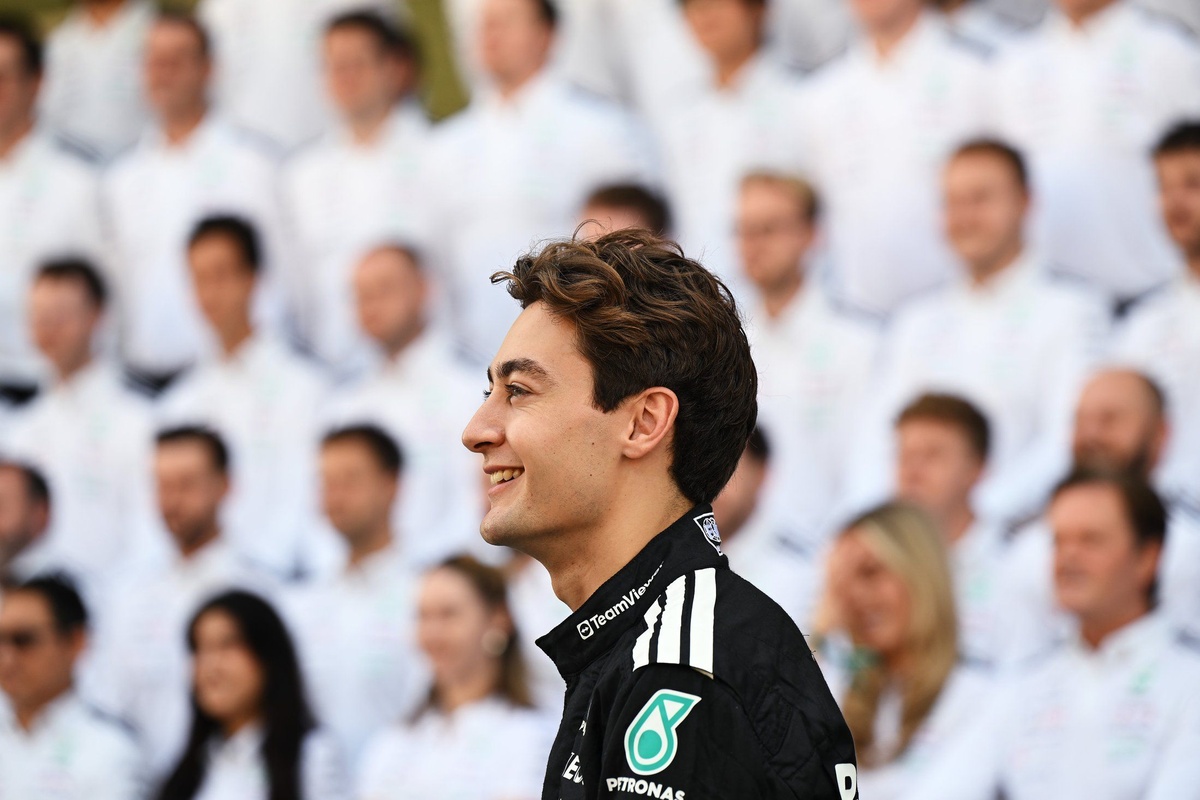
Former F1 driver and respected pundit Karun Chandhok has unleashed a bold prediction for the 2026 Formula 1 season, earmarking Mercedes star George Russell as the outright favourite for the Drivers' Championship. With radical new regulations set to reset the grid, Chandhok believes key operational advantages will propel Russell to the top.

Image: AUTOSPORT
Chandhok highlighted the unique position of established "works teams" like Mercedes and Ferrari. He argues their long-standing, integrated operations, where both chassis and power unit are developed under one roof, will be a decisive factor.
"What we're hearing from a lot of the drivers is the word systems," Chandhok noted. "Having a team from a chassis and power unit side as an integrated operation... has to be an advantage in the early stage of this power unit regulation. And to me, that puts George Russell as the favourite."
This seamless collaboration is crucial, especially as new engine architectures demand unprecedented harmony between every component of the race car.
Unpacking the 2026 F1 Technical Revolution
The 2026 F1 regulations are not just a tweak; they represent a fundamental overhaul designed to level the playing field and emphasize engineering prowess. Key changes include a 50:50 split between internal combustion engine and electric power, significantly lighter cars, and the introduction of active aerodynamics, replacing the familiar DRS system.
This fresh blueprint means that past dominance, such as Red Bull's ground-effect era or Mercedes' hybrid era, offers no guarantee of future success. Teams must entirely rethink their approach, making the integrated "systems" Chandhok champions more vital than ever.
Mercedes' Pragmatic Outlook Amidst High Hopes
While external predictions like Chandhok's fuel excitement for Mercedes, the Brackley outfit's own team principal and CEO, Toto Wolff, offers a typically pragmatic, almost pessimistic, assessment. Despite Mercedes' historical success in previous regulation changes, Wolff remains grounded.
"I'm a notorious pessimist, and the glass is always half empty rather than half full," Wolff stated in a team debrief. He emphasised the unknown variables: whether their internal targets are ambitious enough, if they've missed any crucial insights, or if their execution will be flawless.
"We're going to see some glimpses of performance balance in testing late in January and then in Bahrain," Wolff added. The focus, he insists, will be on relentless, season-long development to master the new technical landscape.