
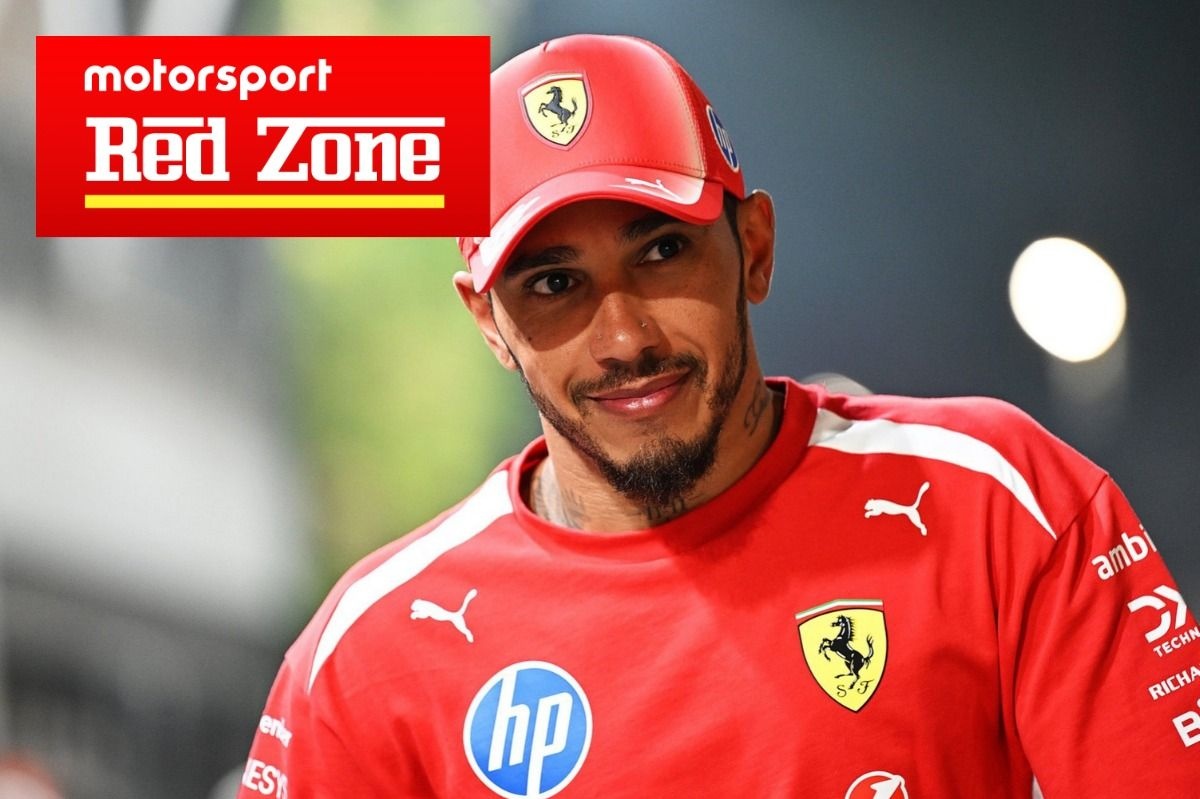

A tactical gamble gone horribly wrong saw Lewis Hamilton sacrifice a potential podium finish at the 2026 Singapore Grand Prix, leaving Ferrari and fans bewildered. The seven-time world champion’s independent call to defy a team instruction during a Virtual Safety Car (VSC) period has sparked debate, with pundit Martin Brundle labeling the strategy "bizarre." This bold move ultimately relegated Hamilton to a disappointing sixth place, costing Ferrari crucial points and a dual podium with Charles Leclerc.
Key Points:
- Lewis Hamilton opted against pitting under a Virtual Safety Car at the Singapore GP, a move that diverged from Ferrari's strategy.
- This decision forced him to complete an arduous 44 laps on a single set of soft tires.
- F1 pundit Martin Brundle slammed the call as "bizarre," questioning the logic behind missing a 'free' pit stop.
- Hamilton openly apologized to the team, taking full responsibility for the strategy that cost Ferrari a likely podium spot.
The High-Stakes Gamble: Hamilton's VSC Defiance
The moment of truth arrived on Lap 18. After an initial stop for soft tires, Ferrari issued a clear directive to both Hamilton and Charles Leclerc to pit under a VSC, triggered by Lance Stroll's stranded Aston Martin. This was a golden opportunity for a 'cheap' tire change, essential on the punishing Marina Bay Circuit.
However, Hamilton made an unprecedented call from the cockpit: he stayed out. This defiant move committed him to an astonishing 44-lap endurance run on a single set of soft compound tires. The degradation was inevitable, and his race pace crumbled as competitors on fresh rubber surged past.
Brundle's Blunt Verdict: "Bizarre" Strategy Cripples Ferrari
Former F1 driver and respected pundit Martin Brundle didn't mince words when dissecting the incident. Writing for Sky Sports F1, Brundle highlighted the perplexing nature of Hamilton's decision, especially given the clear strategic advantage of a VSC stop.
"Bizarrely, he would not stop again, despite the opportunity to make a relatively cheap pitstop under a Virtual Safety Car," Brundle observed. This choice directly led to a "relentless slide down the order," culminating in Hamilton losing fifth place to Oscar Piastri's McLaren even after Piastri himself made an unscheduled stop for a puncture.
Pit Wall vs. Cockpit: A Battle of Instincts and Data
Ferrari Team Principal Fred Vasseur publicly confirmed the team's dismay, stating, "We lost the podium with this." Vasseur asserted that Hamilton would have likely secured second or third place had he followed the instruction. The incident underscores the inherent tension between a driver's in-the-moment instincts and the vast data-driven strategy of the pit wall.
"It is difficult to run a modern F1 car and manage the team’s strategy from behind the wheel," Brundle noted. While Hamilton's instinct to try something different on a notoriously difficult track like Singapore is understandable, the modern sport often demands unwavering trust in the pit lane's comprehensive overview.
Hamilton's Accountability: "A Painful Lesson"
True to his character, Lewis Hamilton immediately accepted full responsibility. Over the team radio post-race, he offered a candid apology: "Sorry, boys. I let you down today with that strategy." His statement on social media further reinforced his ownership of the mistake.
"Yesterday wasn't the result we were looking for, and that's on me," Hamilton posted. He described it as "a painful lesson to learn" but emphasized using it as "a foundation for improvement." Despite the poor result, he acknowledged the "pace we had in the car" and vowed to "come back fighting." This transparent admission solidifies his reputation as a sportsman, even in defeat.
The Singapore Grand Prix serves as a stark reminder that even the greatest drivers can make costly decisions. For Ferrari, it’s a moment to re-evaluate communication and trust with their star driver, ensuring future race-winning strategies are executed as planned.