
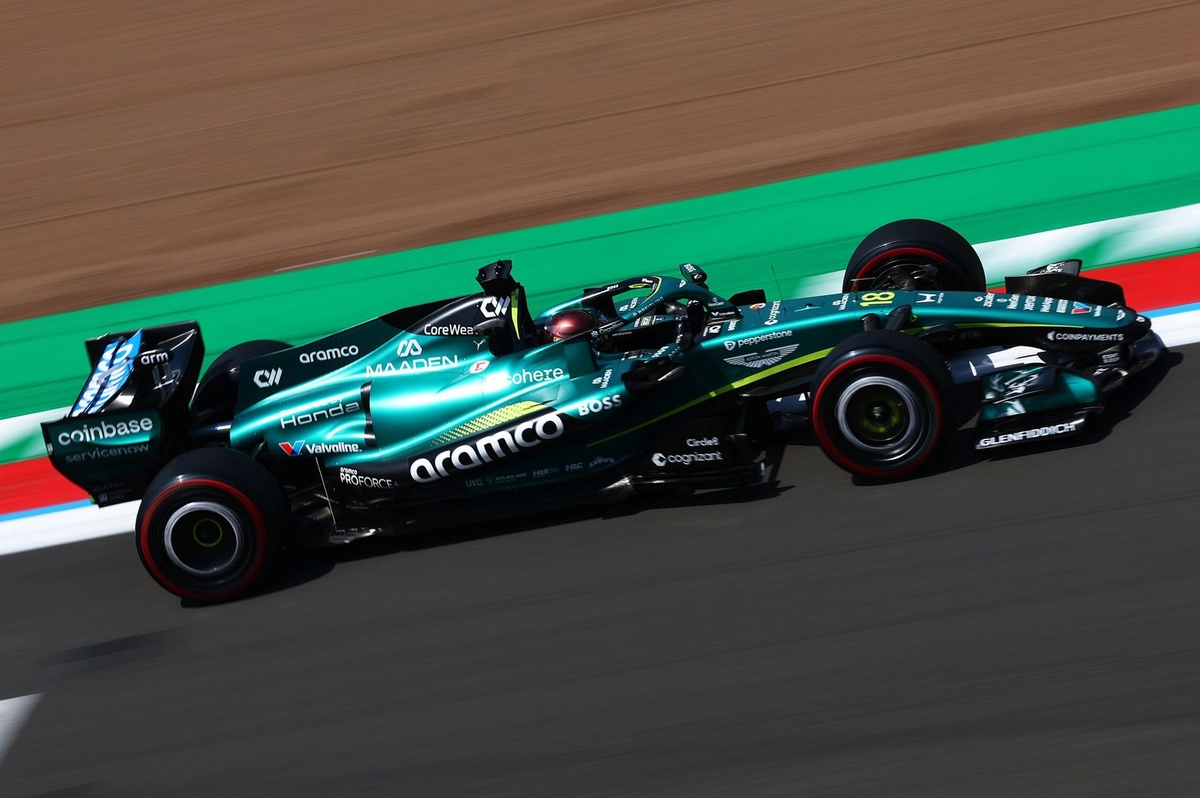

The roar of a Honda engine in Formula 1 has always promised power, but the opening months of its new partnership with Aston Martin have been anything but smooth. Yet, despite the early struggles, the Japanese giant is already looking ahead with an ambitious roadmap to re-establish itself as a premier power unit supplier. Rather than chasing quick fixes, Honda is targeting major progress by the end of the 2027 F1 season or the beginning of 2028.
Key Points:
- Zandvoort Upgrade: Honda is introducing its first significant engine upgrade, focused solely on the internal combustion engine (ICE).
- 2027 Vision: Development is heavily centered on the 2027 F1 regulations, with a focus on substantial combustion performance improvements.
- Chassis Integration: Closer collaboration with Aston Martin is crucial to seamlessly integrate the Honda power unit with future chassis designs, including those influenced by Adrian Newey.
- Reliability Challenge: Changes to fuel flow rates for 2027 and 2028 will demand significant reliability development within a challenging timeline.
- Ambitious Timeline: Honda aims to become a “top competitor” in F1 by late 2027 or early 2028.
The Green Machine's Initial Power Struggle
The current state of the Honda-Aston Martin partnership has been a tough pill to swallow for fans. Significant personnel changes within Honda’s F1 project meant a difficult start was anticipated, but general trackside manager and chief engineer Shintaro Orihara admits the reality has been “even more problematic than expected.”
The search for performance has clearly been a steeper climb than initially projected, leaving Honda with plenty of work to do as it looks to close the gap to its rivals.
Injecting New Life: The Zandvoort Upgrade
Hope is on the horizon for Aston Martin, with Honda set to introduce its first major ADUO upgrade at Zandvoort.
The crucial update is focused on the internal combustion engine, with the immediate goal of getting the Honda power unit “back into the racing field” in terms of raw performance.
However, Orihara acknowledges that several more upgrades will be required to fully bridge the performance gap. The Zandvoort package therefore represents an important first step rather than an instant solution to Honda’s current struggles.
Eyes on the Horizon: Honda's 2027 F1 Ambition
Hope is on the horizon for Aston Martin, with Honda set to introduce its first major ADUO upgrade at Zandvoort. The crucial update is focused on the internal combustion engine, with the immediate goal of getting the Honda power unit “back into the racing field” in terms of raw performance.
However, Orihara acknowledges that several more upgrades will be required to fully bridge the performance gap. The Zandvoort package therefore represents an important first step rather than an instant solution to Honda’s current struggles.
Synergy with Silverstone: Integrating the Beast
Raw power will not be enough. Integration between the Honda power unit and Aston Martin chassis will also play a major role in the partnership’s future. The new engine and chassis regulations provide an opportunity for Honda and Aston Martin to work more closely on integrating the power unit into future designs, particularly with the influence of engineering maestro Adrian Newey.
Early discussions around Newey’s complex requests highlighted some of the challenges involved. However, after a year of shared experience, Honda and Aston Martin have a stronger foundation for developing a more harmonious package moving forward.
The Reliability Gauntlet: F1's Power Shift
The road to 2027 is not simply about finding more speed. Honda must also ensure its power unit can handle the increased demands created by the changing balance between combustion and electrical power.
The balance is set to move toward 58-42 between ICE and electrical power in 2027, before progressing to 60-40 in 2028. The resulting changes in fuel flow rates will create another major reliability challenge for manufacturers. “The demands in terms of reliability will be quite big,” Orihara confirmed.
Honda therefore faces a difficult dual challenge: improving combustion performance while also handling increased fuel-flow demands. Despite the limited development window, Honda believes the FIA’s phased approach makes the target achievable.
Echoes of Red Bull Glory?
Honda has been through a difficult F1 rebuild before. Its previous stint in the championship initially featured plenty of challenges, but ultimately culminated in multiple world championships with Red Bull Racing and Max Verstappen.
That history offers Honda an important reminder of what can be achieved with the right development path. While its current struggles make any talk of victories premature, the manufacturer has already demonstrated that it can turn an underwhelming start into championship-winning performance.
The Road to a Top-Competitor Status
When asked about Honda’s timeline for closing the gap, Orihara offered a candid assessment of the manufacturer’s ambitions. “At the beginning of 2027, maybe we will not have the best of the power units yet, but we will be closer to the top competitor.”
The ultimate target is to become a “top competitor” by the end of 2027 or the start of 2028. For Honda and Aston Martin, the road ahead is clearly demanding. But with the Zandvoort upgrade providing an immediate performance push and 2027 serving as the bigger development target, Honda now has a defined path toward closing the gap.
The comeback will not happen overnight, but Honda’s F1 future is already being built around the next major opportunity.