
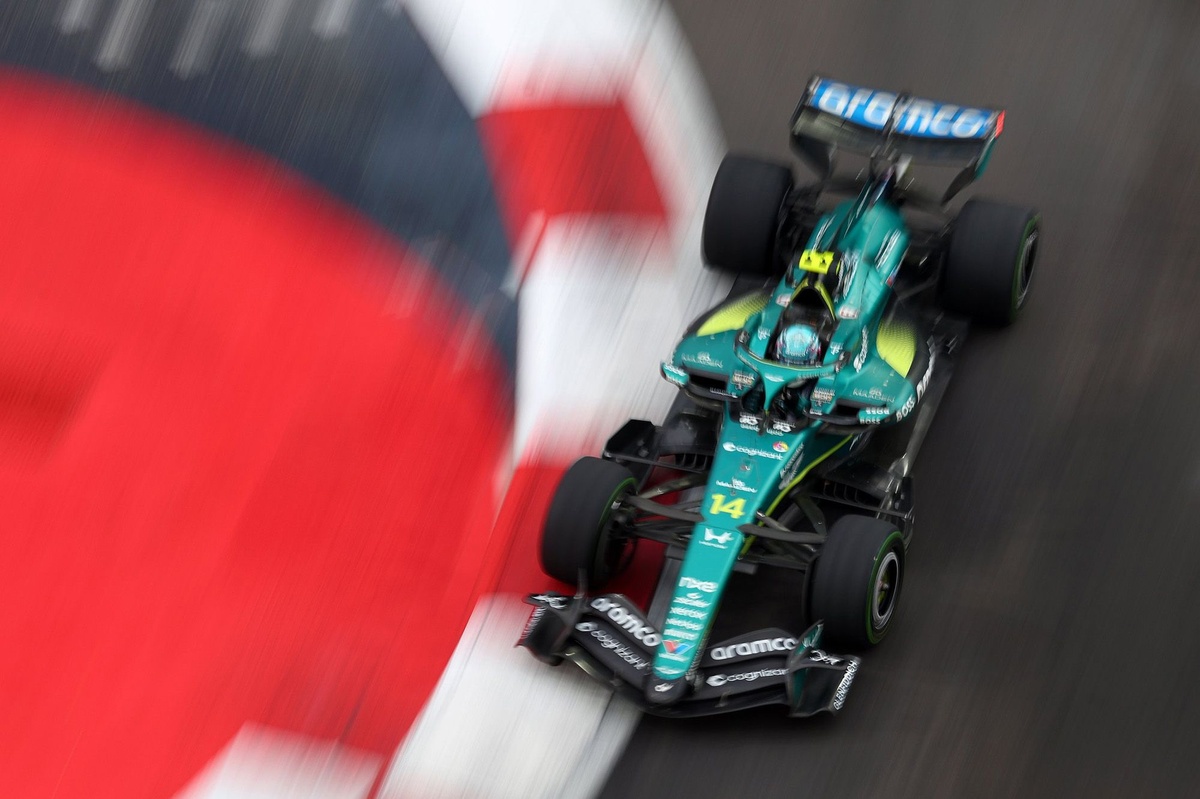

The latest Honda Formula 1 power unit upgrade has delivered a much-needed increase in power, but it has also created a new challenge for Aston Martin by setting back the engine’s driveability. Honda Racing Corporation (HRC) President Koji Watanabe has acknowledged the setback, highlighting the difficult balance between improving performance and maintaining consistent power delivery.
Key Points:
- Honda’s Spec 2 power unit met its power output targets, helping narrow the gap to rival manufacturers.
- The gains came at a cost, with driveability reportedly regressing to levels seen during the troubled early stages of Spec 1.
- Aston Martin drivers, including Fernando Alonso, have raised concerns about severe turbo lag and “random downshifts.”
- Koji Watanabe says engineers must now refocus on control systems and hardware to restore the power unit’s driveability.
The Double-Edged Sword of Spec 2
It has been a case of progress in one area and a setback in another for Honda as it continues its return to the Formula 1 grid. While the new Spec 2 power unit has achieved its target of delivering more power, its driveability has reportedly regressed significantly, making the engine less predictable for drivers.
This leaves Aston Martin’s Adrian Newey-designed AMR26 dealing with an unpredictable power unit, despite improvements to the chassis in late summer. Nevertheless, Aston Martin has shown signs of progress, scoring six points across the last six rounds and beginning to challenge the midfield.
Alonso’s Frustration: A Driver’s Perspective
Few drivers understand the importance of predictable power delivery better than Fernando Alonso. The veteran Spaniard has highlighted issues with the power unit, including severe turbo lag and “random downshifts.” Such problems can disrupt a driver’s rhythm and make it harder to push the car consistently.
Watanabe acknowledged the drivers’ concerns. While the main objective of Spec 2 was to increase power and reduce the performance gap to rival manufacturers, changes to the combustion process inadvertently affected the power unit’s responsiveness and predictability on track.
Unpacking Honda’s F1 Comeback Challenges
Despite Honda’s long history in Formula 1, its return has presented significant development challenges. The new technical regulations also demand a power unit with a much greater emphasis on electrical energy, accounting for nearly 50% of its energy output.
Following its official withdrawal from the Red Bull partnership in 2021, Honda decided to return to Formula 1 in 2023. However, Watanabe explained that establishing a fully functioning development organisation took valuable time, leaving Honda almost two years behind competitors that had started earlier.
The Cost of a Late Start and Limited Resources
With resources constrained and development time limited, Honda initially prioritised electrified components, including the battery and electric motor. Although these areas met their targets, development of the internal combustion engine (ICE) fell behind. Had Honda begun with a fully staffed development organisation, resources could have been allocated to both the electrified components and the ICE simultaneously.
Instead, by the time the focus shifted towards the combustion engine, the team was already working against lost time, the sport’s strict budget cap, and restrictions on development and operating time. These constraints made it difficult to close the gap to manufacturers that had begun their programmes earlier.
The Road Ahead: Balancing Power and Precision
Despite the driveability setback, Watanabe remains optimistic that the problems can be addressed through hardware refinements and adjustments to the power unit’s control systems. Early indications suggest driveability is already improving, even as Honda works through its current challenges.
The next step is to combine the power gains from Spec 2 with more consistent and predictable delivery. For Aston Martin to make further progress in Formula 1, Honda must develop a power unit that delivers both performance and control.