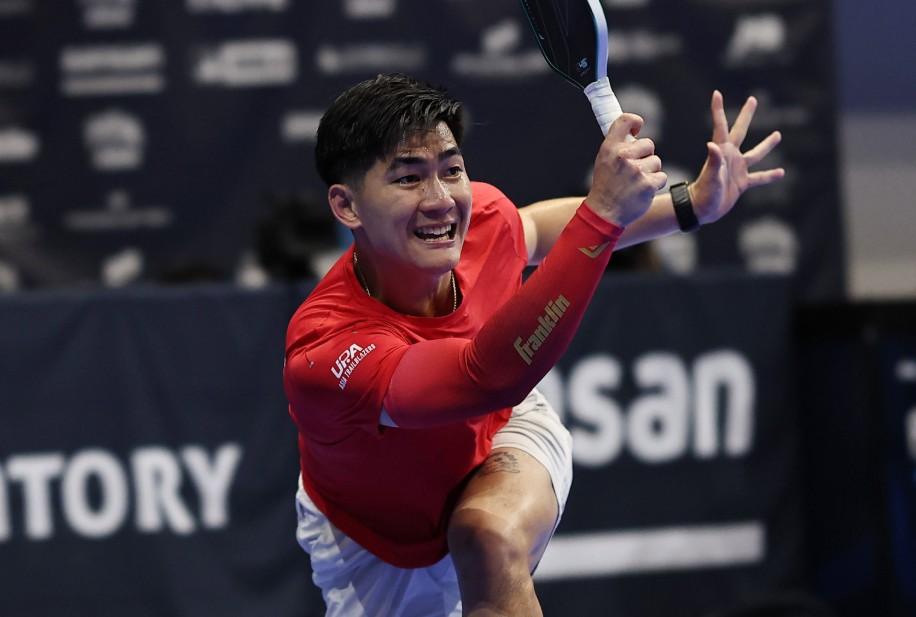

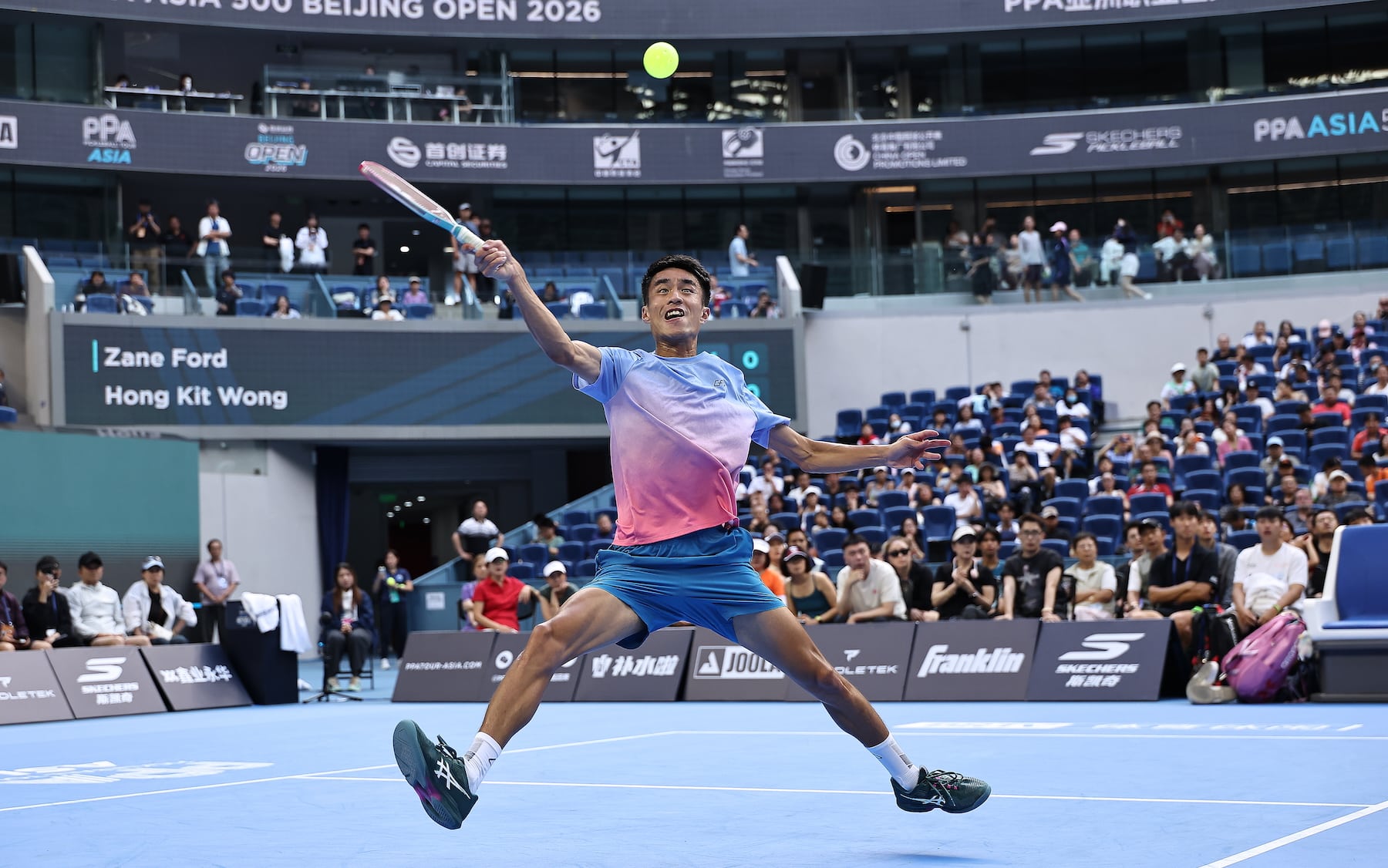

Jack Wong Hong-kit isn't just a favorite; he's a phenomenon, arriving at the Leapmotor Singapore Open with a momentum that feels utterly insurmountable. The question isn't whether he'll contend, but if any challenger has truly cracked the code to his evolving dominance.
Here’s why Hong-kit is the man to beat:
- Unprecedented Form: He’s peaking at precisely the right moment, riding back-to-back championship wins.
- Serving Machine: His "Points Per Side Out" (PPS) metric demonstrates a clear upward trajectory in tournament play.
- Clutch Performance: Crucially, his finals PPS has surged, indicating a newfound ability to deliver under immense pressure.
- The Blueprint Exists (But It's Tough): Only Tama Shimabukuro has successfully neutralized his serve in a final, offering a glimmer of hope to the field.
The Numbers Don't Lie: Hong-kit's Ascending Dominance
In the high-stakes world of singles side-out pickleball, the "Points Per Side Out" (PPS) statistic is the ultimate barometer of a server's power. It measures points won while holding serve against total serving turns. A higher PPS signals a server who consistently racks up points, while a lower one suggests a player who gives the ball back cheaply. For Jack Wong Hong-kit, this number tells a story of relentless improvement.
His recent deep tournament runs paint a vivid picture. At the Macao Open in May, where he secured a silver, his PPS stood at 1.30. A month later, he clinched the Beijing Open with a solid 1.22 PPS. Then came the Sansan Tokyo Open, where Hong-kit truly suffocated his competition, boasting an astounding 1.59 PPS – converting 89 points from just 56 serving turns. He famously swept that tournament without dropping a single game. The trend is clear: his serving game is getting stronger with every event.
Clutch Performer: Finals PPS Trend Soars
What makes Hong-kit's current form particularly terrifying for his opponents is his remarkable evolution in championship matches. Analyzing his final-round PPS across these three tournaments reveals a straight line upwards: 0.72 in Macao, 1.16 in Beijing, and an incredible 1.69 in Tokyo.
At the Macao Open final, his serve, usually a weapon, was neutralized, yielding only 18 points from 25 turns against Tama Shimabukuro. Fast forward to Tokyo, and Hong-kit was averaging nearly a point and a half every single time he served in the final, securing a comprehensive victory.
The Shimabukuro Blueprint: How to Derail the Juggernaut
While Hong-kit's trajectory points to inevitable victory, there is a known strategy to challenge him. In the Macao Open final, Tama Shimabukuro demonstrated the only successful approach to date. He didn't try to out-serve Wong; instead, he dragged the match into a brutal side-out battle.
Shimabukuro's game plan revolved around neutralizing Hong-kit's primary weapon, forcing an "ugly" match where clean scoring runs were scarce. Over half of all serving turns in that final yielded zero points, and neither player achieved a consecutive scoring run longer than three. Shimabukuro's own PPS was a modest 0.85, but that was the genius of it. By dismantling Wong's serving rhythm, Shimabukuro exposed a vulnerability, proving that the gap between silver and gold wasn't talent, but execution in the final moments.
Singapore Showdown: Is the Three-Peat Inevitable?
Jack Wong Hong-kit arrives in the Lion City not just as a favorite, but as an athlete who has visibly and measurably evolved. He’s riding the high of back-to-back titles, with his finals performance trending sharply upward. He has learned from the Macao experience, adapting his game to maintain his elite level when the stakes are highest.
Winning a third straight PPA Tour Asia Men's Singles title is no longer just a possibility—it is a realistic goal backed by consistent results. For his rivals in Singapore, the challenge is clear: do a Tama. But Hong-kit is no longer the player who lost in Macao; he's the player who learned from it. The Hong Kong, China star, now a master of the finish, is ready to etch his name further into the pickleball history books.