
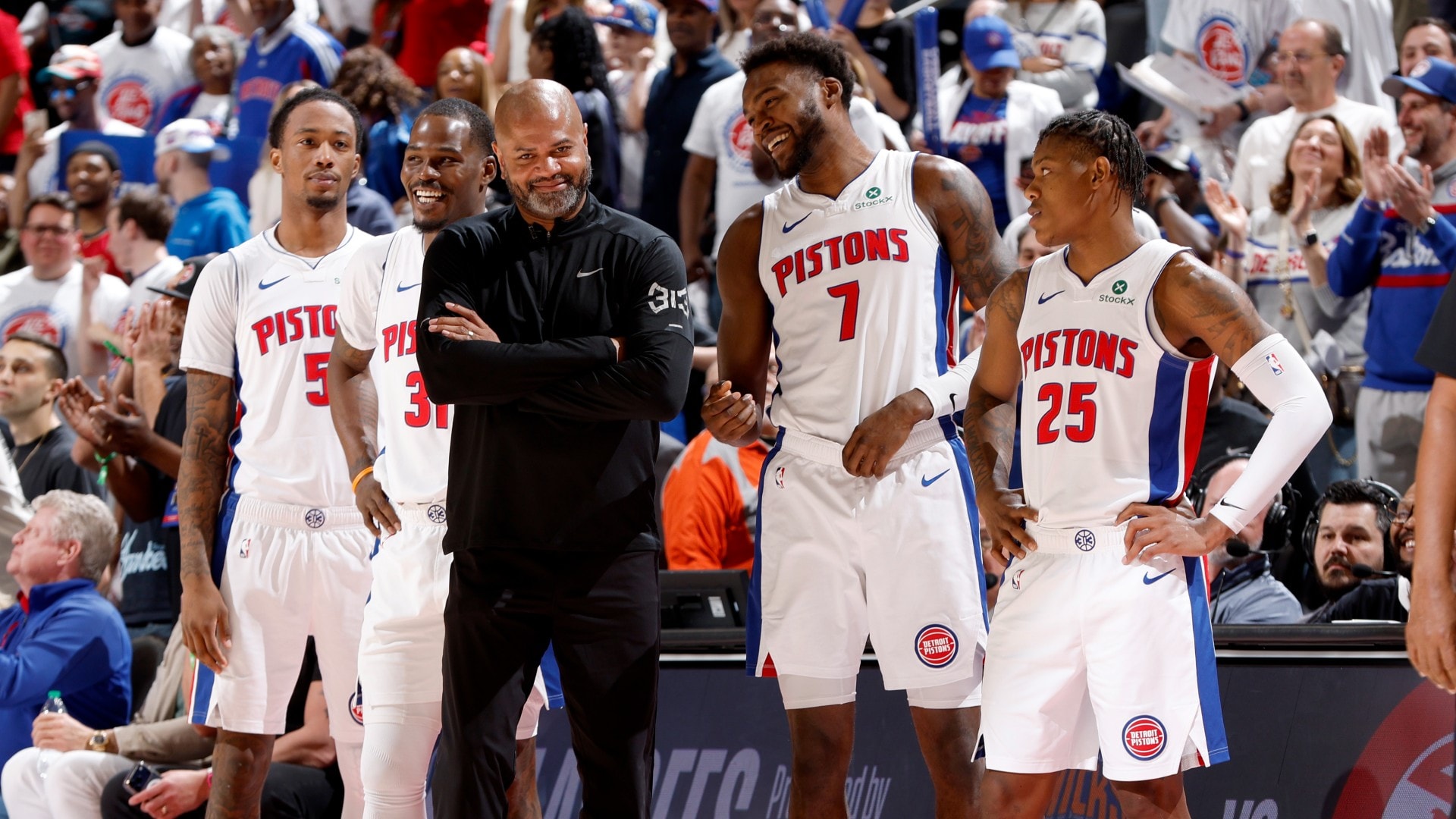

The Architect of Renewal: Bickerstaff's Impact on Detroit
The Detroit Pistons have undergone a seismic shift, transforming from league basement dwellers to a formidable force, and at the heart of this dramatic resurgence stands head coach J.B. Bickerstaff. His unwavering passion and profound emotional intelligence have not just guided a team, but meticulously crafted a culture of growth and relentless pursuit of excellence.
Key Points of Bickerstaff's Impact
- Emotional Intelligence: Fosters deep, individualized relationships, understanding players beyond the court.
- Dramatic Turnaround: Led the Pistons from a challenging 14-win season to a stunning 60 regular-season wins in just two years.
- Player Development: Empowered young stars like Cade Cunningham, Jalen Duren, and Ausar Thompson into All-NBA caliber talents.
- Collaborative Leadership: Cultivates a "democracy" within his coaching staff, welcoming challenges and diverse input.
Even in 2005, during his pre-draft workouts, guard Jarret Jack recognized something special in a young J.B. Bickerstaff. Jack, now an assistant under Bickerstaff in Detroit, vividly recalls the unparalleled passion and unique energy that set Bickerstaff apart. This same unyielding zeal is what has propelled Bickerstaff to a 2026 Coach of the Year finalist nod. His ability to ignite a team's spirit proved critical in the Pistons' recent 3-1 comeback playoff series victory – their first since 2008 – earning him a well-deserved contract extension.
Beyond the X's and O's: The Human Connection
The bedrock of Bickerstaff's coaching triumph lies in an extraordinary grasp of human nature. He doesn't employ a rigid, universal playbook for interaction; instead, his profound emotional intelligence allows him to tailor his approach to each individual. This bespoke method has fostered deep, illuminating relationships with both his players and his coaching staff since he took the reins in Detroit.
Assistant coach Luke Walton emphasizes that players innately sense genuine care, and Bickerstaff delivers. "He truly cares about people," Walton affirmed, highlighting the coach's philosophy: "Our job is to make these players feel invincible." This belief, coupled with personalized attention, has been transformative for a young team aiming to rebound from a difficult period.
While Bickerstaff upholds non-negotiables like maximum effort, tenacious defense, and team-first mentality, his true genius lies in adaptability. He instinctively knows when to shift roles – from coach to mentor, from sounding board to a listening ear. This rare quality has been instrumental in earning the crucial trust and buy-in from the Pistons' locker room, spearheading their incredible leap from 14 wins to a remarkable 60 regular-season wins in just two seasons.
Forging Future Stars: A Development Dynamo
Superstar guard Cade Cunningham, a family-oriented player, finds an additional layer of support in Bickerstaff. "He's super supportive of all of us outside of just basketball," Cunningham shared, noting that players feel comfortable calling him about personal issues, from relationships to family matters. This selfless support, coupled with a desire for on-court greatness, is invaluable for young athletes navigating a demanding profession.
The proof of Bickerstaff's developmental prowess is etched in the Pistons' roster. Cade Cunningham has blossomed into an All-NBA talent. Center Jalen Duren has ascended to All-Star status, contending for an All-NBA team spot and a Most Improved Player finalist nod. Rookie Ausar Thompson emerged as a Defensive Player of the Year finalist, while Isaiah Stewart, despite missing games, was widely considered for an All-Defensive team.
Jalen Duren credits Bickerstaff's direct approach for his offensive surge, leading to a career-high 19.5 points per game and a 23.1 usage percentage. "It was a match made in heaven," Duren stated, referring to Bickerstaff's arrival after his own challenging departure from Cleveland. "He demands the best... and encourages the emotional engagement of the game."
A Journey Forged in Fire: Lessons from the Sidelines
From Assistant to Head Honcho: Evolving Leadership
Bickerstaff's unique perspective is rooted in his upbringing with an NBA coach father, Bernie Bickerstaff, who now advises the Pistons. His own 12-year journey as an assistant coach, including interim stints with the Houston Rockets, Memphis Grizzlies, and Cleveland Cavaliers, shaped his deep understanding of player development.
During his assistant years, often with rebuilding teams, Bickerstaff realized that "you can't just basketball coach your way out of that." He saw young players dealing with challenges beyond the court – success, failure, and new environments. This early insight reinforced his belief in building real relationships as a core responsibility.
His father, Bernie Bickerstaff, describes J.B. as hardened by tough situations, allowing him to cut through distractions. "His work ethic has also been consistent," Bernie observed, noting his son's ability to quickly adapt to what is needed. The elder Bickerstaff has always emphasized that coaching success ultimately depends on the players.
After guiding the Cavaliers to a 95-win record in two seasons following a 22-win predecessor, Bickerstaff ultimately left Cleveland and joined Detroit. He sees those experiences as essential preparation. "This was the perfect spot for me," Bickerstaff admitted, adding that every challenge helped prepare him for the Pistons and a new chapter for his family.
The Collaborative Command: Empowering His Staff
Bickerstaff’s collaborative mindset extends to his coaching staff, including assistants Jarret Jack and Luke Walton, whom he retained. He encourages open voices, building a democratic culture rather than a top-down system. As Jack recalled from an early dinner, Bickerstaff challenged his assistants: "I don't want y'all to kiss my ass. I want y'all to go at me."
This approach brings in fresh ideas and honest feedback, which Bickerstaff believes keeps him sharp and evolving. He remains open-minded and actively seeks new perspectives, even as an established head coach. This willingness to be vulnerable strengthens his understanding of people.
The trust he builds is clear. As Cunningham said, "Almost every head coach will say, 'Yeah, can you come talk to me about whatever.' But to actually have guys feel that security in doing that is a whole different thing." Bickerstaff’s emotional intelligence, shaped by years of experience, has helped unlock the Pistons’ potential and drive their turnaround.