

Is your pickleball paddle silently losing its edge? You invest in top-tier gear to dominate the court, but without proper care, even the best paddles will underperform and die an early death. Don't let carelessness cost you crucial power and spin; extending your paddle's prime performance is simpler than you think. While natural wear is inevitable, smart habits can drastically stretch its lifespan and keep you playing at your peak.
Your Paddle's Lifeline: Essential Care Tips
- Combat Temperature Extremes: Heat is the ultimate enemy; cold also poses a risk.
- Shield Your Surface: A paddle cover isn't just for looks – it preserves critical texture.
- Master the Cleanse: Regular cleaning ensures maximum spin and ball control.
- Store Smart: Where and how you keep your paddle directly impacts its longevity.
The Silent Killer: Extreme Temperatures
Every powerful strike sends shockwaves into your pickleball paddle's core. Over time, this internal structure, whether honeycomb polymer or engineered foam, begins to compress. This leads to a softer rebound, the emergence of dead spots, and a shrinking sweet spot. This natural degradation is unavoidable, but reckless exposure to temperature extremes accelerates it dramatically.
Hot Car Havoc: A Paddle's Worst Enemy
Few threats are as destructive as heat, and it's often the most overlooked. Leaving your pickleball paddle in a hot car can be a death sentence. Interior temperatures can easily soar past 140°F (60°C), enough to soften the adhesive bonding the face to the core and even warp the core material itself. Thermoformed paddles, initially shaped under heat and pressure, are particularly vulnerable to this kind of thermal stress.
The solution is simple and free: keep your paddle indoors, in a climate-controlled environment. Your car's boot, a sunny windowsill, or an uninsulated garage are all no-go zones. After an intense outdoor session, bring your paddle inside immediately rather than leaving it to bake in your bag.
The Chill Factor: Guarding Against Cold
While heat gets the bad rap, prolonged exposure to freezing temperatures also poses a significant risk. Cold can make composite materials brittle, leaving your paddle considerably more susceptible to micro-cracking when you next strike the ball. Just as you wouldn't leave an athlete out in extreme conditions, don't subject your gear to them either.
Shield Your Weapon: The Power of a Paddle Cover
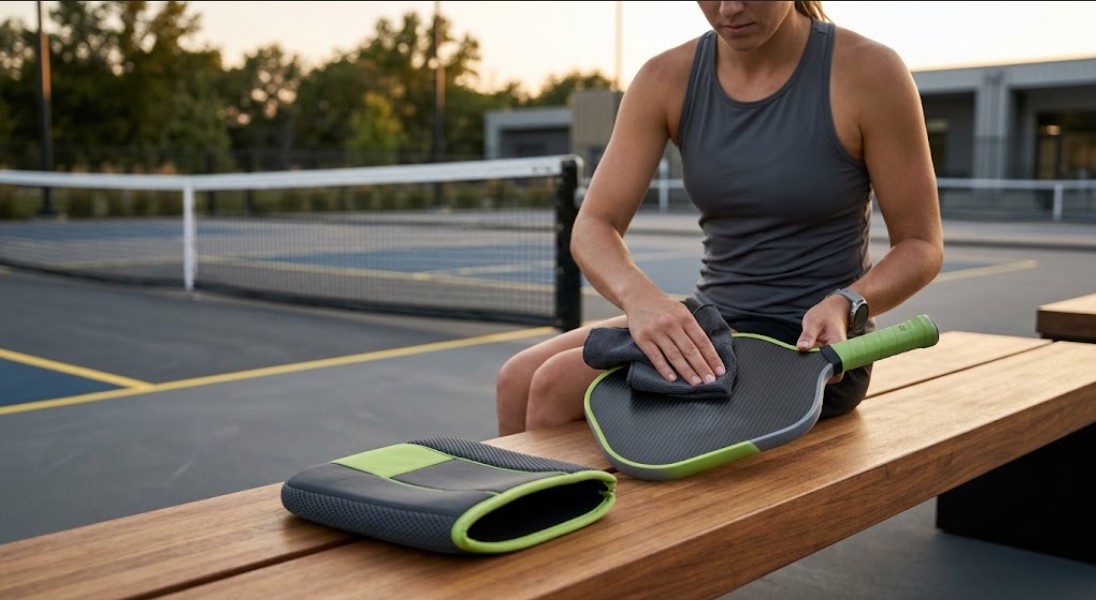
A quality paddle cover won't magically halt the internal compression from gameplay – nothing can stop that. However, its importance lies in safeguarding the vulnerable edges and surface from external damage. Think scratches, dings, and the general abrasion that occurs during transport and storage.
For raw carbon fiber faces, that slightly gritty texture is the secret to generating incredible spin. Protecting this crucial surface with a cover when not in play is essentially protecting your entire spin game. It's like a phone case; it won't stop the internal wear, but it'll prevent costly external damage.
Spin Doctor: Keep Your Paddle Face Flawless
After every match, your pickleball paddle face accumulates dirt, ball residue, and court grime. This seemingly harmless layer stealthily reduces the surface friction essential for grip and, crucially, your spin. Letting it build up means a gradual decline in control and power.
Daily Cleanse: Post-Match Ritual
Maintaining consistent performance between sessions is easy. A quick wipe-down with a microfiber cloth immediately after play is usually enough to remove surface debris. This simple habit preserves the critical texture of your paddle face.
Deep Dive: When to Bring Out the Big Guns
For a more thorough clean, a dedicated paddle cleaning spray is your best friend. Simply spray, wipe, and you're done. For paddles featuring a raw carbon fiber face, a specialized cleaning block can be even more effective. These blocks lift embedded dirt without degrading the delicate texture responsible for your spin.
Crucially, steer clear of harsh household cleaners, solvents, or anything abrasive. These substances can strip away the surface treatment, alter the face's characteristics, or leave behind residues that negatively impact ball reaction. Stick to products designed specifically for pickleball paddles to ensure you're helping, not hurting, your gear.
Modern pickleball paddles are engineering marvels, built with composite construction akin to aerospace technology to handle intense forces. Forgetting this when your paddle is tucked away in a bag is easy, but remember its intricate design the next time you consider leaving it baking in the sun or rattling around unprotected. A little discipline in how you store, cover, and clean your paddle won't make it immortal, but it will guarantee significantly more months of peak performance, ensuring your investment truly pays off on the court.