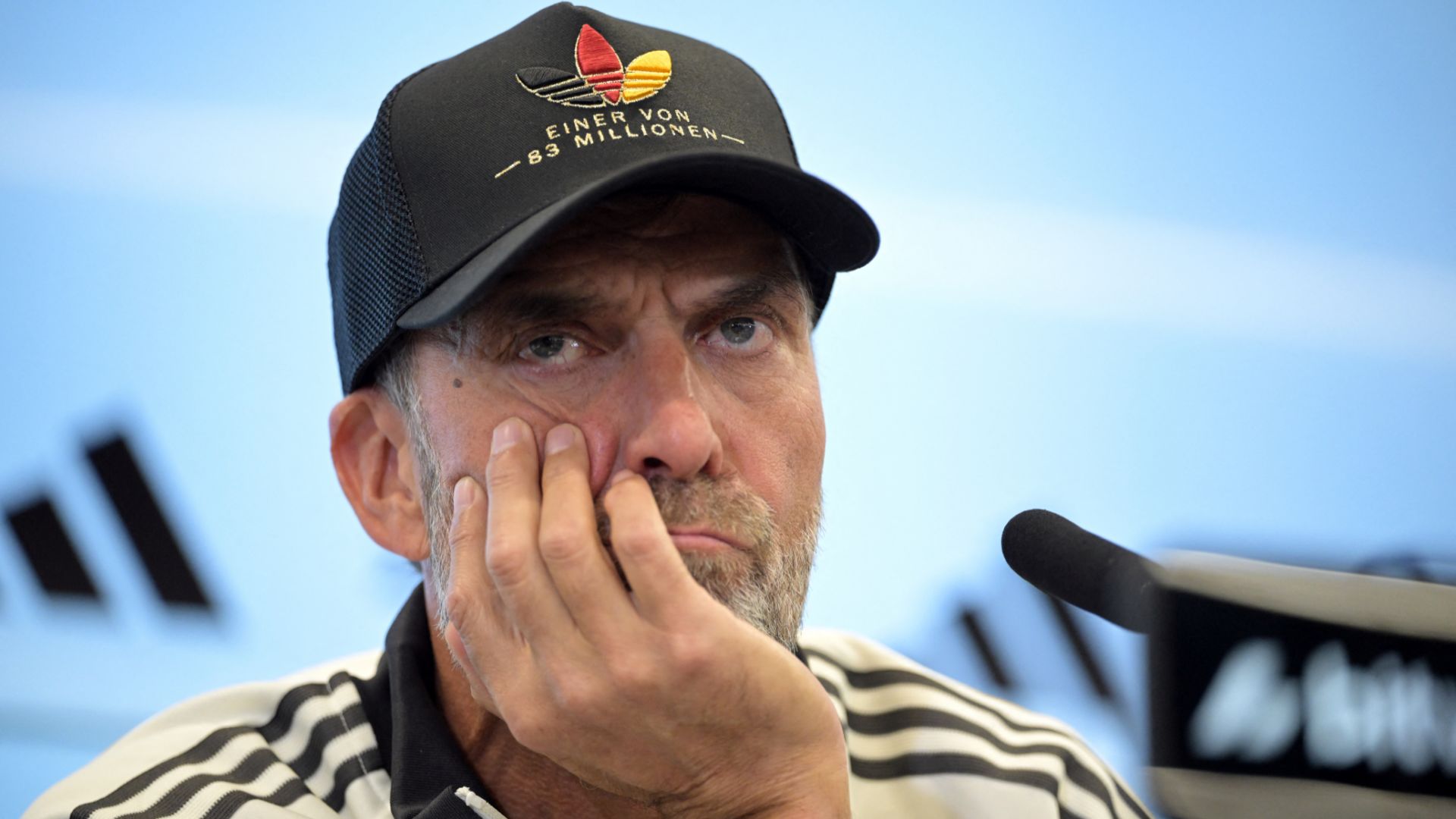

The wait is over! Jurgen Klopp, the architect of modern Liverpool and Borussia Dortmund dynasties, has finally answered the call of his nation, stepping into the demanding role of Germany national team manager. After a brief hiatus, the charismatic coach is back, aiming to inject his trademark passion and intensity into Die Mannschaft.
Key Points:
- Jurgen Klopp departed Liverpool in 2024 after nine trophy-laden years, taking a break from club management.
- He returns to the dugout in 2026, leading the Germany national team following Julian Nagelsmann's disappointing 2026 World Cup exit.
- Former German international Robert Huth has challenged Klopp to simply "be less sh*t" and reignite the team's fighting spirit.
- Expectations are sky-high for Klopp to implement his "heavy metal football" philosophy and restore Germany to international prominence through the 2030 World Cup.
The Prodigal Son's Return to the Touchline
Having brought an iconic nine-year tenure at Anfield to a close in 2024, which saw him deliver Premier League and Champions League glory, Klopp initially stepped away from the relentless pressure of club management. His brief stint as Head of Global Football for Red Bull allowed for much-needed family time, away from transfer negotiations and selecting starting XIs. However, the allure of the touchline proved too strong to resist for the 59-year-old tactician.
The call from his homeland became irresistible after Julian Nagelsmann's side crashed out in the last-32 of the 2026 World Cup. Klopp's return to the international stage marks a pivotal moment for German football, with a contract in place that runs through to the 2030 World Cup. This long-term commitment signals a deep-seated belief in his ability to rebuild and revitalize the national squad.
Rebuilding Die Mannschaft's Spirit
Former Germany international Robert Huth, speaking to GOAL via SportsbookReview.com, perfectly encapsulated the mood: "Be less sh*t! The bar isn't very high, I think, at the moment." This blunt assessment highlights the urgency of Klopp's task, yet Huth also noted the immediate, palpable surge of unity and excitement generated by the appointment. The nation has waited for Klopp for years, sensing his unique ability to connect and inspire.
Huth was particularly struck by Klopp's inaugural press conference. "There was no BS. There were no clever words," he recalled. Instead, Klopp issued a direct challenge to his players: "If you want to play for Germany, you're going to have to run a bit harder, you're going to have to fight harder, this is going to mean a bit more when you put the badge on." This straightforward, passionate approach is precisely what many believe Germany needs to rediscover its competitive edge.
The "Heavy Metal" Blueprint: Expectations for Klopp's Era
The vision for Klopp's Germany is clear: to replicate the intensity, pace, energy, and spirit that defined his successful teams at Dortmund and Liverpool. This "heavy metal football" philosophy promises a dynamic, attacking style that has been sorely missed. While acknowledging the inherent difficulties in translating club intensity to the national team setup, Huth expressed genuine excitement about the potential transformation.
Winning every tournament isn't the immediate, sole benchmark for success, as Klopp himself understands. "There's France, there's England, there's Brazil, there's Argentina, there's some proper other football nations out there," Huth remarked. However, the absolute minimum expectation is that Die Mannschaft will "certainly leave everything on a pitch." For a team that has underperformed since their 2014 World Cup triumph, a semi-final appearance at upcoming Euros or World Cups would be considered a significant step forward.
Klopp's Inaugural Fixtures: A New Chapter Begins
The highly anticipated Klopp era kicks off with two crucial UEFA Nations League matches. First up, Germany travels to the Johan Cruyff Arena in Amsterdam on Thursday to face the Netherlands. This will be followed by his first home game, hosting Greece at Augsburg's WWK Arena on Sunday.
These fixtures mark the start of a journey that will see Euro 2028 qualification commence in March 2027. Germany's recent major tournament record has been underwhelming, with a quarter-final exit at Euro 2024 (played on home soil) representing their best showing across the previous five competitions. With Klopp at the helm, the nation hopes to banish those memories and usher in a new golden age for German football.