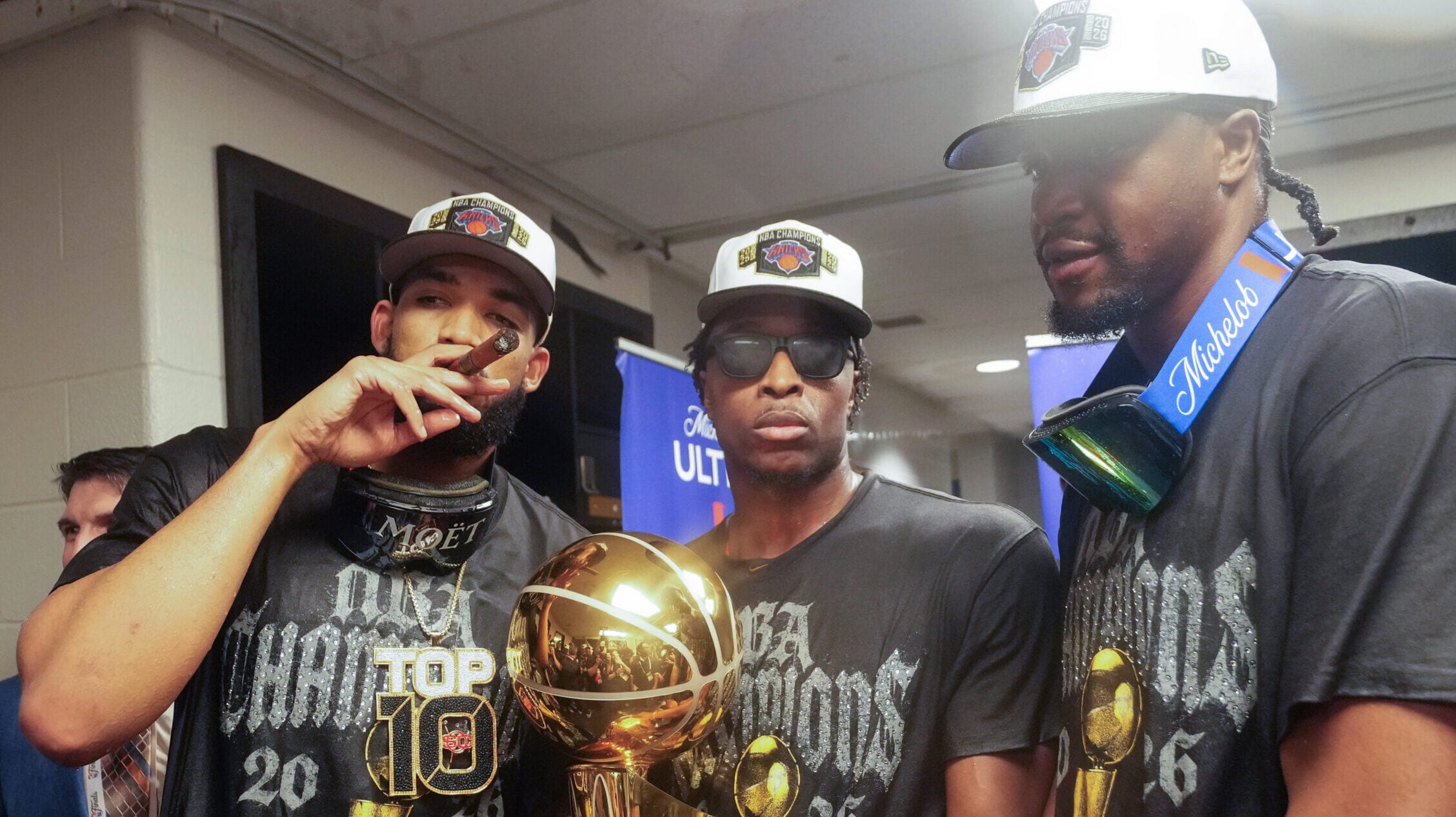

The New York Knicks did more than just win a championship in 2026; they etched their name into the annals of basketball legend with a playoff performance that defied expectations and shattered records. For a franchise starved since 1973, this wasn't just a title – it was a statement, a masterclass in resilience and dominance that captivated the entire league.
- Achieved the highest average point differential (+14.9 PPG) in NBA playoff history.
- Engineered a remarkable 13-game winning streak after an early deficit.
- OG Anunoby set a new record for effective field goal percentage (67.2%) in a single postseason.
- Mastered late-game pressure, outscoring opponents 345-166 in the final six seconds of the shot clock.
Unprecedented Playoff Dominance
Forget typical playoff grinding; the New York Knicks tore through the competition with an astonishing statistical supremacy. After a minor hiccup, going down 2-1 in the first round, they unleashed a 13-game winning streak that stands as the second-longest in NBA playoff history. This surge culminated in their first championship since 1973, a testament to their unwavering focus.
Their +14.9 point differential per game isn't just a number; it's the highest in NBA playoff history, an astounding display of consistent superiority. The Knicks wrapped up their championship with a 16-3 record, an undeniable mark of their relentless drive. What truly sets them apart? They became one of only three teams since the 1984 playoff expansion to win a title without a single loss by five points or more. Their 12 double-digit victories tied for the most ever, including five decisive wins by 29 points or more.
Towns' Towering Impact
While the team's overall dominance was clear, individual brilliance shone brightly. Karl-Anthony Towns delivered a monumental performance, registering a +258 plus-minus over his 578 playoff minutes. This wasn't just good; it was the best mark in any single postseason over 30 years of play-by-play data, surpassing even Stephen Curry's legendary 2017 run.
The Unbreakable Spirit: Kings of the Comeback
This Knicks squad wasn't just dominant when ahead; they were simply unshakeable when challenged. Their 6-2 record in playoff games where they trailed by double-digits is unprecedented, the best in three decades of data. This was a team that thrived on adversity, turning seemingly insurmountable deficits into stunning victories.
Remember Game 1 of the Eastern Conference Finals? The Knicks stared down a 22-point hole against the Cleveland Cavaliers, a team previously 40-1 when leading by 15 points or more. They didn't just win; they shocked the league. Even more incredibly, they found themselves trailing by double-digits in all five NBA Finals games. Their 29-point comeback in Game 4 of the Finals was the largest ever overcome in championship history during the play-by-play era, tying for the second-biggest overall playoff comeback. This wasn't luck; it was pure mental fortitude.
OG Anunoby's Offensive Masterclass
Every championship team has a breakout star, and for the Knicks, OG Anunoby delivered an offensive explosion for the ages. He posted an eye-popping 67.2% effective field goal percentage in the playoffs, setting a new record for any player with at least 150 field goal attempts. This was a significant leap from his 58.1% regular season mark.
Anunoby's scorching hot shooting from beyond the arc was a game-changer. He converted 44-for-90 (49%) from three-point range, a top-five performance for players with at least 75 attempts in the 47-year history of the three-point line. His 16-for-27 (59%) from the left corner three was particularly lethal. It wasn't just Anunoby though; Karl-Anthony Towns (62.0%) and Mikal Bridges (62.0%) also showcased remarkable efficiency, highlighting the team's collective offensive surge.
Fortune's Favor and the Championship Recipe
While sheer talent and grit fueled the Knicks' run, a championship season often involves a dash of good fortune. Their opponents struggled dramatically from deep, shooting just 34.6% on wide-open three-pointers throughout the playoffs, a notably low figure. This number dropped even further against the 76ers and Cavaliers in earlier rounds, where opponents managed a mere 29.5%.
Beyond shooting luck, the Knicks benefited from a strategic path, avoiding regular-season juggernauts like the Boston Celtics and Detroit Pistons who had given them trouble. Crucial bounces, both on their own clutch shots and critical misses by opponents, swung tight games. Opponent woes from the charity stripe (48% on clutch free throws) and from three-point range (21% on clutch threes) in pivotal moments also played a part, alongside late-game errors from stars like Victor Wembanyama and De'Aaron Fox. In championship basketball, every ingredient, including luck, matters.
Clutch Control: Mastering the Shot Clock
When the pressure mounted and the clock dwindled, the Knicks transformed into masters of execution. They dominated late-clock situations, scoring an incredible 345 points on field goal attempts in the last six seconds of the shot clock, compared to just 166 for their opponents. This isn't just about pace; it's about comfort and composure when primary actions are shut down.
Jalen Brunson, the team's relentless engine, led the entire playoffs with 100 buckets in the last six seconds of the shot clock, showcasing his unparalleled ability to create under duress. But it was a collective strength, with Brunson (51.6% eFG%), Mikal Bridges (51.3% eFG%), OG Anunoby (50.2% eFG%), Karl-Anthony Towns (50.0% eFG%), and Josh Hart (47.7% eFG%) all ranking among the league's elite in late-clock effective field goal percentage over the last two years. This ability to consistently convert under extreme pressure was a defining characteristic of their championship season.