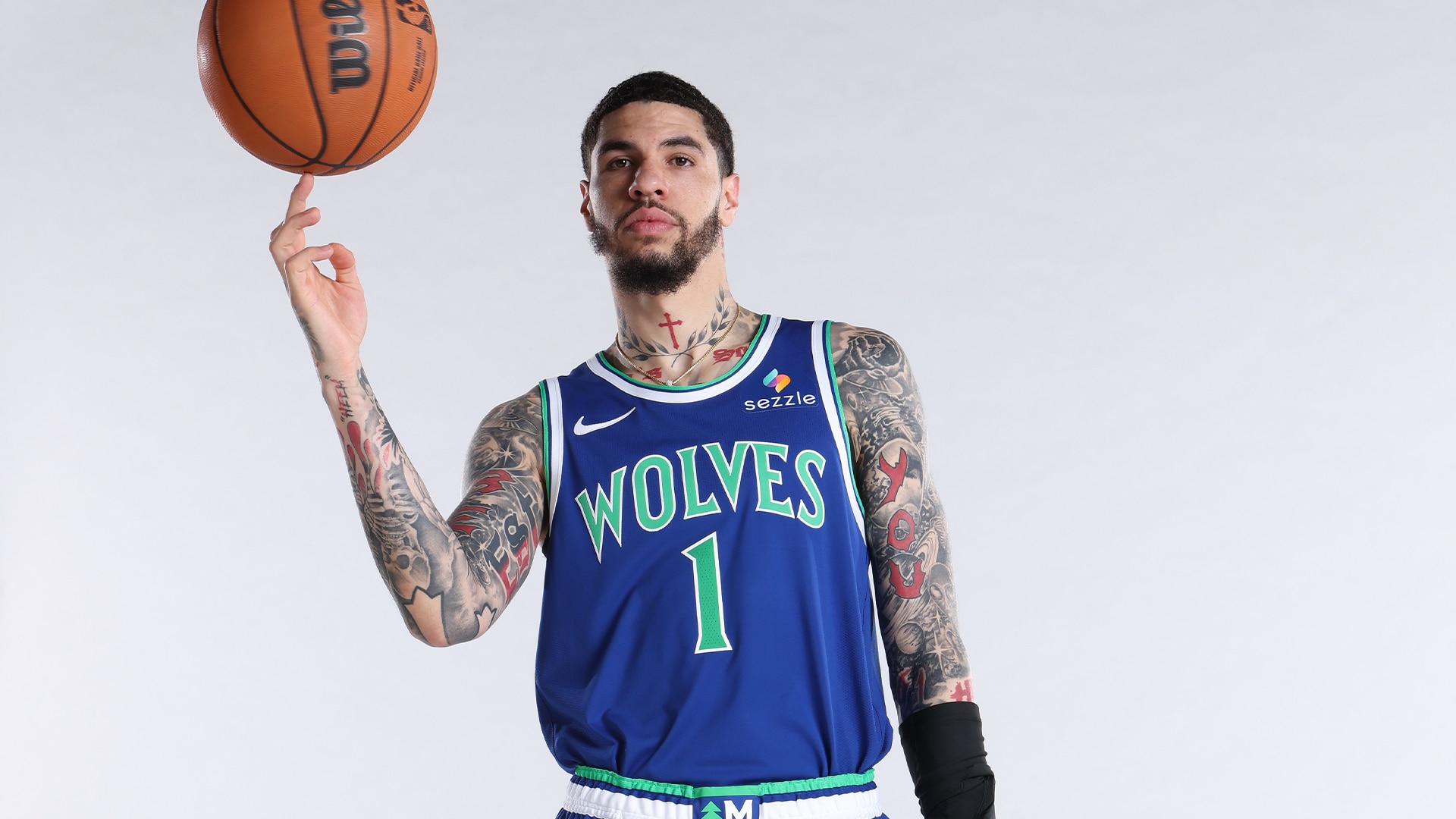

Get ready, Wolves fans! The Minnesota Timberwolves have just pulled off the trade of the summer, ushering in an era of electrifying basketball with the arrival of LaMelo Ball. Pairing him with superstar Anthony Edwards creates arguably the most dynamic backcourt in the NBA, a move designed to rocket the franchise into true championship contention. This blockbuster Wolves offseason move signifies a bold commitment to winning.
Key Takeaways from the Ball Trade:
- LaMelo Ball joins Anthony Edwards, forming one of the league's most exciting and high-octane backcourts.
- The Wolves sacrificed critical frontcourt depth, trading away Julius Randle and Naz Reid in the multi-team deal.
- Ball's elite playmaking and improved efficiency will allow Edwards to focus even more on his devastating scoring.
- The team still faces challenges in replacing frontcourt production and maintaining defensive identity around Rudy Gobert and Jaden McDaniels.
The Dawn of a New Twin Cities Tandem
Tim Connelly, the Wolves' president of basketball operations, has finally realized a long-held vision. He scouted both Edwards and Ball as 2020 NBA Draft prospects, witnessing their immense potential firsthand. While Edwards went No. 1 overall to Minnesota, Ball landed with the Charlotte Hornets just two picks later.
Ball quickly became the face of the Hornets, beating out Edwards for the 2020-21 Kia Rookie of the Year award and earning an All-Star selection the following season. With career averages of 20.8 points, 7.3 assists, and 1.4 steals, alongside a high volume of 3-pointers (averaging 10.4 over the last four seasons), his talent is undeniable.
A Daring Gamble: The Cost of Stardom
Bringing in a talent like LaMelo Ball wasn't cheap. The Wolves had to make significant sacrifices, embodying the old adage of "robbing Peter to pay Paul." Julius Randle and Naz Reid, two critical scoring and rebounding threats, were shipped out in the complex four-team trade.
This move immediately creates a void in the frontcourt, where both players provided crucial depth and offensive punch. While addressing the dire need for a true playmaker, the Timberwolves now face the challenge of bolstering their big man rotation.
Unleashing Ant-Man and LaMelo's Playmaking Prowess
Anthony Edwards had a phenomenal scoring season, averaging 28.8 ppg on career-high shooting splits of 48.9% overall and 39.9% from beyond the arc. However, his assist numbers dipped to 3.7 per game, a stat that became a concern given his increased usage and primary ball-handling duties.
Coach Chris Finch had previously experimented with veteran Mike Conley and young prospect Rob Dillingham at point guard. Ultimately, the team leaned on Edwards more, supplemented by shooter Donte DiVincenzo. This setup, while effective for Edwards' scoring, saw the Wolves' offense slide and their playoff run end in the Western Conference Semifinals against the San Antonio Spurs.
LaMelo Ball's arrival changes everything. As a "point guard lifer," he's a willing, creative passer who consistently racks up assists. He thrives on creating for others and brings a flair that will captivate fans. Last season, despite taking four fewer shots per game, his net rating soared to +9.1, a stark improvement from previous negative seasons.
Why the Hornets Moved On
The Charlotte Hornets made the difficult decision to move Ball as part of a strategic rebuild. With Ball owed $130 million over the next three seasons, Charlotte opted to get younger, stockpile draft assets, and commit to Coby White (acquired from the Bulls) as their future starting point guard. This was a calculated move for the Hornets, offering the Wolves a chance to seize an elite talent.
Defensive Backbone: Gobert and McDaniels' Crucial Roles
While Ball's offensive brilliance is undeniable, his defensive focus has been questioned in the past. However, Coach Finch believes teaming him with the Wolves' defensive stalwarts will lead to improvement. "He's never played with anybody like Rudy behind him," Finch remarked.
Rudy Gobert, the four-time Kia Defensive Player of the Year, remains one of the league's most formidable rim protectors. Now 34, his presence will undoubtedly cover many defensive lapses. Furthermore, Jaden McDaniels, known for his tough perimeter defense and incredible wingspan, will continue to shadow opponents' top scorers, lightening the load for his backcourt teammates.
McDaniels also presents untapped offensive potential. Despite his scoring average of 14.8 last season on 11.1 shots, his usage rate of 18.2% was relatively low. With Randle and Reid gone, the door is open for McDaniels to assert himself more offensively, especially given his efficient shooting splits (51.5/41.2/83.5).
Addressing the Frontcourt Puzzle
The immediate challenge for Connelly and Finch is to plug the newly created hole at power forward. With the Timberwolves reportedly $4.4 million under the second apron "hard cap," financial flexibility is extremely limited, making external additions difficult. They are restricted to a $3.9 million veteran minimum exception.
Internal solutions are being explored. Smaller lineups featuring Ayo Dosunmu, Josh Green (acquired in the Ball trade), Terrence Shannon Jr., and Jaylen Clark will be tested. There's also the possibility of Jaden McDaniels logging minutes at power forward, despite his lean 185 pounds.
The acquisition of LaMelo Ball injects an incredible shot of adrenaline into the Minnesota Timberwolves. While questions about frontcourt depth remain, the sheer dynamism of Ball and Edwards promises an exciting, high-flying brand of basketball. The Wolves are banking on this electrifying backcourt to solve their previous offensive struggles and finally contend for a deep playoff run.