.jpg)

The football world has never seen a talent quite like Lionel Messi, whose career isn't just a testament to his unparalleled skill, but to an extraordinary capacity for reinvention. As he continually adapts, the Argentina captain proves that greatness isn't static; it's a dynamic, ever-evolving force. His journey from an explosive winger to a deep-lying playmaker and a transformative leader is arguably his most remarkable achievement.
- Messi's tactical journey began as a thrilling, touchline-hugging winger at Barcelona.
- Pep Guardiola's legendary "false nine" role revolutionized Messi's game and modern football.
- The departure of midfield legends saw Messi evolve into a primary orchestrator and playmaker.
- His leadership transformed Argentina, culminating in a historic 2022 World Cup triumph.
The Untamed Prodigy: Barcelona's Explosive Winger
When a teenage Lionel Messi first burst onto the scene in a friendly against Jose Mourinho's Porto, he was a blur of raw talent. Operating primarily from the right flank, his signature move was an electrifying cut inside onto his lethal left foot. This early version of Messi immediately captivated the footballing world, with Ronaldinho famously predicting his eventual supremacy. Even Fabio Capello was so enthralled after a 2005 performance against Juventus that he reportedly attempted to sign the youngster on the spot.
Early Barcelona managers quickly grasped his immense potential. Frank Rijkaard notably observed that the more Messi touched the ball, the better the team performed. However, his true tactical awakening was still to come.
Guardiola's Masterstroke: Unleashing the False Nine
The seismic shift in Messi's career, and indeed in football history, arrived with Pep Guardiola in 2008. Initially, Guardiola maintained Messi on the wing, but a crucial defensive realization prompted a revolutionary change. The decision to move Messi centrally was born out of necessity, a tactical tweak that would soon redefine his position and the sport itself.
The legendary May 2, 2009, clash against arch-rivals Real Madrid at the Santiago Bernabéu stands as the moment of tactical genius. In a stunning 6-2 victory, Guardiola deployed Messi as a "false nine," pushing Samuel Eto'o wide. By dropping deep into midfield, Messi created a nightmare for opposition centre-backs, tearing apart Real Madrid's defensive structure. This pivotal role transformed him into a system-breaker, leading to an astonishing 96 goals in just 69 La Liga matches between 2011 and 2013, alongside four consecutive Ballons d'Or. Messi himself admits learning "an enormous amount" about tactics from Guardiola.
The Orchestrator Supreme: Evolving into the Enganche
As Barcelona's midfield titans, Xavi and Andres Iniesta, gradually departed, Messi answered the call for another evolution. He transitioned from being merely the devastating finisher to becoming the team's primary engine, dictating play from a deeper role. This "enganche" (the hook) position saw him balance his prolific goalscoring with elite-level playmaking.
His final years at Barcelona and his subsequent move to Paris Saint-Germain (PSG) showcased this profound shift. During the 2019-20 season, he recorded a staggering 22 assists alongside 25 goals, demonstrating his dual threat. At PSG, for the first time in his club career, he even registered more assists than goals in a single season. He had become, as one Argentine analyst aptly put it, "a goalscorer who became an Iniesta," proving his mental acuity had surpassed any physical decline.
Argentina's Liberated Leader: World Cup Glory
Perhaps Messi's most profound transformation was as a leader for his beloved Argentina. After years of agonizing heartbreak, including three consecutive lost finals, he briefly retired in 2016. His return, however, marked the emergence of a different man: a vocal, defiant captain, unafraid to confront officials and inspire his teammates.
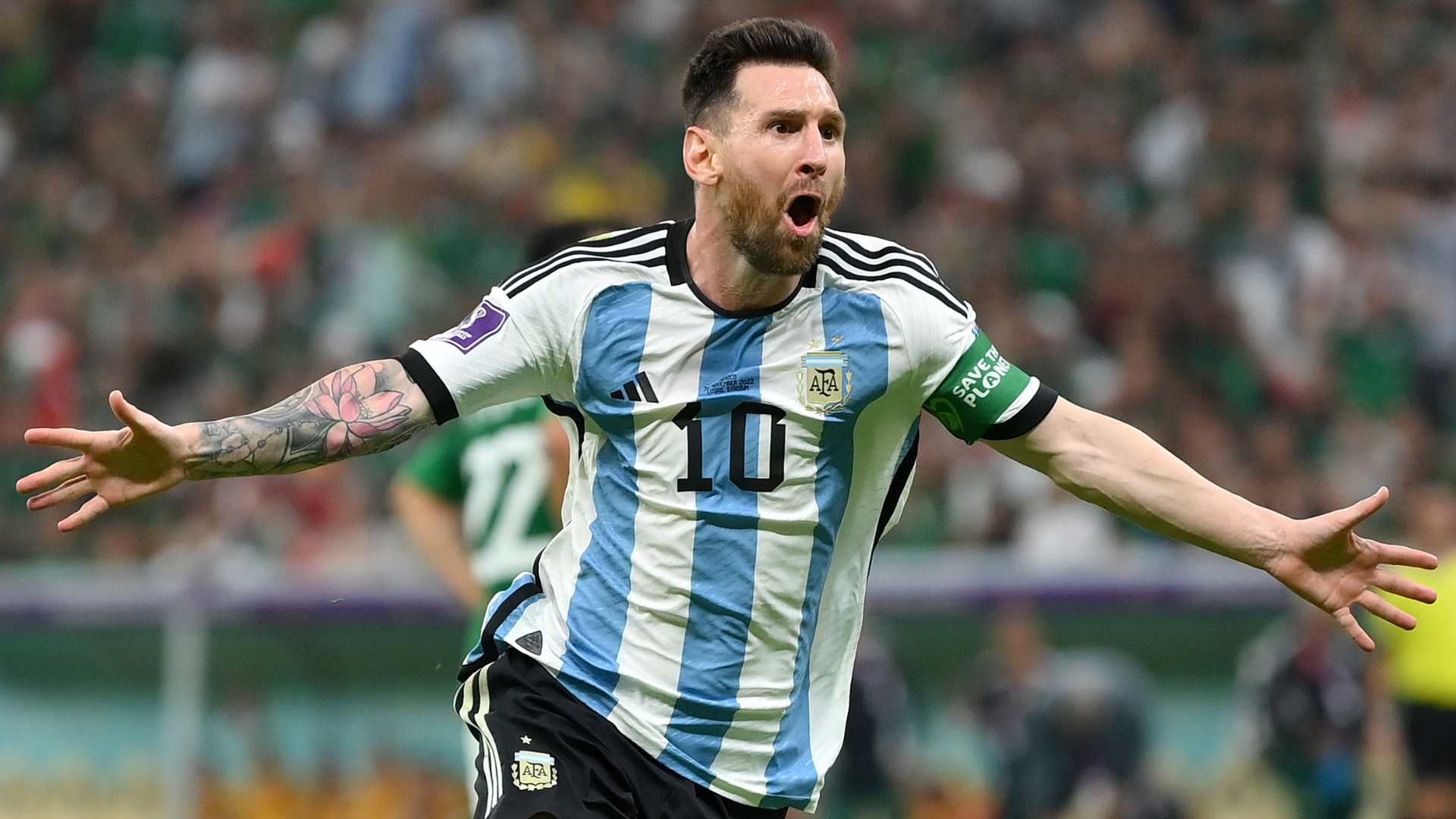
The Copa America 2021 triumph was the emotional release, paving the way for his ultimate peak at the 2022 World Cup in Qatar. There, we witnessed a magnificent synthesis of every Messi iteration. The youthful winger danced past Josko Gvardiol, while the veteran quarterback delivered a clinical pass for Nahuel Molina against the Netherlands. Now at Inter Miami, he embodies the "walking maestro," preserving energy to deliver decisive, match-winning blows. As his idol, Pablo Aimar, famously remarked, "The last Messi is always the best Messi."
Lionel Messi's career is an ongoing masterclass in adaptability. He has "reinvented himself at least five times," a testament to his unparalleled genius. As he eyes another potential dance on the global stage, one can only wonder what new iteration of greatness this footballing demigod might unveil next.