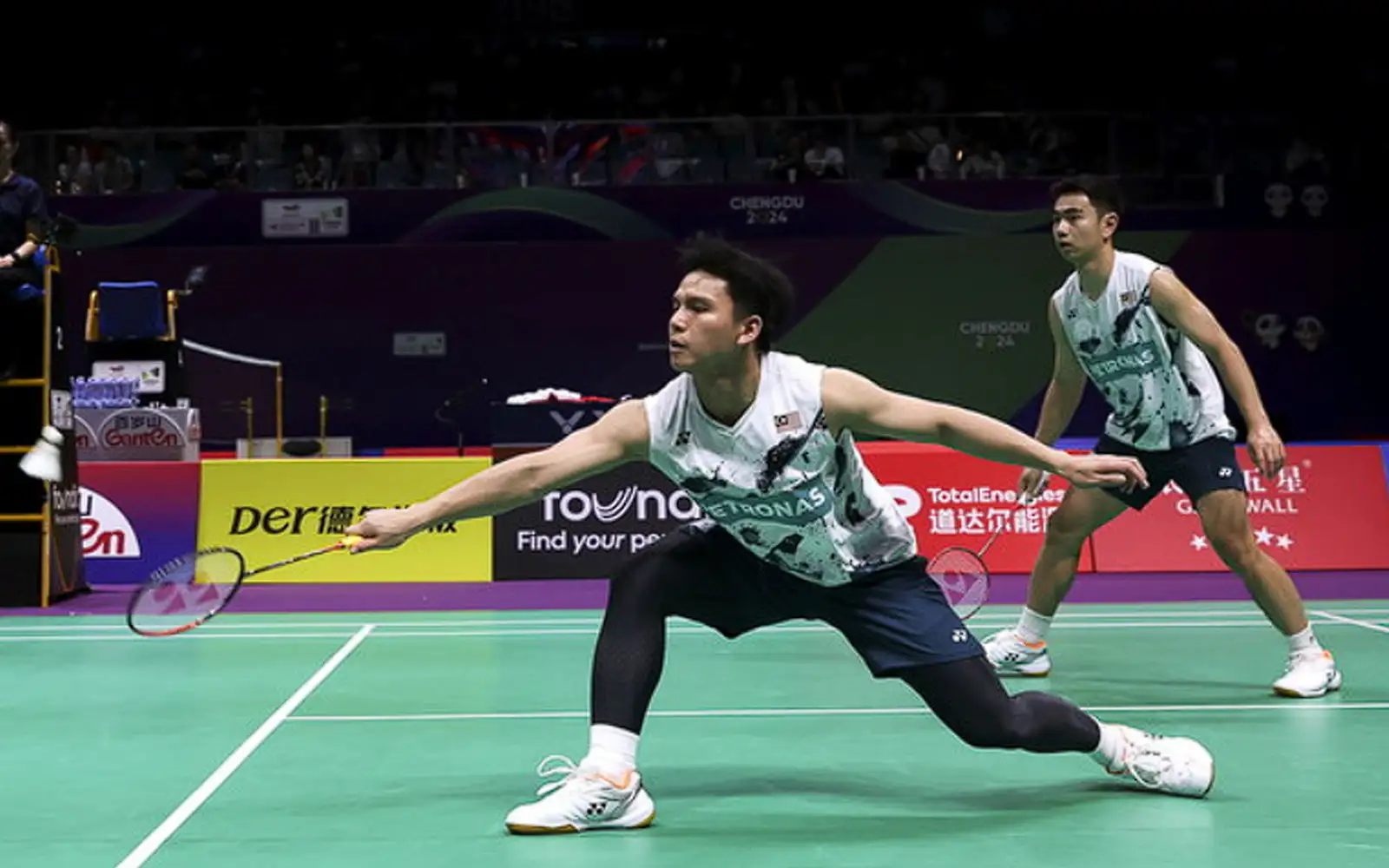



The promise of a strong showing at the Korea Masters evaporated in a single, gut-wrenching day for Malaysia's mixed doubles contingent. What was supposed to be a golden opportunity to make a statement on the international stage, especially with several top-ranked pairs absent, turned into a collective quarter-final nightmare.
Key Takeaways from the Korea Masters:
- All three Malaysian mixed doubles pairs — Chen Tang Jie-Clarissa San, Jimmy Wong-Cheng Su Yin, and Loo Bing Kun-Noraqilah Maisarah — crashed out in the quarter-finals.
- The Super 300 event presented a prime chance for a deep run due to the absence of several world-leading international teams.
- The results underscore ongoing challenges within the department, including recent coaching changes and the long-term absence of injured star Toh Ee Wei.
- Despite an encouraging prior win, Chen Tang Jie and Clarissa San couldn't secure a crucial semi-final berth, highlighting a need for consistency.
Korea Masters Heartbreak: A Golden Chance Squandered
Fans had high hopes for Malaysia's mixed doubles teams at the Korea Masters, a Super 300 tournament significantly less competitive than usual. The absence of many top-tier combinations from the global circuit was supposed to clear a path for the Malaysian contingent to shine. Instead, Friday saw all three remaining pairs exit in the quarter-finals, leaving a bitter taste and raising serious questions about the department's current trajectory.
This collective setback comes at a critical juncture for Malaysian badminton's mixed doubles. The recent departure of national coach Nova Widianto has undoubtedly left a void, and the continued sidelining of world champion Toh Ee Wei due to an ACL injury further complicates matters. These off-court challenges are clearly translating into on-court struggles, as players grapple to find rhythm and consistency.
Individual Fights, Collective Disappointment
Tang Jie-San's Near Miss Against Japanese Challengers
Chen Tang Jie and his new partner Clarissa San had shown flashes of genuine potential throughout the tournament, notably overcoming Taiwan's fourth seeds and world No. 45 pair Wu Hsuan Yi-Yang Chu Yun in the second round. However, their momentum faltered in the quarter-finals against Japan's unheralded world No. 103 pair, Haruki Kawabe-Kokona Ishikawa. The Malaysian duo succumbed in a tight contest, 22-20, 21-17, missing out on their first semi-final appearance as a partnership. This defeat, in just 35 minutes, underscores the need for greater mental fortitude in crucial moments.
Wong-Cheng's Challenge against Local Talent
Fifth seeds Jimmy Wong and Cheng Su Yin also saw their Korea Masters journey end in the quarter-finals. They faced a tough challenge from local South Korean pair Kim Jae Hyeon-Jang Ha Jeong, the world No. 32. Despite a spirited effort, the Malaysians couldn't match their opponents' intensity, ultimately falling 21-17, 21-18. This loss highlights the competitive depth even in a 'weaker' field.
Bing Kun-Noraqilah Outgunned by Chinese Third Seeds
Earlier in the day, the campaign for Loo Bing Kun and Noraqilah Maisarah concluded with a straight-sets defeat. They were outclassed by China's third seeds and world No. 36, Gao Jia Xuan-Wu Meng Ying, losing 21-14, 21-15. The disparity in ranking and experience was evident, bringing an early end to Malaysia's mixed doubles hopes.
What's Next for Malaysian Mixed Doubles?
The Korea Masters served as a harsh reality check. While individual pairs showed glimpses of talent, the overall performance signals a department in transition. With significant structural changes and key players sidelined, the focus must shift towards building resilience, fostering new partnerships, and developing a coherent strategy to regain their competitive edge on the global stage. Fans will be eager to see how the national setup responds to these challenges in upcoming tournaments.