

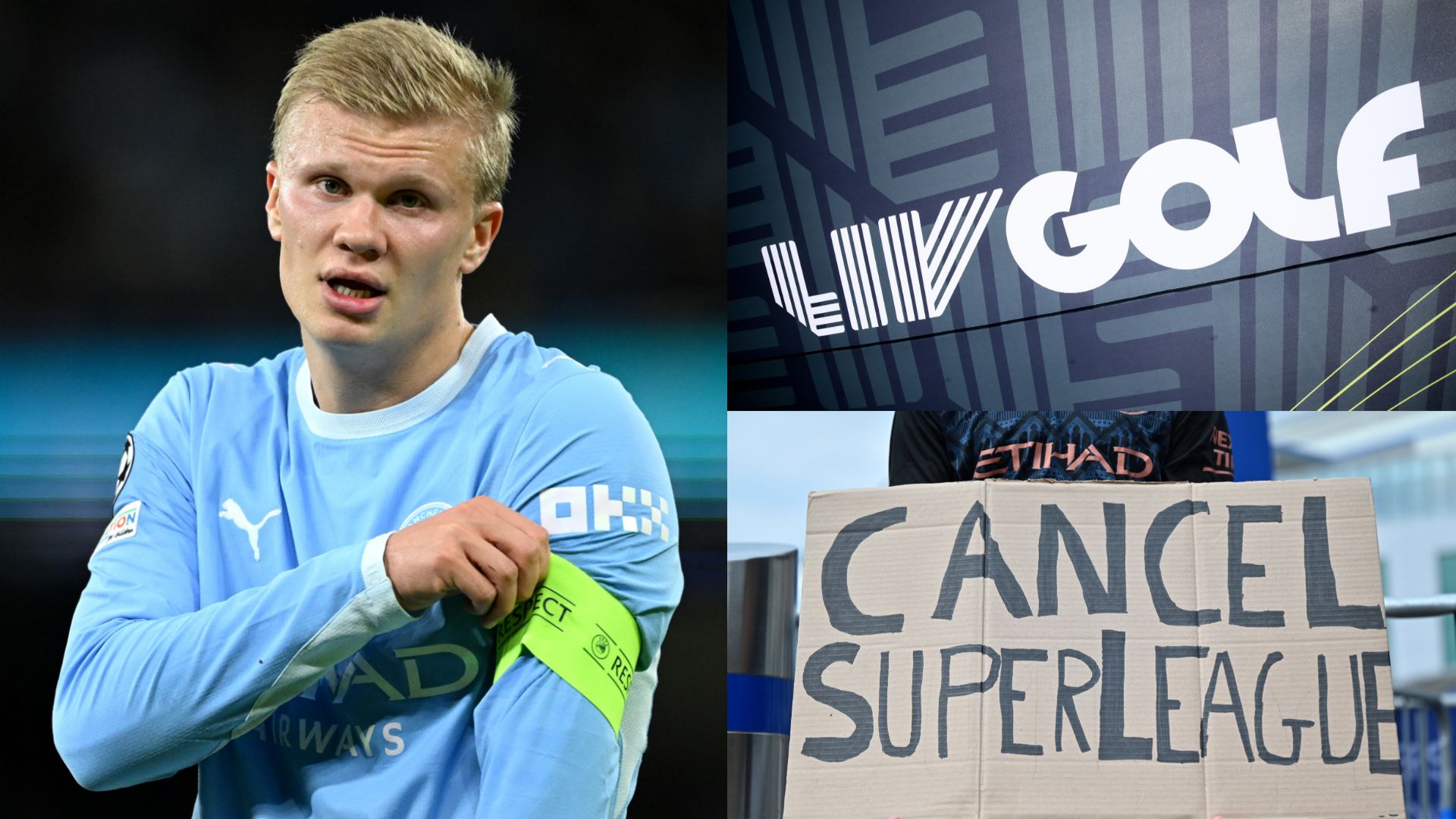

The European Super League, a concept once vehemently rejected by fans, now looms large again amidst the unprecedented Financial Fair Play (FFP) challenges facing Manchester City. Is the Etihad club, facing a staggering 115 charges from the Premier League, truly considering a drastic breakaway? The very idea sends shivers down the spines of traditional football purists.
Key Points:
- Manchester City's 115 FFP charges could force a radical re-evaluation of their future in English football.
- Former City defender Danny Mills argues players prioritize international football (like World Cups) over club-only competitions.
- The LIV Golf experiment offers a stark warning: sport without "jeopardy" loses its audience and ultimately fails.
- The promise of a global legacy and national hero status far outweighs club achievements for top international stars.
The Lingering Shadow of a Breakaway League
Rewind to spring 2021, and football was rocked by the revelation that 12 European giants, including the Premier League's 'Big Six' (Manchester City, Liverpool, Manchester United, Chelsea, Arsenal, and Tottenham), planned to form an exclusive Super League. Fierce fan backlash, however, swiftly dismantled the proposals. Despite this, clubs like Real Madrid and Juventus have steadfastly refused to abandon the dream entirely.
A major hurdle for any breakaway remains the international football conundrum. Players participating in an unsanctioned league would be ineligible for FIFA and UEFA tournaments like the World Cup or European Championships. This critical restriction drastically impacts transfer appeal and player ambition.
Man City's FFP Quandary: A Super League Escape Route?
The Etihad Stadium currently finds itself embroiled in a seismic FFP battle, grappling with 115 charges that could lead to severe penalties, including expulsion from the Premier League or significant points deductions. The allure of escaping stringent FFP and PSR regulations within a Super League could theoretically grant clubs with wealthy owners, like Manchester City, unchecked spending power.
Could the sheer pressure of potential sanctions push City back to the negotiating table with Super League architects? It’s a compelling, albeit controversial, question that underscores the high stakes of their current predicament.
Danny Mills: Why International Glory Trumps Club Cash
Former Manchester City defender Danny Mills offers a definitive perspective on player loyalties. Speaking to GOAL, Mills emphasized the deep-seated desire among top players for international football recognition. "If FIFA don't ratify your Super League, none of those players can play in international competition," Mills stated unequivocally.
He passionately argued that while club legends are celebrated locally, World Cup or Euros winners achieve a national, timeless status – often leading to honors like knighthoods. "You win the World Cup, you win the Euros, you're a legend of your country, you get knighthoods, it's there forever," Mills highlighted, pointing out the fleeting memory of even recent Champions League winners compared to World Cup champions. This unparalleled legacy makes the international stage non-negotiable for most elite footballers.
The Peril of "No Jeopardy": LIV Golf's Hard Lesson
The cautionary tale of LIV Golf provides a powerful analogy for any closed-shop sports competition. While initially attracting star players with immense financial incentives, the project has faced significant challenges, including bankruptcy proceedings. Mills swiftly drew parallels, questioning LIV's long-term viability.
"How's that gone? It hasn't gone brilliantly," Mills remarked, attributing its struggles to a fundamental flaw: the absence of "jeopardy." Sport thrives on competitive balance, promotion, and relegation – the hope of glory and the fear of failure. Without these elements, games can become "bland" and "unwatchable." The Premier League's success, and indeed the entire football pyramid, relies on this inherent competitive drama.
Football's Lifeblood: Competition and Consequence
Mills further elaborated on the crucial role of jeopardy in maintaining fan engagement. He highlighted changes in the EFL Championship to expand play-off spots, precisely to extend competitive relevance throughout the season. "If you have a Super League, if you're not in the top four with 10, 15 games to go, you go ‘don't need to bother now’ and the standard falls," he explained.
This lack of consequence ultimately renders a competition unappealing. Fans are drawn to the drama, the uncertainty, and the high stakes – even the cruelty of a penalty shootout. Remove that tension, and "it becomes unwatchable, in my opinion," Mills concluded. The enduring appeal of football, from the Premier League to the World Cup, lies in its unpredictable, high-stakes nature.