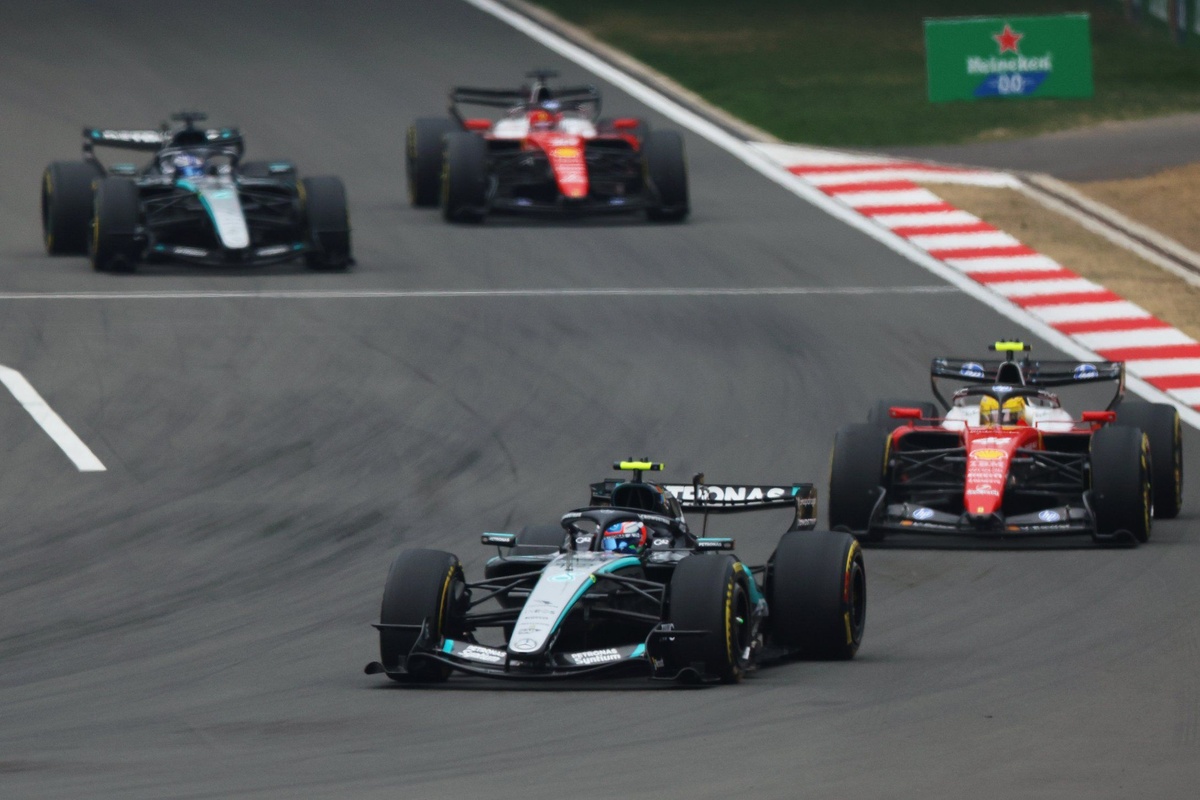

The 2026 Formula 1 season has roared to life, and one truth has become brutally clear: Mercedes is on another level. While Ferrari has shown flashes of brilliance with strong starts, the data from the opening rounds reveals a far more sobering reality for the Scuderia. Is this just an early season blip, or are we witnessing the dawn of another Mercedes era of unparalleled dominance?
Key Takeaways from the Early Season
- Mercedes swept the first two Grands Prix and sprint race, but Ferrari consistently challenged them in the initial phases.
- Despite strong starts and early leads, Ferrari consistently loses out due to Mercedes' superior overall package and long-run pace.
- Key performance deficits for Ferrari include energy management, straight-line speed, and significant long-term tyre degradation.
- Mercedes' current advantage in race pace is statistically greater than recent dominant eras, comparable only to its own golden years of 2014-2016.
The Silver Arrows' Unyielding Grip
Mercedes has flawlessly executed the opening events of the 2026 Formula 1 season, securing every victory available across two Grands Prix and a sprint race. Yet, the scoreboard doesn't tell the full story. Ferrari has aggressively contested these races, often snatching the lead at the start, only to see the Silver Arrows reel them back in and ultimately claim victory.
Unpacking the Performance Gap
Initial impressions can be deceiving. While Ferrari has been visually competitive, a deep dive into the telemetry and lap data reveals precisely where the performance divergence lies between these two titans.
Straight-Line Supremacy: Mercedes' Power Advantage
Mercedes' qualifying advantage, initially a staggering 0.809 seconds in Australia, tightened to 0.351 seconds in Shanghai. This reduction doesn't signify a fundamental shift in chassis performance, but rather a variable impact of energy management.
The difference is most stark in top-speed-dominated sections. In China, a significant portion of the deficit occurred in the final sector, which features a long straight. Here, Mercedes' advanced power unit and the crucial energy deployment edge allowed them to pull clear where it mattered most. While Ferrari could match pace through corners and technical sections, the moment the track opened up, Mercedes simply had more in reserve—translating into decisive gains on the straights.
Energy Management: The Silent Decider
Beyond outright speed, the real separator lies in how efficiently each team manages energy over a lap. Mercedes has demonstrated a far more refined deployment strategy, maximising electrical output at key moments without compromising overall balance.
Ferrari, by contrast, appears to be operating within tighter limits. While capable of strong bursts—especially in the opening laps—their system struggles to sustain that performance consistently across a stint. This imbalance becomes increasingly evident as races unfold, allowing Mercedes to dictate the tempo.
Tyre Life: Where Races Are Won and Lost
Perhaps the most telling difference emerges over long runs. Ferrari’s early aggression often sees them jump ahead, but that advantage fades as tyre degradation begins to take its toll.
Mercedes, on the other hand, maintains a far more controlled approach. Their superior tyre management enables drivers to extend stints, preserve grip, and attack when it matters most. As a result, even when trailing early on, the Silver Arrows can methodically close the gap and execute decisive overtakes in the latter stages.
The Illusion of Closeness
On the surface, Ferrari’s ability to challenge at the start creates the impression of a tight contest. However, the data paints a different picture. Once variables such as fuel load, tyre wear, and energy deployment are factored in, Mercedes’ race pace advantage becomes increasingly pronounced.
In fact, the current gap is statistically significant—echoing the kind of dominance last seen during the team’s peak hybrid-era campaigns. While Ferrari may appear within reach over a single lap or in the opening exchanges, sustaining that level across an entire race remains a major hurdle.
Can Ferrari Close the Gap?
There is still optimism within Ferrari. The reduced qualifying deficit in China suggests that progress is being made, even if marginal. With a long season ahead and a relentless development race underway, opportunities remain to chip away at Mercedes’ advantage.
Key areas of focus will include improving energy efficiency, enhancing straight-line performance, and addressing tyre degradation over extended stints. If Ferrari can unlock gains in these areas, the competitive landscape could begin to shift.
Early Verdict: Mercedes in Control
For now, the evidence is clear—Mercedes holds a commanding advantage. Their superiority is not built on a single factor, but on a complete, well-optimised package that delivers across all conditions.
Ferrari may have the speed to challenge in moments, but until they can match Mercedes over the full race distance, the Silver Arrows remain firmly in control.
The season is still young, but if current trends continue, Formula 1 could be on the brink of witnessing another chapter of Mercedes dominance.