

The Silver Arrows' Aero Advantage Under the Microscope
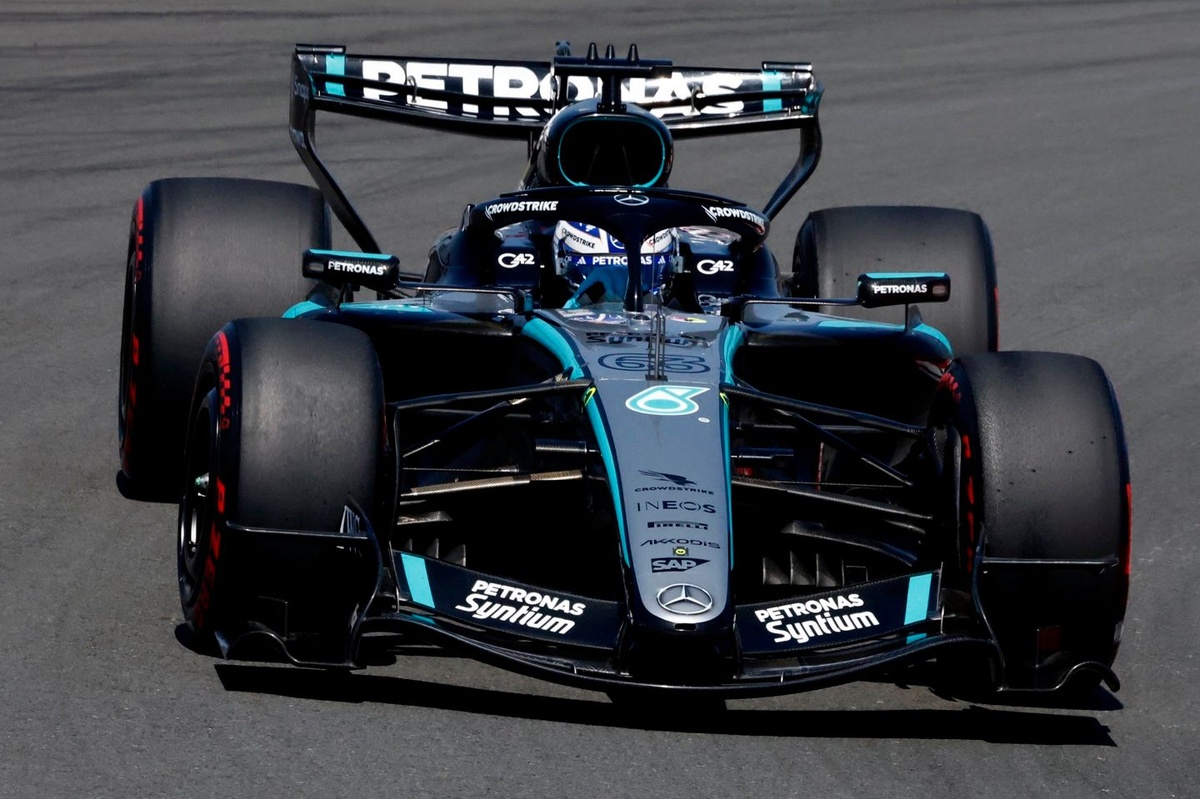
Just when you thought the technical squabbles in Formula 1 couldn't get more complex, Mercedes-AMG Petronas F1 Team finds itself squarely in the FIA's crosshairs once again, this time over an ingenious, yet potentially illegal, 'two-phase' front wing design for the 2026 season.
Key Points:
- Mercedes' 2026 front wing design is under FIA investigation.
- The wing reportedly operates with a "two-phase" closing mechanism, potentially exceeding the 400-millisecond regulatory limit.
- This advanced aero solution could provide a significant performance advantage, especially during braking.
- The controversy follows F1 teams submitting their 2026 car designs after the Chinese Grand Prix.
After the mandatory submission of 2026 car designs following the Chinese Grand Prix, rival teams and the FIA swiftly turned their attention to the cutting-edge aerodynamics of the Mercedes W17. The Silver Arrows, previously under scrutiny for engine compression ratios, are now facing questions about their revolutionary front wing, a development that could reshape the early battles of the 2026 championship.
Unpacking the 'Two-Phase' Front Wing Mystery
The core of the FIA investigation centers on allegations that Mercedes' movable front wing utilizes a deceptive 'two-phase' closing sequence. While the initial movement reportedly adheres to the 400-millisecond closing time stipulated by 2026 regulations – satisfying the monitoring sensors – a subsequent, unmonitored second phase completes the closure, potentially extending the total time beyond the legal threshold.
This sophisticated system is believed to offer a crucial competitive edge. By subtly adjusting the wing over a longer duration, Mercedes could be mitigating the sudden load transfer to the front axle during heavy braking, leading to improved stability and precision upon corner entry. Such an advantage, even fractional, could be a game-changer in the pursuit of tenths on the track.
Who Sparked the Probe? Paddock Rumors Swirl
Initially, whispers in the paddock pointed to Ferrari as the team that flagged the potential irregularity. However, the Scuderia has vehemently denied making any official complaint. Insiders now suggest the inquiry originated from another unnamed competitor, highlighting the intense scrutiny and competitive intelligence at play in Formula 1's technical arms race. It's a clear signal that every design detail of the new generation cars is being dissected.
FIA Takes the Reins: Resolution Expected at Suzuka
The ball is now firmly in the court of FIA single-seater director Nikolas Tombazis and his technical team. With the Japanese Grand Prix at Suzuka just around the corner, pressure is mounting for a definitive ruling. The sporting integrity of F1 demands clarity on this crucial aerodynamic interpretation, ensuring a level playing field for all teams ahead of the radical 2026 regulations. Expect a swift decision to prevent further controversy from overshadowing the racing action.