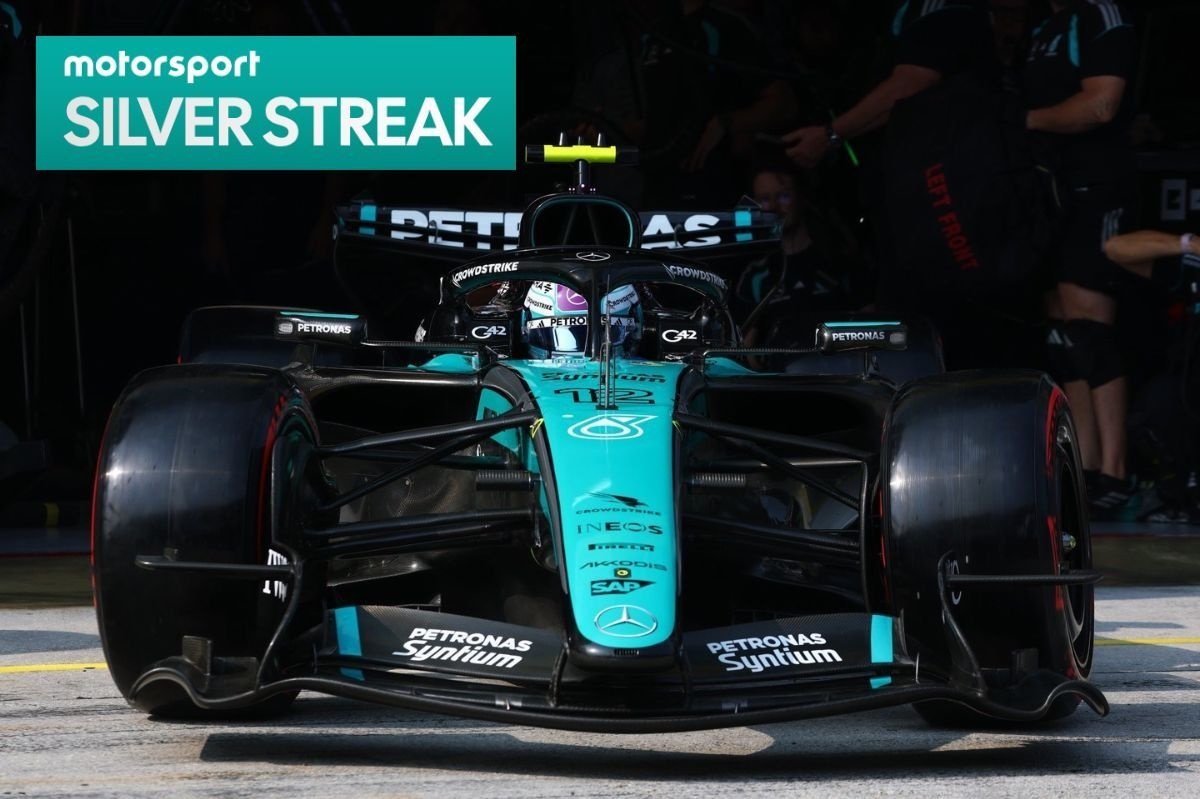



Mercedes rolled the dice with a major aerodynamic overhaul at the unforgiving Sepang International Circuit, but the early returns have left the team searching for answers. The Silver Arrows arrived in Malaysia with high hopes, only for qualifying to expose a series of unexpected weaknesses.
Key Takeaways:
- Mercedes introduced a significant aero upgrade at Sepang, a track not visited since 2017.
- The new W17 package struggled with the circuit's abrasive surface, contributing to a "very bad qualifying."
- Kimi Antonelli qualified P4 despite a Q2 tyre mishap, while George Russell took P8 (both gaining a grid spot).
- Toto Wolff and Russell admit the upgrade's true impact remains a "big question mark."
The High-Stakes Sepang Gamble
Mercedes made a bold move by debuting a substantial aerodynamic update package at Sepang. This was far more than a minor revision, featuring a completely new floor, major changes to the diffuser and rear-wheel architecture, and a drastically revised sidepod profile that required an internal cooling redesign.
Given the scale of the changes, the team committed to running the package on both cars, meaning there was no direct back-to-back comparison with the previous specification during the weekend.
Why No Clear Answers?
That lack of comparative data, combined with Sepang's notoriously abrasive asphalt, has made it difficult for Mercedes to establish exactly where the new package stands.
George Russell acknowledged the challenge, saying: "If you could have done a direct back-to-back it would have been great to know, but that's the challenge of this sport."
He also suggested that the upgrade might have received a more positive verdict at a different circuit. Instead, Sepang's unique characteristics have amplified the uncertainties surrounding the package.
Drivers Grapple With the Silver Arrow
Despite the extensive upgrade, Mercedes' qualifying performance was well short of their usual championship-leading standard. Kimi Antonelli, the current championship leader, secured P4 on the grid, which became P3 after a penalty for another driver, but his session was far from straightforward.
A track-limits violation in Q2 forced Antonelli to use an additional set of Pirelli C4 soft tyres, leaving him with only one fresh set for his crucial Q3 run. Earlier in the weekend, Antonelli had topped FP3, suggesting that Mercedes had stronger potential than the final qualifying result showed.
George Russell qualified P8, later moving to P7, and finished 0.741s off Max Verstappen's pole time. While Mercedes' internal simulations indicated that the upgrade was a step forward, Russell stressed that the stopwatch ultimately matters more than the data from the factory.
"All the numbers say it's an improvement, but obviously it's a sport where we need to follow the lap times and not what the numbers say. So the numbers look absolutely fine and in line with expectations. However, the result wasn't," Russell said.
Wolff's Puzzling Diagnosis
Team Principal Toto Wolff was equally candid about Mercedes' struggles, describing qualifying as "a very bad one for us."
Wolff admitted the team had been "a little bit caught out on Friday with some car behaviour that we didn't see all year." The W17 displayed several unusual characteristics, including excessive drag that cost significant time on the straights, particularly compared with Max Verstappen, as well as too much understeer through low-speed corners.
Those were, according to Wolff, "things we haven't seen all year," adding another layer of uncertainty to the team's assessment of the new package.
Sepang's Unique Challenge and the Road Ahead
The Sepang International Circuit, last visited by F1 in 2017, is known for its abrasive and low-grip tarmac, a characteristic designed to improve wet-weather performance. While every team has had to adapt to the unusual surface, Russell confirmed that it is "clearly affecting us more than others."
The abrasive track appears to be a key factor in Mercedes' difficulty understanding and optimizing its new W17 package. With both cars running the upgrade, the team has also had limited opportunity to isolate whether the performance deficit comes from the package itself or the setup required at Sepang.
Race day therefore becomes more than an opportunity to recover positions. Mercedes must use the difficult conditions to gather valuable data and establish whether its major upgrade is genuinely flawed or whether Sepang has simply exposed a setup vulnerability.
For now, the verdict on the new package remains unclear. What Mercedes learns in Malaysia could prove crucial in determining the team's development direction for the rest of the season.