

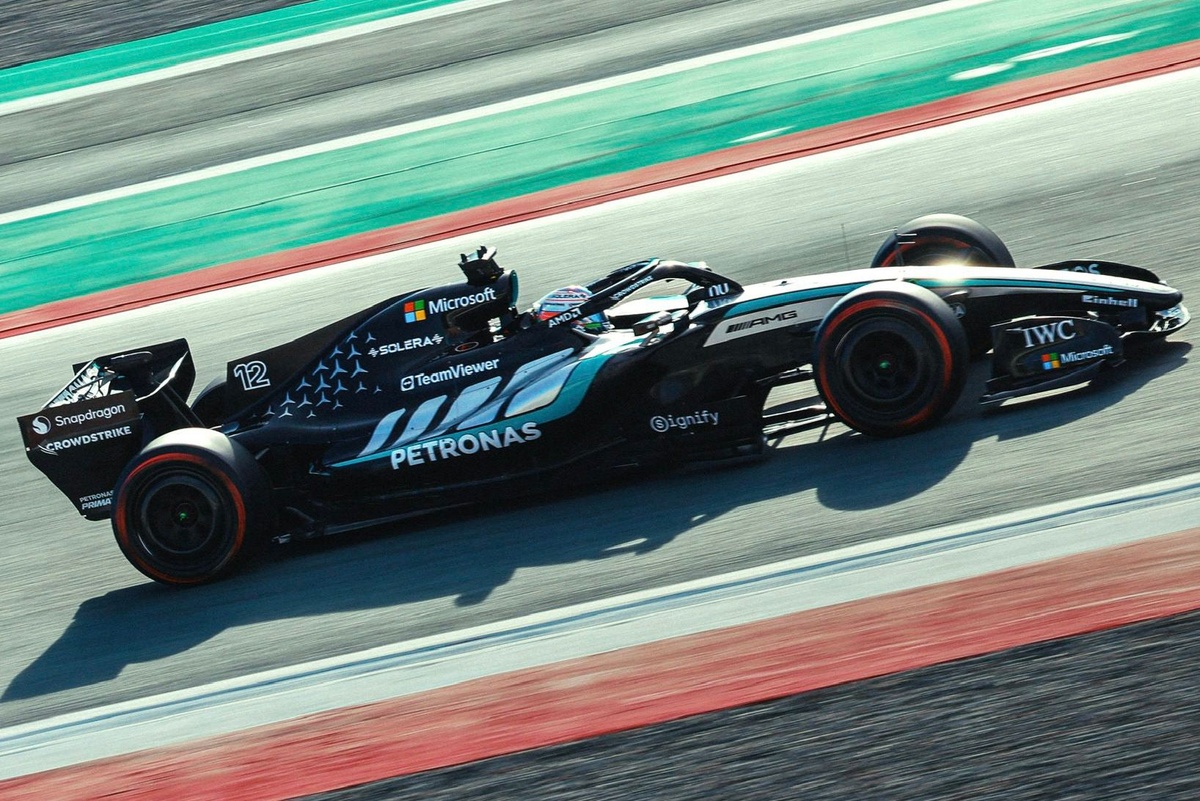

The 2026 Formula 1 season may be a distant blip on the horizon, but Mercedes has already fired a warning shot across the paddock. Their initial pre-season shakedown in Barcelona reveals a team operating with surgical precision, showcasing impressive reliability and the raw potential of their new machinery. This isn't just about turning laps; it's about laying a formidable foundation for a new era.
Key Takeaways from Barcelona:
- Mercedes W17 demonstrates bulletproof reliability in early testing.
- Andrea Kimi Antonelli successfully completes a full race simulation on his second half-day.
- The new Mercedes HPP power unit appears robust, racking up significant mileage across teams.
- The Silver Arrows are preparing to unlock qualifying pace, deploying a massive 350kW of electric energy.
Early Indicators of Silver Arrow Strength
The Mercedes W17 has hit the ground running, quite literally. Both Monday and Wednesday saw the car perform flawlessly, demonstrating exceptional reliability — a critical factor under the radical new 2026 regulations. George Russell spearheaded the effort, logging a monumental 92 laps, even battling sub-zero track temperatures in the morning.
This early consistency sends a powerful message. While outright pace is unknown, the ability to gather vast amounts of data without interruption is invaluable. It suggests Mercedes has a strong base to build from, allowing them to rapidly accelerate their development curve.
Antonelli's Rapid Ascent: A Race Sim Statement
Perhaps the most significant development comes from young phenom Andrea Kimi Antonelli. On only his second half-day behind the wheel, the Italian sensation remarkably completed a full race simulation. This isn't just a testament to his innate talent but a crucial data-gathering exercise for the team.
"I did a lot of laps and was able to do a race sim, which was nice and the most important thing is that we did a lot of laps, a lot of mileage and a lot of data for the team. It was a good day overall," Antonelli stated, highlighting the importance of the work. He also noted the W17 feels like a "big step" from its predecessor, emphasizing the constant learning process required with such a revolutionary car.
The New Power Unit: A Force to be Reckoned With?
The new Mercedes HPP power unit is clearly earning its stripes. Not only did the works team complete extensive mileage, but customer teams McLaren and Alpine also racked up impressive numbers in Barcelona. This widespread reliability across different chassis is a major positive indicator for the engine manufacturer.
While unofficial lap times in the 1m17s range offer little insight, the sheer number of laps completed by all teams utilizing the Mercedes engine paints a promising picture. The emphasis at this stage is purely on proving component durability and system integration, an area where the Silver Arrows seem to be excelling.
Pushing the Limits: Eyeing Qualifying Pace
With two days of intensive data collection under their belts, Mercedes is ready to elevate their game. The team confirmed they will utilize their final permitted shakedown day on Thursday to delve into qualifying performance. This will be a fascinating challenge, particularly regarding the deployment of the new regulations' massive 350kW electric energy over a single lap.
George Russell expressed his anticipation: "That's going to be very different getting to use that 350 kilowatts over the course of a full lap, full beans, and that's going to have a different reaction on the car compared to the long run." This shift from endurance to outright speed will provide critical insights into the W17's raw pace and the power unit's peak performance capabilities.
The early Mercedes shakedown has been nothing short of impressive. Reliability, driver performance, and a clear development plan suggest the Silver Arrows are building a strong platform for their 2026 campaign. The paddock will be watching closely as they push for ultimate qualifying pace, eager to see if this early promise translates into championship contention.