
.png)

Messi's American Saga: The Ultimate World Cup Farewell?
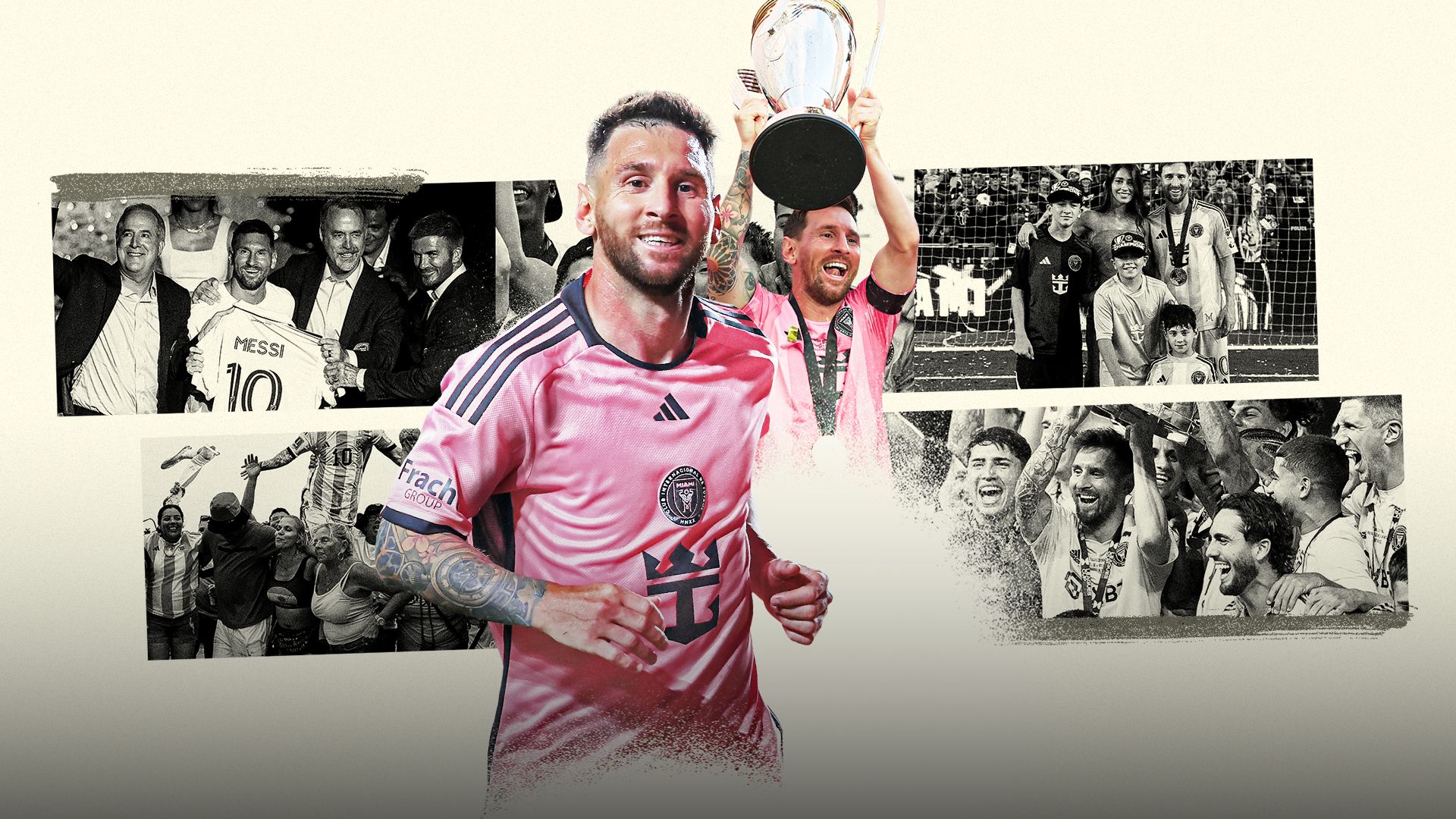
It's undeniable: Lionel Messi's arrival in the United States has been more than just a transfer; it's a seismic cultural shift, transforming the landscape of American soccer and setting the stage for what could be the most poetic farewell in sports history at the 2026 World Cup.
The Messi Phenomenon: Key Takeaways
- Messi's move to Inter Miami ignited unprecedented "Messi-mania," dramatically boosting MLS popularity and US soccer engagement.
- Familiarity with US stadiums, travel, and climate offers Argentina and their captain a distinct home-field advantage for the 2026 World Cup.
- Beyond his on-field brilliance, Messi's humility and authentic persona have resonated deeply, redefining the American public's relationship with soccer.
- The 2026 World Cup in North America is shaping up to be a tailor-made final chapter for the legend, celebrating his universal legacy.
The American Dream Unfolds
When Lionel Messi chose Inter Miami, many saw it as a gilded retirement. They were wrong. This wasn't a fade into obscurity but a strategic masterstroke, a move to expand his legend and open a new frontier for football. The notion of 'The American Messi' isn't marketing fluff; it's the organic evolution of a global icon finding joy and purpose away from Europe's relentless demands.
In Miami, Messi has found a rhythm where the beautiful game intertwines with everyday life. Training sessions give way to ocean sunsets, and the pressure cooker of European football is replaced by an enthusiastic, yet respectful, crowd. This environment is crucial, especially as he approaches the 2026 World Cup at 39 years old.
"Messi-Mania" Engulfs the Nation
The night Messi debuted for Inter Miami was electric. A last-minute free-kick, a goal nestled perfectly in the top corner, and suddenly, the city was captivated. David Beckham teared up, Antonela beamed, and a diverse crowd from across the Americas understood they were witnessing a moment etched in history. Since then, "Messi-mania" has transcended sports, becoming a full-blown social phenomenon.
Youth soccer academies in the area have seen a 60% surge in enrollment. Local bars now open early for Miami matches, and supermarkets stock mate and Argentina jerseys. Even previously indifferent Americans are now tuning into MLS. The emotional connection Messi forged is palpable, drawing families from distant states and inspiring children to mimic his legendary left foot.
A World Cup Stage Built for a Legend
Everything seems perfectly aligned for the 2026 World Cup: the calendar, the logistics, the narrative. The United States isn't just a host nation; it's poised to be the grand stage for the closing act of an extraordinary era. For Messi, already a player who has conquered everything, this World Cup offers a unique sense of belonging.
He’ll play in familiar stadiums like Hard Rock Stadium in Miami or Atlanta's Mercedes-Benz Stadium, cheered on by crowds that revere him. He won't be a visitor; he'll be, in essence, a local. The humid climate, akin to his hometown of Rosario in summer, coupled with impeccable US facilities and comfortable domestic travel, removes typical World Cup adaptation hurdles, turning potential obstacles into allies.
Crucially, the stands will be a sea of sky-blue and white for Argentina matches, filled not just by travelling Argentines but by millions of Latinos across the continent who claim Messi as their own. In a nation where immigration defines identity, Messi embodies a universal talent that transcends borders.
The Unstoppable Cultural Force
For decades, soccer was viewed as an exotic sport in the United States. Then Messi arrived. Weekends now revolve around Inter Miami games. TV viewership records are shattered. Media outlets, once dominated by basketball or baseball, now feature soccer prominently. The "Messi effect" hasn't just elevated the MLS; it has fundamentally redefined America's relationship with the sport.
The US now leads the world in Argentina jersey sales outside South America. In parks, American children dream of replicating Messi's free-kicks. This is the new context for 2026: a country fully embracing soccer as a cornerstone of its cultural identity, all thanks to a 170-centimeter maestro from Rosario.
The Grand Finale: A Story Written in the Stars
Some stories in football feel divinely inspired, and Messi's American journey is undoubtedly one of them. The world's greatest player, in his twilight, moves to a global city in a country yearning for soccer prominence. Three years later, the World Cup arrives on his adopted turf, in stadiums he knows, before fans who adore him, still radiating the aura of a champion. It’s hard to call it mere coincidence.
Perhaps this is football's way of repaying Messi for everything he's given. One last chance to savor the game without pressure, to conclude his story on his own terms. When the World Cup kicks off, Miami will be alive with Messi murals and Argentine flags. And in a moment of sublime understanding, perhaps at Hard Rock Stadium, the captain will realize that this entire, beautiful narrative was always meant to unfold this way.
Messi, the boy from Rosario who conquered Europe, found ultimate glory in Qatar, and now lives among palm trees, will welcome the world to his new home. The 2026 World Cup is more than just a tournament; it’s a tribute, a stage meticulously crafted for his legacy, and potentially the perfect final chapter to football's most enchanting tale.
.jpg)