
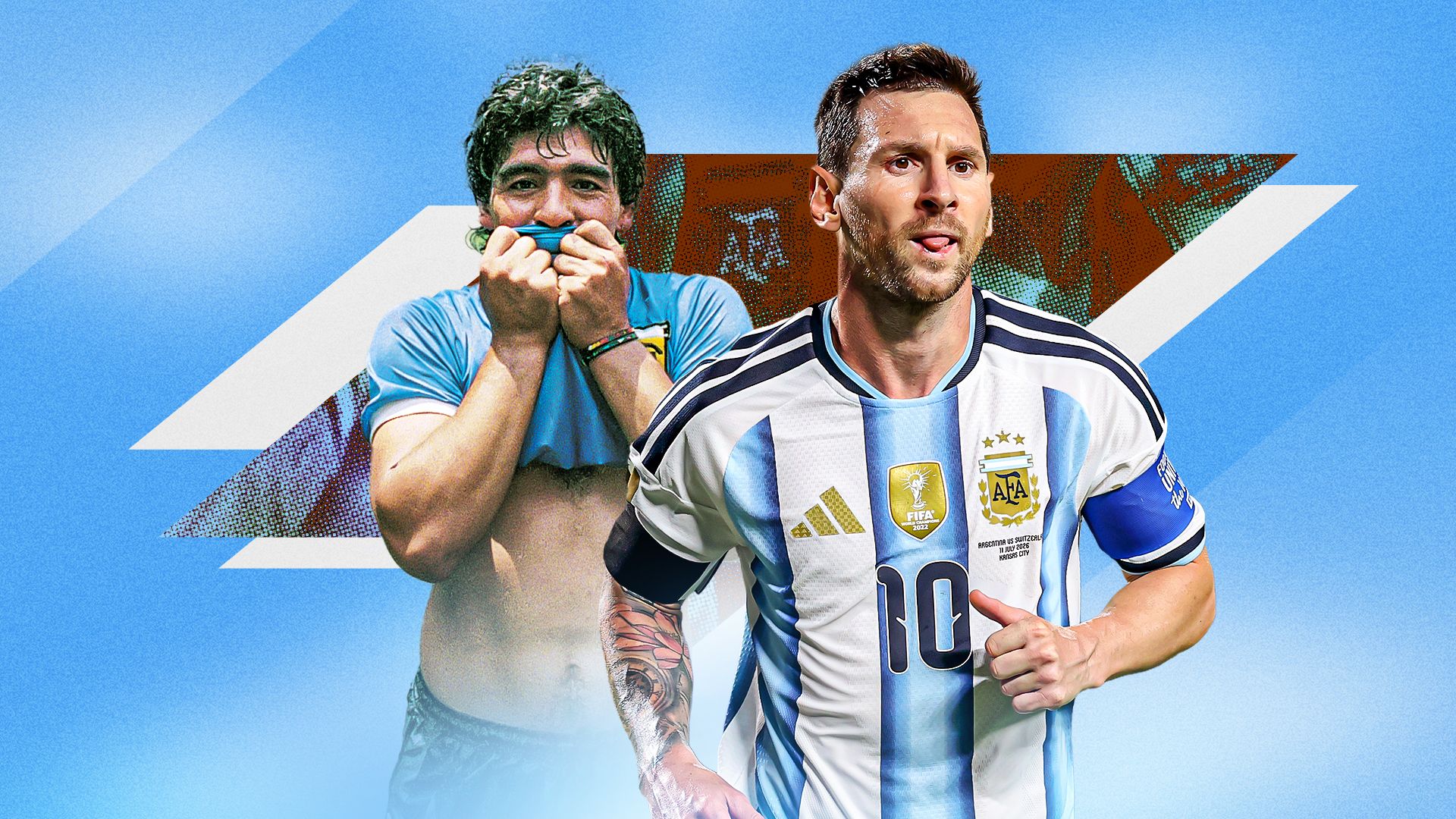

Forget polite football talk – when Argentina clashes with England at the World Cup, it's never just 'a game'. It's an electrifying collision of history, raw emotion, and a rivalry steeped in some of football's most unforgettable moments, now featuring Lionel Messi's ultimate quest for glory.
Key Points:
- The Argentina-England rivalry transcends sport, marked by geopolitical tension and contentious matches.
- Diego Maradona's infamous "Hand of God" and "Goal of the Century" defined the 1986 quarter-final.
- Lionel Messi now faces England in a semi-final, with the chance to write a defining chapter in his already legendary career, echoing Maradona's heroics.
- England seeks a first World Cup final appearance since 1966, facing a seemingly unplayable Messi.
A Rivalry Forged in Fire
Argentina's coach, Lionel Scaloni, might try to downplay the upcoming semi-final as "just a football game," but the players and fans know better. Midfielder Jose Manuel Lopez articulated the stark reality: "From an off-the-pitch perspective, it's a match-up with a lot of history with a lot of pain." This isn't just about 22 players and one ball; it's about decades of tension.
The friction ignited well before the iconic 1986 clash. In 1966, England manager Alf Ramsey famously branded Argentina "animals" after a fractious World Cup encounter at Wembley, a match the Three Lions won controversially with a Geoff Hurst goal. Later, David Beckham's emotional dismissal in France '98 added another dramatic chapter. These moments, however, pale in comparison to the seismic events of Mexico '86.
Maradona's Immortal Legacy: Deceit and Dazzle
The mere mention of England and Argentina in a World Cup context instantly conjures images of the 1986 quarter-final. It was an epic showdown that remains perhaps the most iconic and certainly the most controversial fixture in tournament history. For an entire generation of Argentines, Diego Maradona became a god that day, forever etching his name into the annals of football lore.
The Infamous "Hand of God"
On June 22, 1986, Maradona scored two goals that perfectly encapsulated his polarizing genius. In the 51st minute at the Azteca, he audaciously flicked the ball past an onrushing Peter Shilton with his hand. "We all saw it," former Liverpool winger John Barnes admitted, reflecting the outrage. However, Barnes famously placed the blame on the officials, not Maradona, acknowledging the Argentine's supreme talent even amidst the controversy.
The Goal of the Century
Just four minutes later, Maradona delivered a moment of pure, unadulterated brilliance. Receiving the ball in his own half, he embarked on an astonishing 11-second, 11-touch slalom, weaving past five England players, including Shilton, before slotting home. His teammate Jorge Valdano later described it as "Diego’s personal adventure, one that was totally spectacular," a feat of individual artistry unmatched in World Cup history.
Beyond the Pitch: The Echoes of Conflict
The controversy surrounding Maradona's first goal was magnified by the raw geopolitical backdrop. The quarter-final took place just four years after the Falklands War between Argentina and the United Kingdom. Maradona later confessed that beating England felt like "a beautiful feeling, a type of symbolic revenge over the English" for the loss of las Malvinas. He famously justified his deceit by stating, "Those who steal from a thief are entitled to 100 years of forgiveness."
England manager Bobby Robson and his players were understandably furious, feeling cheated out of a semi-final spot. Gary Lineker's late header to halve the deficit only intensified their belief that justice had been denied. The "Hand of God" wasn't just a goal; it was a defiant, deeply political statement for Argentina.
Messi's Ultimate Quest: To Conquer England, To Match Diego
Fast forward to the present, and the upcoming semi-final in Atlanta carries its own immense weight. While less politically charged than 1986, Argentina's players chanted "For the Malvinas, for Diego and for Leo's last [World Cup]!" after their recent victory, demonstrating the enduring connection. For England, this is a monumental opportunity to reach a World Cup final for the first time since their 1966 triumph.
Argentina's team performances have been inconsistent, but Lionel Messi continues to defy Father Time. At 39 years old, his eight goals and two assists in just six matches are simply extraordinary. He is carrying his nation, a one-man mission in pursuit of football's greatest prize.
Messi has collected every possible club and individual honor, yet a World Cup victory over England remains the one box unchecked, the specific legacy-defining achievement that could truly place him alongside, or even above, Diego Maradona in Argentine lore. The odds may favor talents like Harry Kane or Jude Bellingham to decide the match, but this fixture could once again become "all about another Argentine on a truly spectacular personal adventure." The stage is set for Messi to write his most indelible World Cup chapter.