


Mike D’Antoni didn't simply coach offense — he helped redefine what NBA offense could look like. His basketball philosophy was shaped by his roots in West Virginia, his playing career at Marshall, his years dominating as a point guard in Italy and the influence of NBA coach Doug Moe. Those experiences eventually came together in a revolutionary formula: play fast, spread the floor, shoot 3-pointers, attack the rim and put your five most skilled players on the court regardless of size.
When D’Antoni finally got the opportunity to unleash that philosophy as head coach of the Phoenix Suns in 2003, the results changed the direction of basketball at both the NBA and college levels.
Key Highlights
- Mike D’Antoni brought his European basketball influences to the NBA, pioneering a fast-paced system built around spacing, 3-pointers and attacking the rim.
- His 2004-05 Phoenix Suns led the NBA in scoring, offensive efficiency and pace while setting the tone for the modern 3-point era.
- Steve Nash became the perfect engine for D’Antoni’s system, helping turn his offensive vision into one of the NBA’s most influential styles.
- D’Antoni finished with a 672-527 regular-season record, two Coach of the Year awards and three Western Conference Finals appearances before entering the Naismith Basketball Hall of Fame as a contributor.
From West Virginia to Italy: The Roots of D’Antoni’s Basketball
D’Antoni's coaching philosophy was built from a lifetime of experiences. His basketball journey began in West Virginia, where he played prep basketball at Mullens High School before continuing his college career at Marshall.
He then moved to Europe, where he established himself as one of the top point guards in Italy's premier professional league. His European experience would prove especially important in shaping the offensive principles he would eventually bring to the NBA.
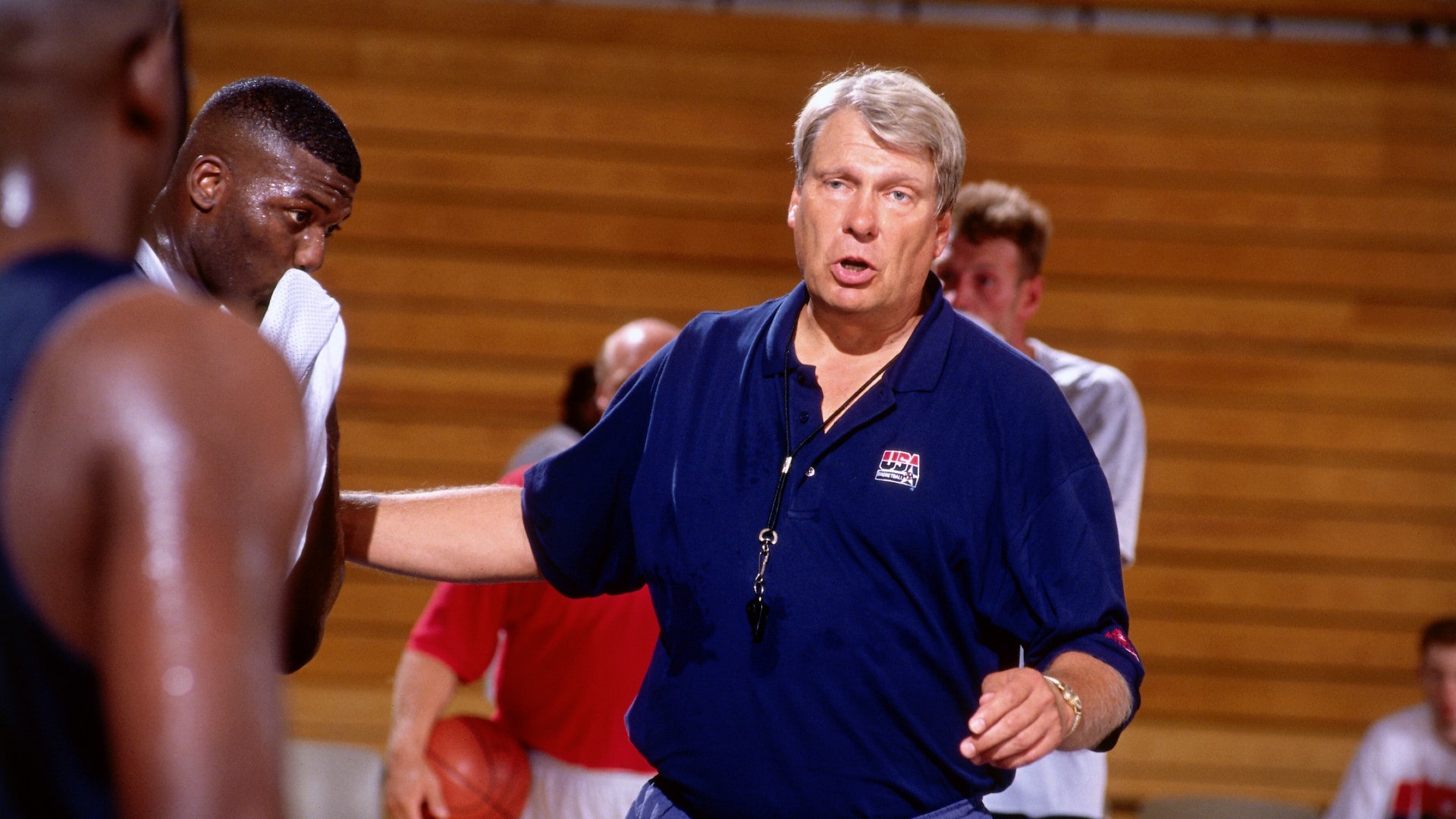
D’Antoni also spent part of his NBA playing career under Doug Moe, another influential figure who helped shape his approach to the game. Those influences eventually formed the foundation of a system that would become synonymous with pace, spacing and offensive freedom.
"Most coaches are the products of all the past experiences, and I had a lot," D’Antoni said. "Even growing up, the teams I always played on in high school and in college at Marshall, we were always undersized and fast and were really successful. And then as you get into the pros, you just follow your coaches."
The Suns' Offensive Revolution
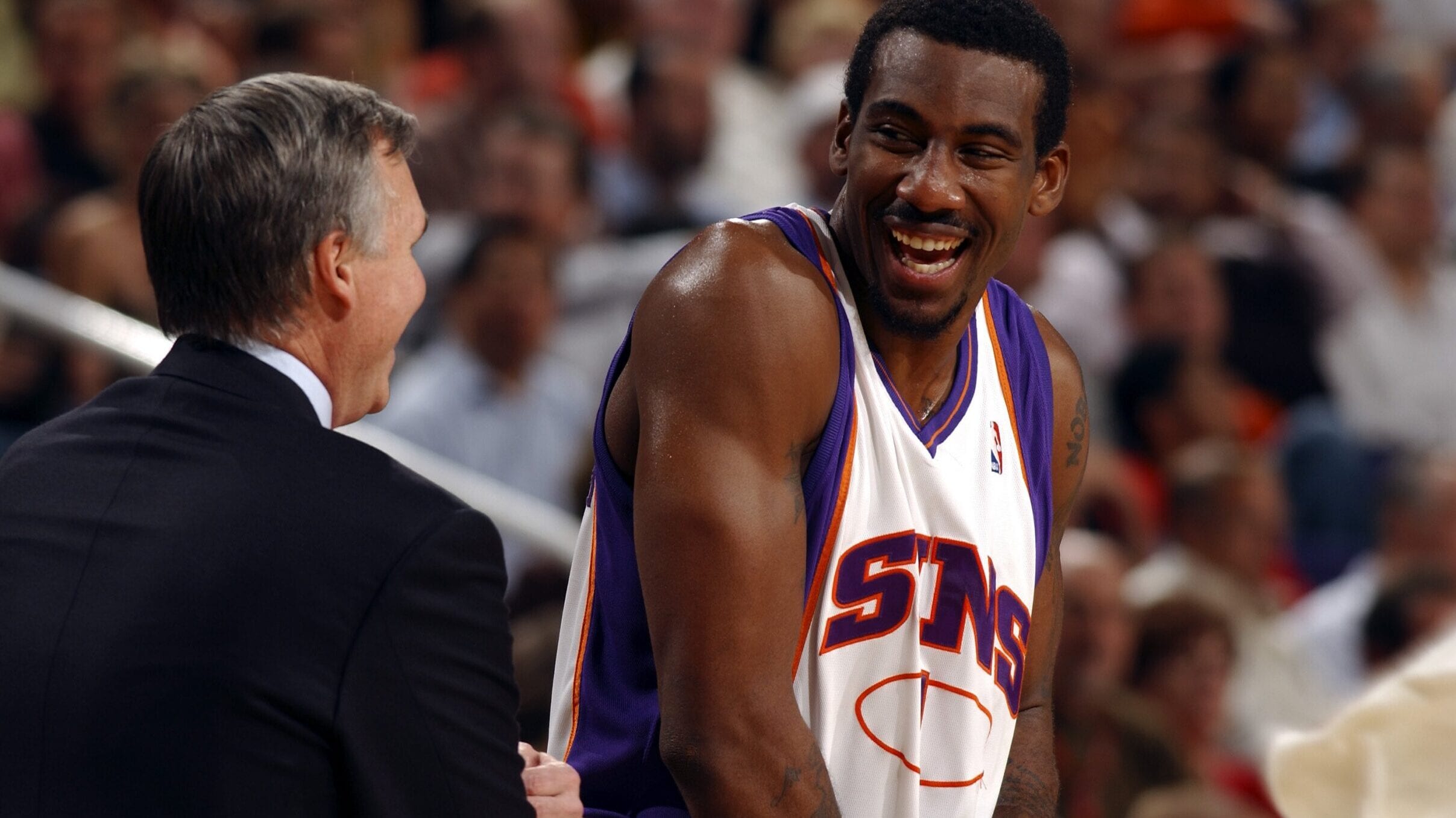
D’Antoni's breakthrough came when he took over as head coach of the Phoenix Suns in 2003. His first full season with Phoenix in 2004-05 produced an offensive juggernaut featuring Steve Nash, Amar’e Stoudemire, Shawn Marion, Joe Johnson and Quentin Richardson. The Suns started the season 31-4 and finished 62-20.
They led the NBA in:
- Scoring: 110.4 points per game
- Offensive efficiency: 114.5 points per 100 possessions
- Pace: 95.9
- 3-pointers made: 9.7 per game
- 3-pointers attempted: 24.7 per game
- 3-point percentage: .393
Phoenix's style completely disrupted conventional thinking. At a time when teams were still heavily influenced by dominant interior players such as Shaquille O'Neal and Tim Duncan, D’Antoni's Suns demonstrated how speed, spacing and perimeter shooting could become the foundation of an elite offense. They weren't the first NBA team to play quickly, shoot heavily from deep or use smaller lineups. What made D’Antoni different was the way he combined all three ideas into one cohesive offensive system.
Steve Nash: The Perfect Point Guard for D’Antoni's Vision
D’Antoni's system needed a special kind of point guard, and he found exactly that in Steve Nash. Nash possessed the passing, ballhandling and shooting ability required to maximize the spacing around him. More importantly, he had an exceptional understanding of how to identify and attack defensive weaknesses before opponents could recover.
But there was more to their success than luck. D’Antoni's objective was to maximize everything Nash could do — from controlling the ball and creating passing opportunities to exploiting the extra space created by 3-point shooting.
"I was just trying to maximize the point guard, trying to maximize spacing, use the three. And I just went with it," D’Antoni explained. "You tweak it every year, you do a little bit different. You have different personnel. But the basics were there. It started in Italy and I just kind of ran with it."
Europe Taught D’Antoni to Think Bigger
D’Antoni's years in Italy had a profound impact on how he viewed the game. As a player, he acknowledged that he wasn't a particularly strong finisher around the basket, which encouraged him to embrace the 3-point shot.
As a coach in Italy, however, he became fascinated by the versatility of European players. He saw players developing skills that traditionally weren't expected from their positions — ballhandling, passing and shooting from different areas of the floor. That helped D’Antoni imagine an NBA offense where every player could contribute beyond traditional positional roles.
"The one thing that I was able to jump on real quick was the big guys. I thought they were much more skilled," D’Antoni said. "They could shoot the 3, they could run, they could handle the ball."
That versatility allowed him to open up the floor and explore the concept of playing five skilled players across the court. "So that was probably the influence that Europe gave me was that you can play five out because you're center and four guy and everybody, you have five skilled players on the court."
From Doubt to an NBA Coaching Revolution
Despite his confidence in the system, D’Antoni admitted he wasn't completely certain his ideas would translate to the NBA. After finding success in Italy — including two Italian league championships, two Italian Supercup titles and a EuroLeague Final Four appearance — he wanted the chance to prove his offensive philosophy at basketball's highest level.
But there were doubts. "I was insecure as a coach coming back to the NBA whether it would work or not," he said.
Ultimately, several factors came together at the perfect time. The NBA had introduced rule changes that increasingly favoured offense, including defensive three seconds and restrictions on perimeter hand-checking.
D’Antoni also found himself surrounded by an ownership and front-office group led by Jerry Colangelo and Bryan Colangelo that was willing to embrace his unconventional ideas. Most importantly, he had the personnel to make the system work.
"I had the right personnel, and it all fell into place," D’Antoni said. "And whether I could see that or not, I always wanted to play that way. It was the best way to go for us."
D’Antoni's Lasting NBA Legacy
D’Antoni's influence extends far beyond the Phoenix Suns. Across 16 seasons as an NBA head coach, he compiled a 672-527 regular-season record and went 54-56 in the playoffs. He won NBA Coach of the Year in 2004-05 and 2016-17, reached the Western Conference Finals three times with Phoenix in 2005 and 2006 and Houston in 2018, and coached two players during MVP-winning seasons: Steve Nash twice and James Harden once.
His Phoenix teams were immortalized in Jack McCallum's book Seven Seconds or Less: My Season on the Bench with the Runnin' and Gunnin' Phoenix Suns, further cementing the cultural impact of that era.
D’Antoni's philosophy also looks remarkably familiar in today's NBA. The Golden State Warriors, whose success and four championships D’Antoni has openly acknowledged, averaged 44.1 3-point attempts per game last season. Even the Sacramento Kings, ranked No. 30 in the league in 3-point attempts per game, averaged 30.2 attempts.
A Hall of Fame Career Built on Innovation
D’Antoni's Hall of Fame induction is recognition of more than his win-loss record. It celebrates a coach who absorbed ideas from West Virginia, Marshall, Europe and the NBA, combined them into something uniquely his own and then had the courage to trust that vision.
"A coach is only as good as his players are," D’Antoni said. "And I got really lucky."
The players certainly played their part. But D’Antoni gave them a system designed to maximise their strengths and challenge traditional ideas about how basketball should be played. Now, as he enters the Naismith Basketball Hall of Fame as a contributor, the "Seven Seconds or Less" era stands as more than a memorable chapter in NBA history.
.JPG)