
Monaco GP: F1 Teams Uncover Hidden Downforce Advantage
Monaco isn't just another race; it's a brutal test of precision and a playground for aerodynamic innovation. This year, Formula 1 teams are rewriting the rulebook, leveraging a clever loophole to generate unprecedented levels of downforce for the iconic street circuit.
Key Points: The Monaco Aero Advantage
- Monaco's unique low-speed demands allow teams to prioritize downforce over drag.
- Teams are replacing the inactive DRS actuator housing with multiple small winglets.
- This 'dirty downforce' strategy boosts rear wing and diffuser performance.
- Mercedes, Red Bull, Audi, Cadillac, and Racing Bulls are among the innovators.
Monaco's Unique Aero Equation
At the legendary Monaco Grand Prix, the usual balancing act between downforce and drag goes out the window. The circuit's tight corners and lack of significant straights mean teams can throw efficiency concerns aside and chase raw grip.
This unique characteristic of Monte Carlo allows engineers to unleash 'dirty downforce' solutions – designs that might create excessive drag elsewhere but are gold in the principality. The goal? Maximize cornering performance at all costs.
The Ingenious Rear Wing Redesign
The key to this aero revolution lies in a specific section of the rear wing. With Formula 1's 'straight mode' (formerly DRS) inactive for the Monaco Grand Prix, the housing for the wing actuator becomes redundant.
Savvy aerodynamicists, ever in pursuit of marginal gains, quickly spotted an opportunity. They're utilizing the FIA's defined legality box for this actuator to integrate a cluster of tiny, downforce-generating winglets.
How 'Upwash' Powers Performance
These miniature winglets aren't just for show. They actively enhance the rear wing's effectiveness by generating 'upwash.' This aerodynamic phenomenon expands the low-pressure field behind the car.
When this expanded low-pressure zone interacts with the diffuser, it supercharges the underbody airflow. The result is increased suction, pulling the car harder to the tarmac and delivering a crucial boost in downforce.
Who's Leading the Aero Arms Race?
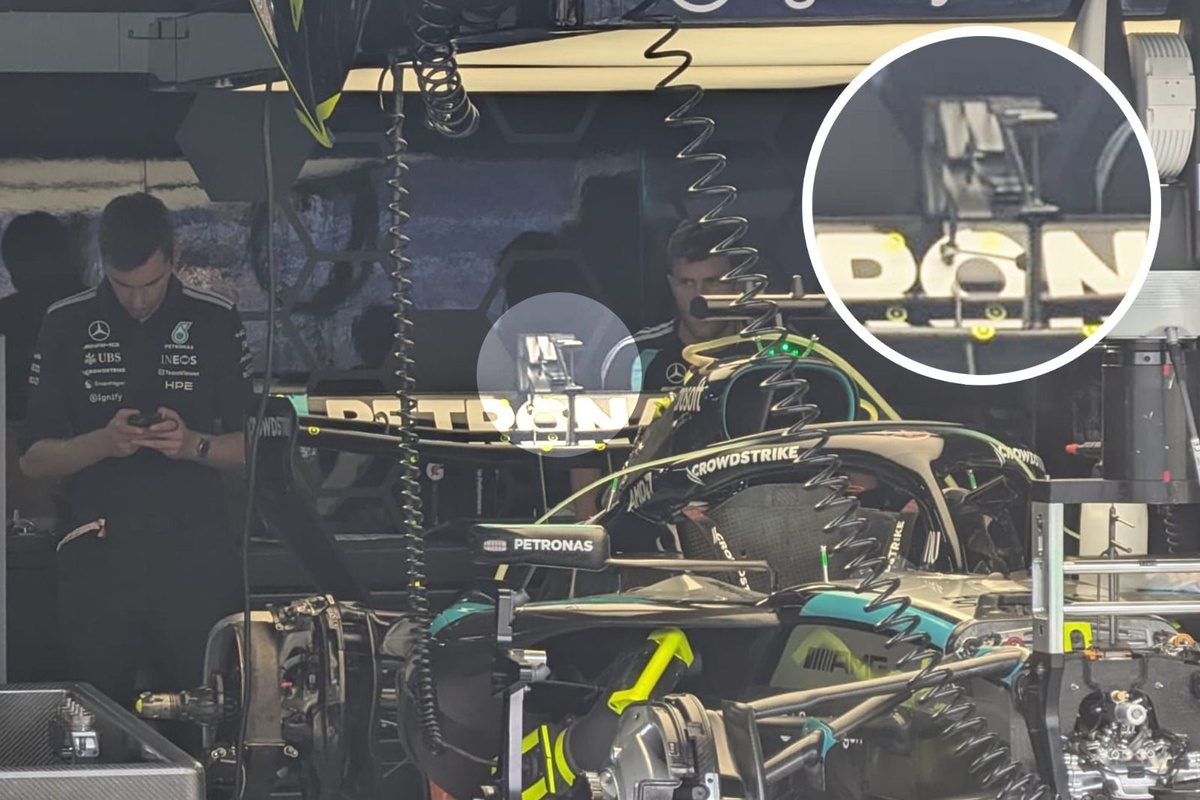
Unsurprisingly, the top teams are at the forefront of this Monaco aero innovation. Mercedes has perhaps taken the most audacious approach, with an intricate arrangement that looks like a 'vine' of aerofoils.
Their design features a mainplane-mounted pylon supporting a trio of cascading winglets, topped by another, with two additional banks of two winglets. Crucially, each final winglet includes a Gurney flap to amplify its potency.
Red Bull, known for its aero prowess, has opted for a more integrated solution, modifying its standard actuator housing to snugly fit two winglets, neatly enclosed by endplates.
Meanwhile, Audi and Cadillac are employing similar strategies, with two cascading elements mounted on the upper rear wing plane, functioning like an additional tab. Cadillac even went a step further, completely removing the actuator section.
Racing Bulls also embraced this philosophy, transforming their actuator housing into a single tab that extends the central part of the rear wing, complete with its own Gurney flap for added punch. This strategic exploitation of the rules highlights the relentless pursuit of performance in Formula 1.